 Pin It
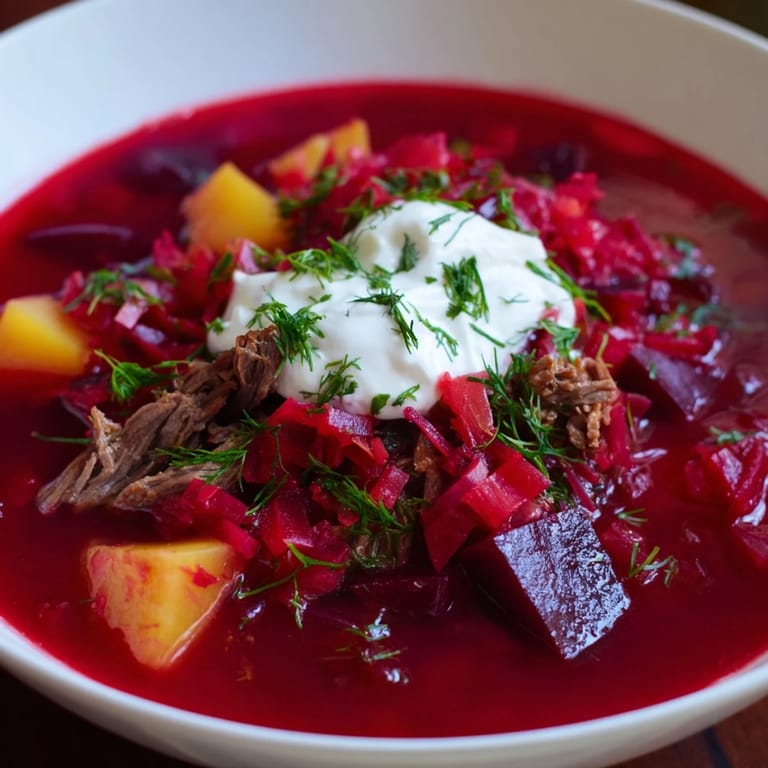
 My grandmother's kitchen always smelled like beets when autumn arrived—that earthy, almost sweet perfume that seemed to seep into every corner for weeks. She'd make this borscht on days when the weather turned unpredictable, when you could feel winter circling just beyond the windows. The first time I actually watched her make it, I was surprised how much she fussed over the beef, skimming the broth like she was polishing silver, and how the vegetables transformed from raw, humble things into this jewel-toned medley that made the whole pot shimmer. Now I understand: that patient attention is what turns simple ingredients into something that tastes like comfort and history in a single spoonful.
I made this for my neighbor last winter when she was recovering from surgery, and I'll never forget how she closed her eyes on the first spoonful, tears streaming down her face—not from sadness, but from that kind of relief only a warm bowl can bring. She told me later it reminded her of her mother's kitchen in Kyiv, which I never knew. The soup had unlocked something deeper than hunger.
Ingredients
- Beef chuck or brisket (400g): This cut has just enough marbling to create a rich, gelatinous broth without being greasy—don't skip the simmering time, as that's where the depth develops.
- Water (1.5 liters): The foundation of everything; use filtered water if your tap water is heavily chlorinated, as it can muddy the subtle beet flavor.
- Bay leaves and black peppercorns: These aren't background players—they anchor the broth with a subtle herbal note that keeps the sweetness of the beets in check.
- Beets (3 medium): The soul of the dish; they give color, earthiness, and a natural sweetness that's more sophisticated than adding sugar outright.
- Carrots and onions: The aromatic base that builds flavor—don't rush the sautéing step, as those few minutes transform their raw edge into something mellow.
- Potatoes (2 medium): They thicken the broth slightly and add substance without weighing it down; waxy potatoes hold their shape better than starchy ones.
- Cabbage (1/4 small head): A touch of green brightness that prevents the soup from tasting too heavy, and it adds a subtle textural contrast.
- Tomato paste (2 tablespoons): A concentrated umami boost that deepens the savory notes—don't use the squeezable tubes if you can help it, as they often contain extra water.
- Sunflower or vegetable oil (2 tablespoons): Use oil with a neutral flavor; olive oil can compete with the beet's delicate earthiness.
- Sugar (1 tablespoon): Not for sweetness, but for balance—it quiets the vinegar's edge and enhances the beets' natural sugars.
- White vinegar (2 tablespoons): The secret brightness that makes people ask what that tangy note is; it's what keeps borscht from tasting one-dimensional.
- Sour cream (150g): The finishing touch that transforms the soup from warming to luxurious; use full-fat if possible for the best creaminess.
- Fresh dill or parsley: Dill is traditional and adds a slightly anise-like note, but parsley works beautifully if that's what you have.
Tired of Takeout? 🥡
Get 10 meals you can make faster than delivery arrives. Seriously.
One email. No spam. Unsubscribe anytime.
Instructions
- Start the broth:
- Place your beef in the pot with water, bay leaves, peppercorns, and salt, then bring it to a rolling boil. You'll see foam rise to the surface—skim it off gently with a spoon or small ladle, as this prevents the broth from becoming cloudy. Reduce to a steady simmer and let it cook undisturbed for 45 minutes while you prepare the vegetables.
- Build the flavor base:
- In a separate skillet, heat oil over medium heat and add your chopped onions, stirring until they turn translucent and fragrant—about 3 minutes. Add the grated carrots and beets, watching as the pan fills with that deep crimson color, and sauté for 5 minutes. Stir in tomato paste, sugar, and vinegar, then keep stirring occasionally for another 7–8 minutes until the vegetables are tender and the raw tomato paste taste has mellowed into something rich and concentrated.
- Combine and layer:
- Remove the beef from the pot (it should shred easily now), then strain the broth through a fine-mesh sieve if you want extra clarity, though many people skip this step. Return the strained broth to the pot and bring it back to a simmer, then add your diced potatoes and cook for 10 minutes until they're just starting to soften. Next, add the shredded cabbage and your sautéed beet mixture, simmering for another 10 minutes until everything is tender and the flavors have melded.
- Final assembly and rest:
- Shred or cube the beef and return it to the pot along with minced garlic, then taste and adjust salt and pepper as needed. Simmer for 5 more minutes so the garlic can perfume the whole pot, then remove from heat and let the borscht rest for 15–20 minutes—this is crucial, as the flavors will deepen and round out as it cools slightly.
 Pin It
 There's a moment near the end of making borscht when you lean over the pot and take a deep breath, and suddenly you understand why people have been making this soup for generations—it's not just about filling a belly, it's about permission to slow down. This dish teaches patience in a way recipes usually don't.
The Art of the Sour Cream Swirl
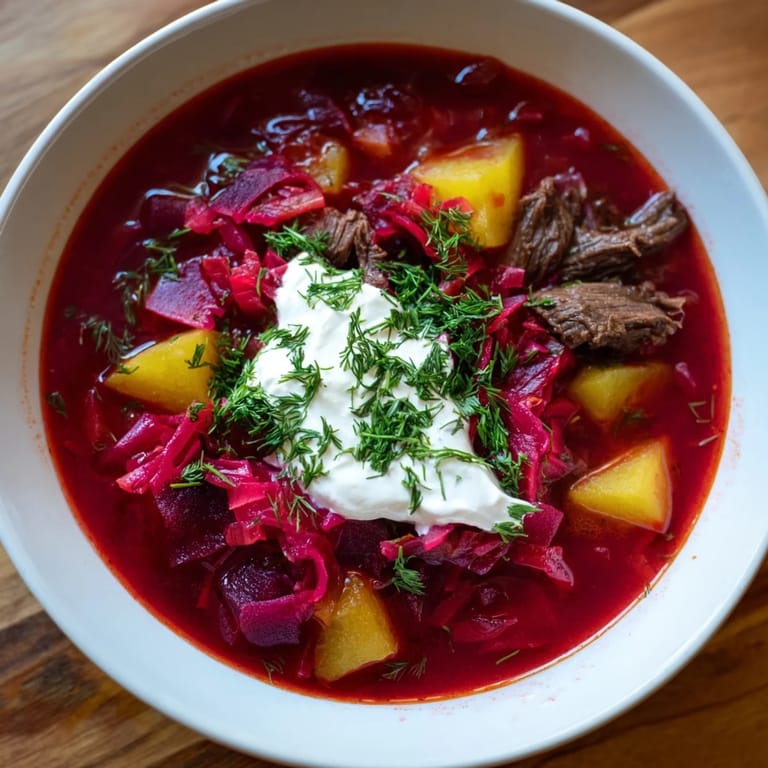
The sour cream isn't a garnish; it's a textural and flavor revelation that happens when it meets the hot soup. A generous dollop creates a cool, creamy pocket that plays beautifully against the warm, tangy broth. I learned to dollop it into the center of the bowl rather than stirring it in immediately—that way you get moments of silkiness between spoonfuls of full-flavored soup, and everyone at the table can control their own ratio of cream to broth.
Make-Ahead and Reheating Wisdom
Borscht improves overnight as flavors continue to develop and meld, making it an ideal soup for cooking ahead. When reheating, bring it back to a gentle simmer on the stovetop rather than using high heat, which can make the vegetables mushy and the broth taste flat. If the soup thickens too much after sitting in the fridge, thin it with a splash of water or extra broth until it reaches the consistency you love.
Serving and Pairing Possibilities
Borscht deserves a supporting cast that honors its simplicity and depth. Thick slices of rye bread are traditional and absolutely essential for soaking up the last spoonfuls, while pampushky (Ukrainian garlic rolls) add a warm, garlicky dimension that feels luxurious. A small glass of something cool—sparkling water, a light lager, or even weak tea—offers a nice palate cleanse between spoonfuls, and some people add a final squeeze of fresh lemon juice to brighten everything further.
- Serve in warmed bowls so the soup stays hot longer and feels more intentional.
- A sprig of fresh dill floating on top adds visual beauty and releases its aroma when you bring the bowl to your lips.
- If anyone is vegetarian, keep some plain broth on hand to serve them—they can still enjoy all the vegetable goodness without the beef.
 Pin It
 Make this soup on a day when you have time to think about something else while it simmers, when you can let the house fill with its perfume. It's worth every minute.
Recipe FAQs
- → What cut of beef is best for this soup?
Beef chuck or brisket works well, offering tender texture and flavorful broth after simmering.
- → Can this dish be made gluten-free?
Yes, it contains no gluten ingredients if served without bread, and ensure sour cream and tomato paste are gluten-free.
- → How long should the soup simmer for optimal flavor?
Simmer for at least 1 hour 30 minutes to develop a rich, balanced taste and tender beef.
- → What vegetables contribute to the soup’s signature flavor?
Beets, cabbage, potatoes, carrots, and onions combine to create the soup’s earthy sweetness and vibrant color.
- → Is it possible to prepare a vegetarian version?
Yes, omit the beef and use vegetable broth to maintain hearty vegetable flavors.
- → How should the soup be served for best results?
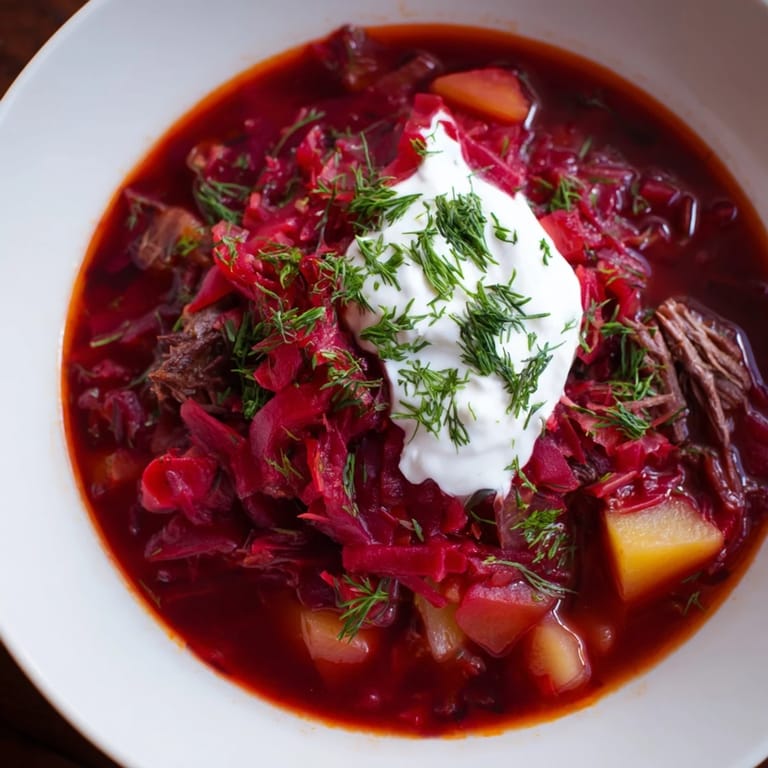
Serve hot with a spoonful of sour cream and garnish with fresh dill or parsley to enhance freshness and creaminess.