 Pin It
 The first time I made this Pasta Soup with Chicken and Vegetables, my kitchen windows fogged up on a particularly chilly autumn evening. There's something almost magical about the way the fragrant steam rises from a pot of simmering soup, promising comfort in each spoonful. I remember standing over the pot, lifting the lid periodically just to inhale the herby aroma that seemed to chase the cold away even before the first taste. What started as a practical way to use up vegetables in my refrigerator has become one of our household's most requested meals when the temperature drops.
Last winter, my neighbor had surgery and I brought over a container of this soup with some crusty bread. Her husband called later that evening to say it was the first meal she'd fully finished since coming home from the hospital. I distinctly recall him describing how she smiled after the first spoonful, saying it tasted like someone cared. Of all the compliments I've received about my cooking over the years, that one stays with me, reminding me that food is never just fuel.
Ingredients
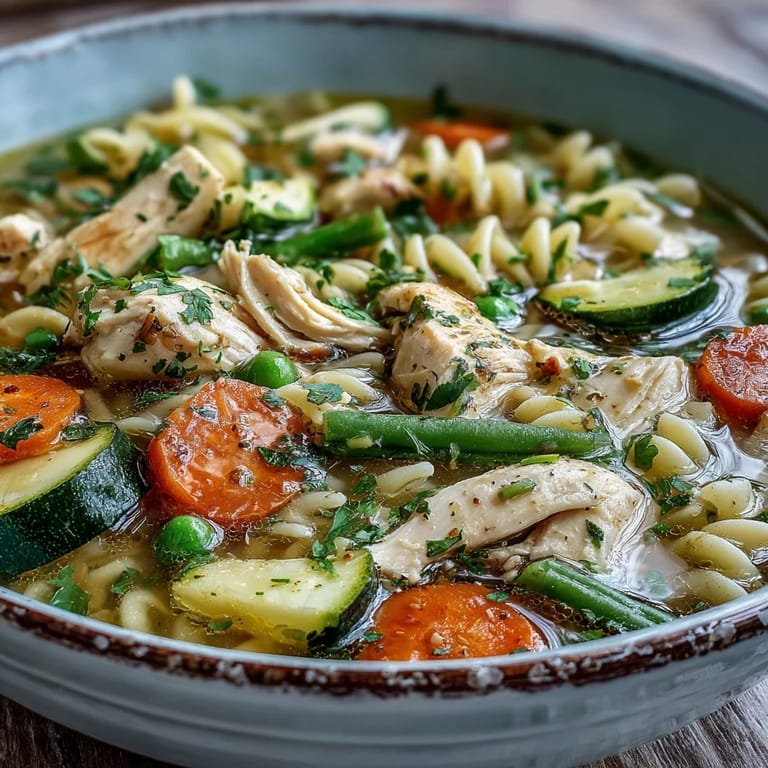
- Chicken breast: Cubing the chicken into uniform half-inch pieces ensures they cook quickly and evenly while remaining tender throughout the soup.
- Small pasta shapes: I prefer ditalini or small elbow macaroni because they nestle perfectly on a spoon alongside the vegetables and don't overwhelm the other ingredients.
- Fresh and frozen vegetables: The combination gives you the best of both worlds - the texture from fresh vegetables and the convenience of frozen peas that require zero prep.
- Chicken broth: I always choose low-sodium because it allows you to control the salt level yourself, something I learned after making an overly salty batch that had us drinking water all night.
- Herbs: Dried herbs work perfectly in the long simmer, but that final sprinkle of fresh parsley adds a brightness that wakes up all the flavors.
Tired of Takeout? 🥡
Get 10 meals you can make faster than delivery arrives. Seriously.
One email. No spam. Unsubscribe anytime.
Instructions
- Build your flavor base:
- Heat that tablespoon of olive oil in your largest soup pot and add the holy trinity of soup making - onions, carrots, and celery. You'll know they're ready when your kitchen starts smelling like comfort and the vegetables have softened but not browned.
- Add your aromatics:
- Toss in the minced garlic and stir continuously for just a minute. You'll smell when it's ready - that pungent garlic aroma will fill your kitchen, but pull it off the heat before it turns bitter.
- Brown the chicken:
- Add those chicken cubes and give them a few minutes to develop some color. Look for that slight golden edge that signals flavor is developing, but don't worry about cooking them through completely.
- Build the soup base:
- This is where magic happens - add your zucchini, green beans, tomatoes with all their flavorful juice, and those dried herbs. Each ingredient is adding layers of flavor that will meld together as they simmer.
- Let it simmer:
- Pour in your broth and let everything bubble away gently for about 15 minutes. This is my favorite part - the kitchen fills with steam and the ingredients begin to harmonize together.
- Add the final elements:
- Stir in the pasta and frozen peas, letting them cook until the pasta reaches that perfect al dente texture. The peas will brighten up to a vibrant green that makes the whole soup look more appealing.
- Finish with freshness:
- Remove that bay leaf (nobody wants to bite into that surprise), then stir in the fresh parsley. Take a moment to taste and adjust seasonings - sometimes it needs just a touch more salt or pepper to make the flavors pop.
- Serve with love:
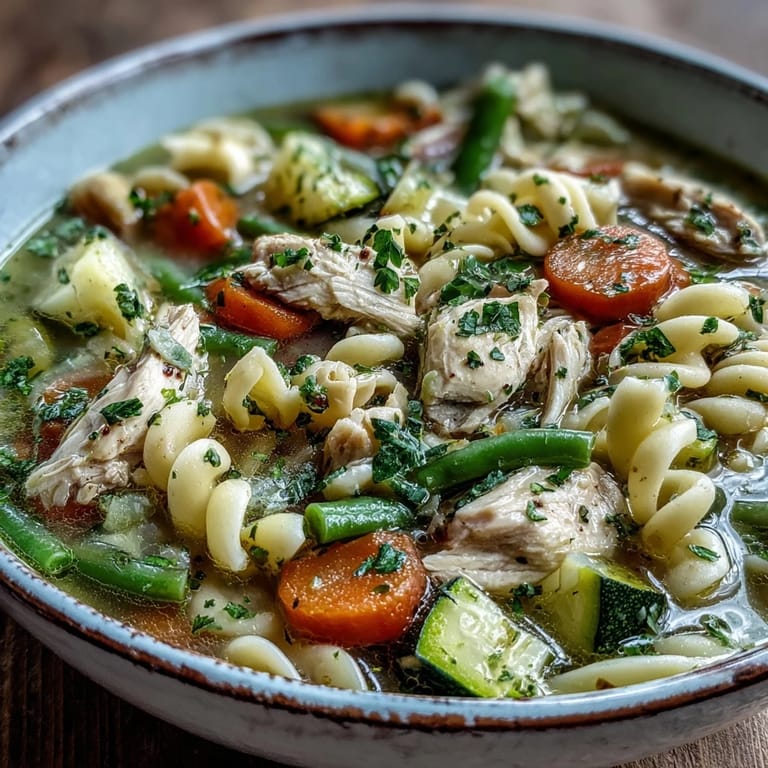
- Ladle into bowls while it's steaming hot. I like to have some grated Parmesan on the table for people to add if they wish - it melts slightly into the broth creating little pockets of creamy richness.
 Pin It
 One evening when my son was going through a particularly picky eating phase, he actually asked for seconds of this soup. I watched in quiet amazement as he methodically fished out every single piece of pasta first, then the chicken, and finally braved the vegetables - starting with the peas and eventually trying everything else. That night, this recipe transformed from just a reliable dinner option into a small parenting victory that I silently celebrated while refilling his bowl without comment on his peculiar eating method.
Seasonal Adaptations
What I love most about this recipe is how it evolves with the seasons. In summer, I'll use fresh corn cut from the cob instead of peas, and add a handful of cherry tomatoes that burst with sweetness. During fall, I might swap in some butternut squash cubes that melt slightly and thicken the broth. Winter calls for heartier additions like kale or spinach stirred in at the last minute. The soup becomes a calendar of what's available, each version carrying the memory of that particular time of year.
Make-Ahead Options
On particularly hectic weeks, I prep all the vegetables the night before and store them in the refrigerator in separate containers based on when they enter the pot. This small bit of organization transforms dinner from a 50-minute process to just 30 minutes of actual cooking. The soup itself keeps wonderfully in the refrigerator for up to 3 days, though the pasta does continue absorbing broth. For longer storage, I freeze portions without the pasta, then add freshly cooked pasta when reheating for the best texture.
Serving Suggestions
While this soup is certainly satisfying on its own, I've found that the right accompaniments can transform it into a feast. My family particularly loves it with warm, crusty sourdough bread for dipping into the flavorful broth. I've served it with simple side salads dressed just with lemon and olive oil to add a fresh counterpoint to the rich soup. Sometimes I'll put out a board of sliced apples and sharp cheddar cheese alongside the soup for a casual weekend lunch that feels both nourishing and slightly special.
- For a dinner party presentation, serve the soup in warmed bowls with a small swirl of good olive oil on top and a sprinkle of fresh herbs.
- Keep a wedge of Parmesan and a grater at the table so everyone can add as much or as little as they like.
- If you're serving kids, having some crackers on the side can make the meal more interactive as they can crumble them into the soup themselves.
 Pin It
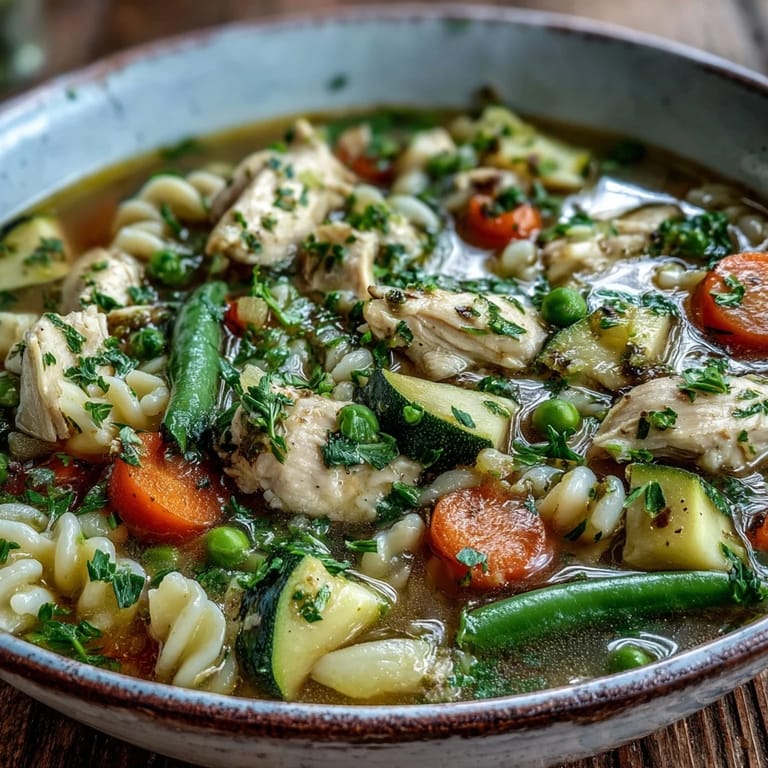
 This soup has taught me that true comfort food isn't just about the ingredients or even the taste - it's about how it makes people feel when they eat it. Whether served on a busy weeknight or ladled into containers for friends in need, it carries something essential that can't be measured in cups or grams.
Recipe FAQs
- → Can I use rotisserie chicken instead of raw chicken breasts?
Yes, rotisserie chicken works wonderfully and adds extra flavor. Simply add shredded rotisserie chicken during the last 10 minutes of cooking along with the pasta and peas to heat through without overcooking.
- → What pasta shapes work best in this soup?
Small pasta shapes like ditalini, elbow macaroni, small shells, or orzo are ideal because they hold up well in liquid. Avoid large pasta shapes that can become mushy or overwhelm the spoon.
- → Can I make this soup gluten-free?
Absolutely. Simply substitute regular pasta with your favorite gluten-free pasta variety. Also ensure your chicken broth is certified gluten-free, as some brands contain gluten-based additives.
- → How should I store and reheat leftovers?
Store in an airtight container in the refrigerator for up to 4 days. The pasta may absorb some liquid, so add extra broth when reheating. Reheat gently on the stovetop over medium-low heat, stirring occasionally.
- → Can I freeze this soup?
Yes, but freeze without the pasta for best results. The pasta can become mushy when frozen and reheated. Cook fresh pasta when serving the thawed soup, or slightly undercook the pasta initially if planning to freeze.
- → What vegetables can I substitute?
Feel free to swap zucchini or green beans for corn, spinach, bell peppers, or diced potatoes. The soup is very versatile and works with whatever vegetables you have on hand or prefer.