 Pin It
 My first lahmacun came from a tiny shop in Istanbul's old quarter, where a baker's hands moved so quickly over the dough that I could barely follow. Years later, standing in my own kitchen, I realized it wasn't magic—it was just confidence, practice, and knowing exactly when the dough had given up being difficult. Now every time I make these, I think of that moment when the hot flatbread emerged from the oven, crisp and fragrant, and how something so humble could feel like such a small victory.
I made these for a dinner party once when I was too anxious to attempt something "fancier," and honestly, they stole the show. People were reaching for seconds before the main course arrived, and someone asked for the recipe right there at the table. That's when I stopped apologizing for simple food and started understanding that generosity on a plate matters more than complexity.
Ingredients
- All-purpose flour (300 g): This is your foundation—good flour makes a difference, but don't overthink it; standard all-purpose works beautifully here.
- Warm water (180 ml): Not hot, not cold; warm enough that you can comfortably hold your finger in it for a few seconds.
- Instant yeast (1 tsp): Fresh yeast gives you more predictable results, especially on humid days.
- Ground lamb or beef (300 g): Lamb is traditional and more flavorful, but ground beef is easier to find and works just as well.
- Tomato paste (2 tbsp): This concentrates the savory depth; don't skip it or water down the flavor by substituting fresh tomato alone.
- Cumin and paprika (1 tsp each): These are your signature spices—they're what makes lahmacun taste like itself, not just seasoned meat.
- Fresh parsley (2 tbsp): Dried won't give you the same brightness, so use fresh if you possibly can.
- Lemon wedges and sumac (for serving): These finish the dish with acid and tartness; they're not optional extras, they're part of the soul of it.
Tired of Takeout? 🥡
Get 10 meals you can make faster than delivery arrives. Seriously.
One email. No spam. Unsubscribe anytime.
Instructions
- Mix and knead the dough:
- Combine your flour, sugar, and salt in a bowl. Dissolve the yeast in warm water, then add it with olive oil to the dry mix and stir until shaggy. Knead for 5–7 minutes until smooth and elastic—your hands will tell you when it's ready, when it stops fighting back and becomes almost silky. Cover and let it rise for 30 minutes until it's visibly puffed and soft.
- Build the meat topping:
- Mix your ground meat with all the vegetables, spices, and olive oil in a bowl. The topping should be moist and paste-like, not crumbly. Taste a tiny bit on your finger (you can eat raw meat here because of the spices and salt acting as preservatives) and adjust seasoning if needed.
- Get your oven impossibly hot:
- Preheat to 250°C (480°F) or your highest setting, with a pizza stone or baking tray inside heating up for at least 10 minutes. This initial blast is what creates the crispy crust you're after.
- Shape and top:
- Divide the risen dough into 8 balls. Roll each one thin—almost transparent in spots—into a round about 20 cm across. Spread a thin, even layer of meat topping across each round, leaving a tiny border.
- Bake until the edges char:
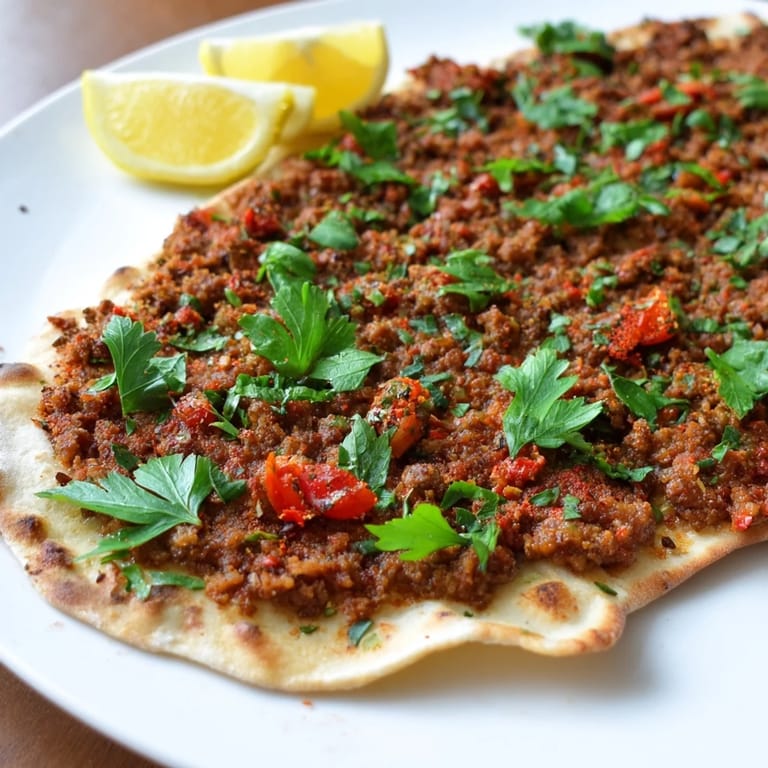
- Working carefully with your hot stone, bake for 6–8 minutes. You're looking for the edges to turn golden and crispy and the topping to lose its raw shine. Don't panic if the bottom looks dark; that's exactly right.
- Finish and serve:
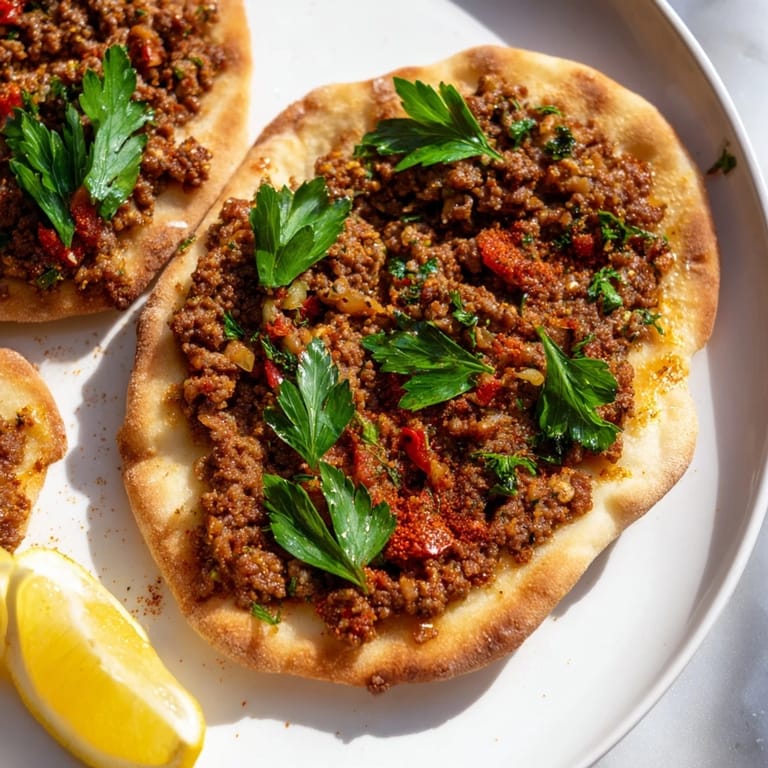
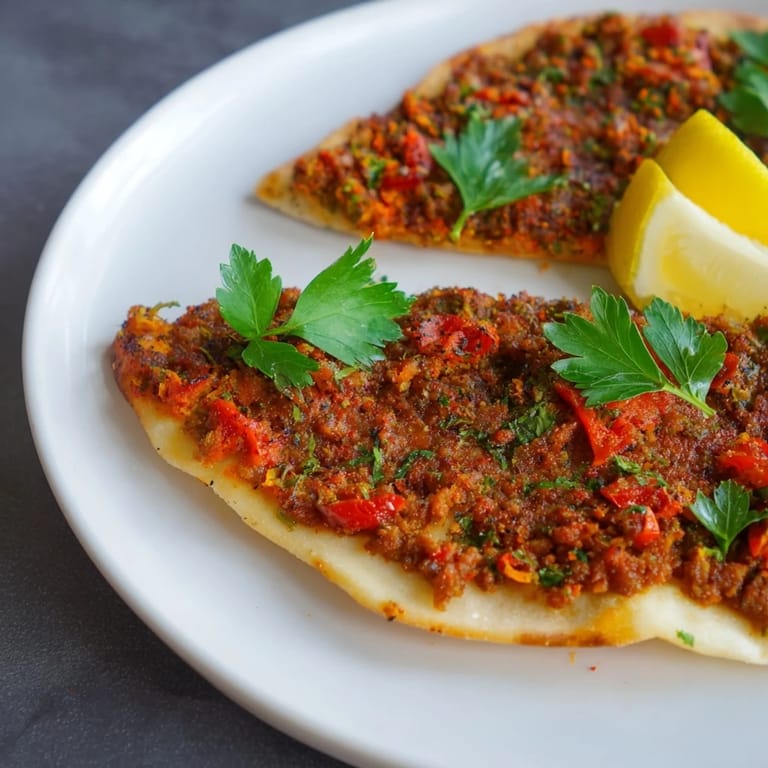
- Pull them out hot, scatter fresh parsley on top, squeeze lemon over them, and eat them immediately. The textural contrast between crispy crust and soft, juicy topping only lasts a few minutes, so don't wait.
 Pin It
 There's a moment near the end of cooking when steam rises out of the oven and you hear the sizzle of the meat caramelizing, and you know something delicious is about to happen. That's the moment I fell in love with this recipe—not because it's complicated, but because it's honest and direct, and it never pretends to be anything other than what it is.
Rolling Thin Takes Practice
The first time I made these, I rolled the dough too thick and the centers stayed chewy and undercooked. My mistake taught me that lahmacun is supposed to be closer to crispy flatbread than pizza dough. Now I use my fingers more than a rolling pin, gently stretching the dough outward and letting gravity do some of the work. If you see light through a thin spot, you're doing it right.
The Meat Topping Is Actually a Paste
This isn't like the dry, crumbly meat of a taco or burger. The topping should be moist, almost spreadable, with all the juices from the tomatoes and onions binding everything together. If yours looks too dry, add a splash more olive oil. The meat will cook fast and become fragrant and slightly caramelized on top, but the bottom edges will stay a little yielding—that contrast is the whole charm.
Serving and Variations
Lahmacun are eaten hot, often rolled up around fresh herbs, sliced onions, and cucumber, almost like a taco. Some people drizzle them with more lemon or a touch of hot sauce. You can make them ahead and reheat them in the oven, though they're never quite as magical as when they're fresh.
- For a vegetarian version, finely mince mushrooms and walnuts together with the vegetables and spices, adding a tablespoon of soy sauce for depth.
- You can prep the topping a day ahead and the dough a few hours ahead; just let everything come to room temperature before assembly.
- Serve alongside ayran (a salty yogurt drink) or a chilled white wine to balance the richness.
 Pin It
 These flatbreads remind me that the best food doesn't need to be complicated—it just needs to be made with attention and eaten immediately, preferably with people you like. That's all a recipe really is.
Recipe FAQs
- → What type of meat is used for the topping?
Ground lamb or beef is commonly used, combining well with aromatic spices for a rich flavor.
- → How thin should the dough be rolled?
Roll the dough into thin rounds approximately 20 cm in diameter to achieve a crisp texture when baked.
- → Can this flatbread be made vegetarian?
Yes, substitute the meat with a minced mushroom and walnut mixture for a flavorful vegetarian version.
- → What spices enhance the topping’s flavor?
Common spices include ground cumin, paprika, black pepper, and optional chili flakes for a balanced, aromatic profile.
- → How is it best served?
Serve warm, garnished with fresh herbs like parsley or mint, lemon wedges, and optional sliced onions with sumac for added zest.