 Pin It
 I was standing in my kitchen on a gray Tuesday afternoon when my roommate burst through the door with a bag of fresh vegetables from the farmer's market, practically glowing. She'd challenged me to make something colorful that didn't feel like rabbit food, and that's when the Rainbow Buddha Bowl clicked into place. The way the vegetables caught the light as I arranged them felt like painting with produce, and suddenly lunch became something I actually wanted to look forward to.
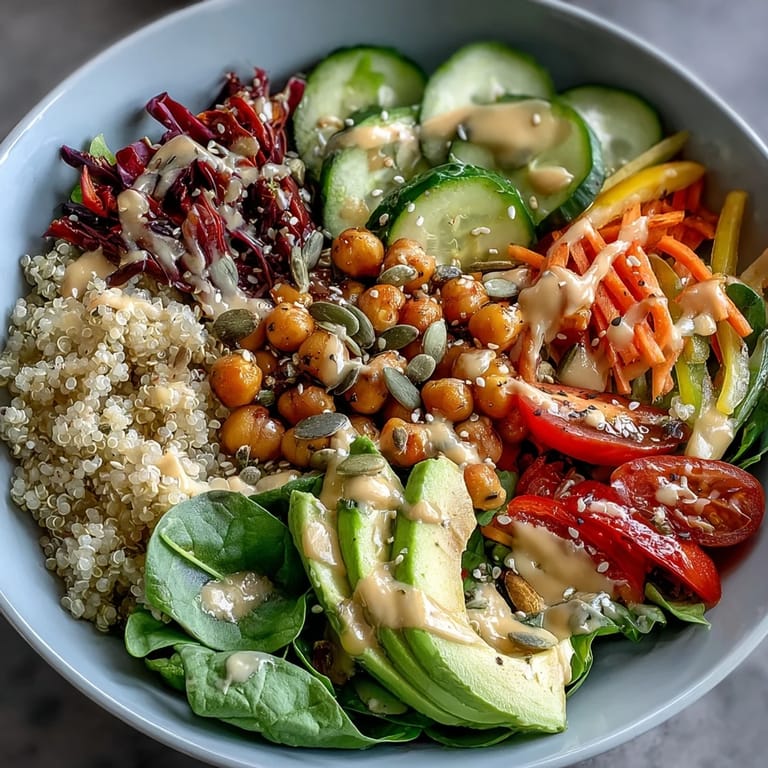
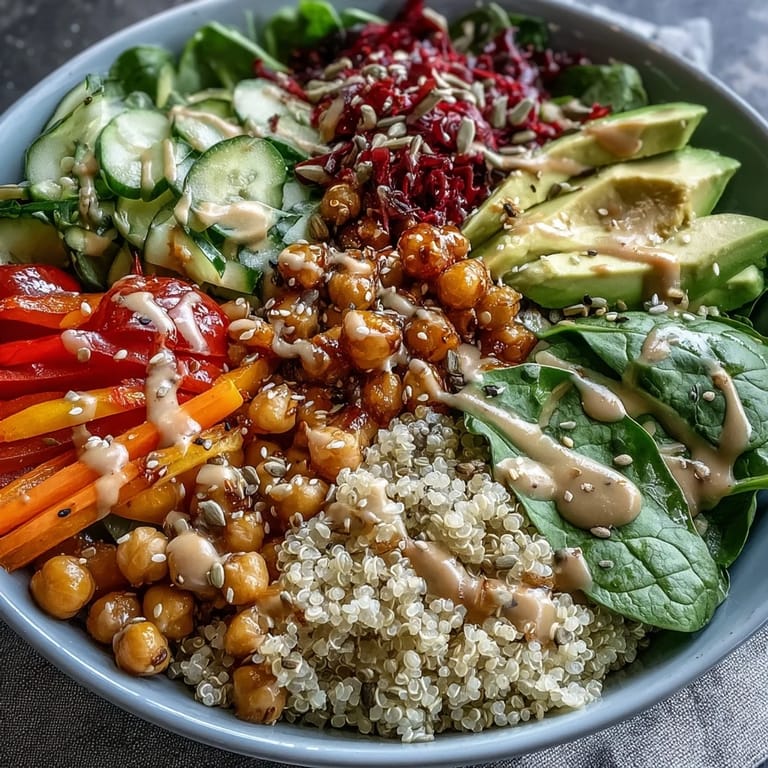
There was this moment when my partner came home, saw the bowl I'd made, and actually paused mid-sentence. I'd arranged the vegetables in rings like a stained glass window, and the tahini dressing pooled in the center catching the light. It wasn't that the food tasted exceptional—though it did—but something about the care I'd put into the presentation made the meal feel intentional rather than rushed.
Ingredients
- Quinoa, rinsed: The texture matters here; rinsing removes bitterness and helps each grain stay separate and fluffy rather than mushy.
- Water: Use exactly 2 cups for perfect absorption, but keep extra on hand since altitude and stove variations change cooking times.
- Salt: Half a teaspoon seasoning the grain itself makes all the difference in flavor—don't skip this step thinking you'll just salt at the end.
- Cooked chickpeas: Canned works beautifully, but if using dried, cook them until tender enough to bite through but still holding their shape.
- Red cabbage: Slice it thin so it's tender enough to eat raw; thick slices feel tough and woody in a cold bowl.
- Carrots, julienned: Thin matchstick pieces soak up the dressing better than chunks and feel delicate in the bowl.
- Cherry tomatoes, halved: Halving releases their juice into the bowl, creating little bursts of flavor as you eat.
- Yellow bell pepper: Any color works, but yellow adds brightness without the earthiness of red or the vegetal bite of green.
- Cucumber, sliced: Keep the skin on for color and texture; peel only if it feels waxy or bitter.
- Fresh baby spinach: Adds iron and wilts slightly from the warm quinoa without turning mushy.
- Ripe avocado: Slice it just before assembling so it doesn't brown; the fat adds richness that balances the tahini.
- Toasted pumpkin seeds: The nuttiness and slight crunch provide textural contrast that makes the bowl more interesting.
- Sesame seeds: Toast them yourself if you have time—store-bought toasted ones taste fresher than raw.
- Tahini: Use good quality paste; cheap tahini tastes chalky and thin, and the dressing suffers for it.
- Lemon juice, fresh: Bottled juice changes the flavor profile noticeably, so squeeze fresh if you can.
- Maple syrup or honey: The sweetness balances the tahini's earthiness; use whichever you have on hand.
- Minced garlic: A single clove prevents the dressing from tasting garlicky-aggressive; you want a whisper, not a shout.
- Black pepper: Fresh cracked tastes livelier than pre-ground.
Tired of Takeout? 🥡
Get 10 meals you can make faster than delivery arrives. Seriously.
One email. No spam. Unsubscribe anytime.
Instructions
- Cook the quinoa properly:
- Bring the water to a rolling boil before adding rinsed quinoa and salt, then turn the heat to low and cover tightly. This prevents the grains from boiling over and ensures even cooking; after 15 minutes you should see tiny spiral tails appearing on each grain when you lift the lid.
- Let it rest, then fluff:
- This 5-minute rest allows any remaining moisture to redistribute through the grains, making them fluffy rather than clumpy. Use a fork to gently separate them rather than stirring, which can break them apart.
- Slice vegetables with intention:
- While quinoa cooks, get all your vegetables prepped and arranged on a cutting board. Thin, consistent slices make the bowl feel thoughtful and cook/soften evenly if you're meal-prepping ahead.
- Whisk the tahini dressing smooth:
- Start with less water than the recipe calls for, whisking constantly to avoid lumps. The mixture will look broken at first, then suddenly come together into silky creaminess—this is the moment you know you've whisked enough.
- Build your bowl with color in mind:
- Divide warm quinoa first as your base, then arrange vegetables in sections rather than mixing everything together. This not only looks beautiful but lets each flavor shine instead of muddying together.
- Finish with seeds and dressing:
- Drizzle dressing over the top just before eating so nothing gets soggy. Sprinkle seeds last so they stay crunchy and don't absorb moisture.
 Pin It
 I made this bowl for myself after a difficult week, and something about eating something so carefully arranged and nourishing felt like self-care without the guilt of indulgence. The colors alone seemed to lift my mood before I even took a bite.
Why This Bowl Became My Default Lunch
There's something psychological about eating from a bowl this beautiful—it makes you slow down and actually taste things instead of mindlessly scrolling through lunch. Every color represents a different nutrient, and knowing that you're getting fiber, protein, healthy fats, and vitamins in one meal removes the mental math about whether you're eating well. Once I started making these, restaurant lunches felt unsatisfying by comparison.
Customizing Your Bowl
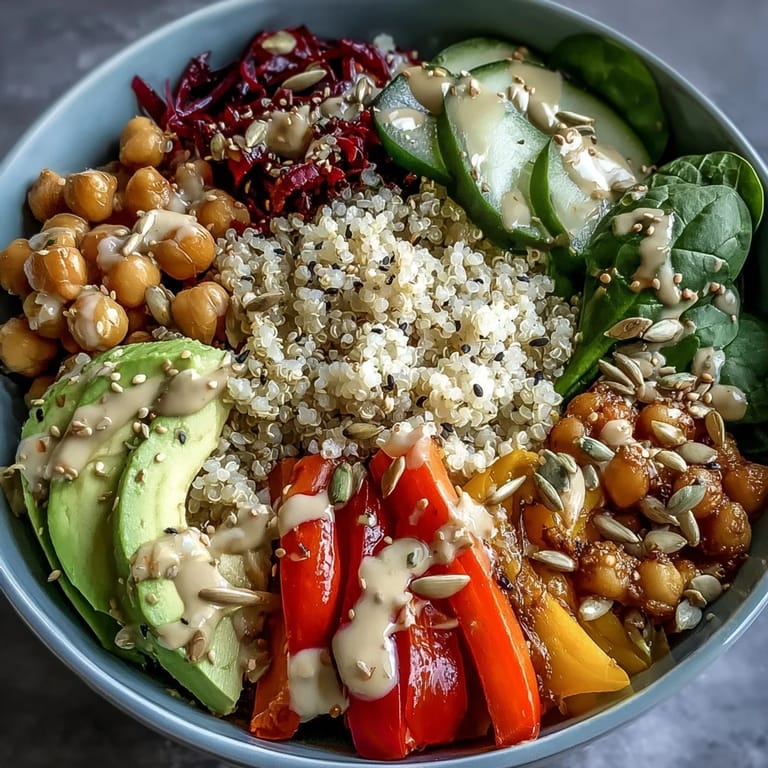
The genius of this bowl is that it's a framework, not a prescription. I've swapped out vegetables based on what's in season or on sale, used different grains when I wanted to experiment, and changed proteins depending on what I had frozen. My favorite variation happened by accident when I roasted everything except the greens, which made the bowl warm and comforting instead of cold and bright.
Meal Prep Magic
Store the components separately and you've got lunches for days without anything getting soggy or brown. The quinoa keeps for four days, the veggies stay crisp for up to three days in sealed containers, and the tahini dressing actually tastes better on day two when the flavors have time to meld. Assemble only what you're eating that day, leaving the avocado and dressing to add fresh each time.
- Cook your quinoa in a batch at the start of the week and portion it into containers.
- Prep vegetables on Sunday and keep them separately so nothing gets wilted or waterlogged.
- Make extra tahini dressing—it's perfect for drizzling over roasted vegetables or grain bowls throughout the week.
 Pin It
 This bowl taught me that eating well doesn't require complicated techniques or exotic ingredients—just thoughtfulness and color. Make it once and you'll understand why it became my answer to what's for lunch.
Recipe FAQs
- → How long does this bowl keep in the refrigerator?
Store assembled bowls without avocado and dressing for up to 2 days. Add fresh avocado and dressing just before serving for best texture and flavor.
- → Can I use other grains instead of quinoa?
Absolutely. Brown rice, farro, couscous, or bulgur work beautifully. Adjust cooking time according to grain package instructions.
- → What other proteins work well in this bowl?
Grilled tofu, tempeh, roasted chicken, or boiled eggs make excellent protein additions. Simply cook and slice before arranging on top.
- → How can I make this bowl more filling?
Add roasted sweet potato, steamed broccoli, or increase the chickpea portion. A dollop of hummus or extra avocado also adds satisfying substance.
- → Can I prepare the vegetables ahead of time?
Yes. Slice all vegetables except avocado up to 2 days in advance and store separately in airtight containers. Assemble bowls fresh when ready to eat.
- → Is the tahini dressing make-ahead friendly?
The dressing keeps well in the refrigerator for up to 5 days. Whisk again before serving and add a splash of water if it thickens.