 Pin It
 The first time I made pelmeni, I had no idea what I was doing—just a hastily copied recipe and stubborn determination. My hands were covered in flour within minutes, the dough kept tearing, and I nearly called it quits. But then something clicked: the rhythm of folding each little dumpling, the satisfying pinch that sealed them shut, and finally, that moment when they bobbed up from the boiling water like tiny treasures. That one batch converted me completely. Now pelmeni are what I make when I want to slow down and remember that the best meals require patience and a little bit of mess.
I brought pelmeni to a potluck once, skeptical they'd survive the trip. A friend who grew up eating her grandmother's version took one bite and went completely quiet. Then she asked for the recipe, and I knew I'd done something right. Now whenever I make them, I think about how food carries memory—how a dumpling wrapped the right way can suddenly transport someone back to their childhood.
Ingredients
- All-purpose flour (2 cups): This is your foundation—don't skimp on quality, and make sure it's fresh because the dough won't develop the right elasticity otherwise.
- Cold water (1/2 cup): Keep it actually cold, not room temperature, because it affects how the dough handles and how tender your pelmeni skins become.
- Egg (1 large): This binds everything together and gives the dough just enough richness to stay supple.
- Salt (1/2 tsp for dough): Seasoning the dough itself makes every bite taste intentional.
- Ground pork and beef (7 oz each): The combination of both meats gives you depth—pork adds sweetness, beef adds backbone.
- Onion (1 small, finely grated): Grating instead of mincing releases more liquid and flavor that gets absorbed into the meat.
- Garlic (2 cloves, minced): Fresh garlic matters here because it'll warm up beautifully as the filling cooks through.
- Black pepper and salt for filling: Don't be shy—this filling needs proper seasoning to taste alive.
- Cold water for filling (2 tbsp): This small amount keeps the filling sticky enough to stay moist inside the sealed dumpling.
- Sour cream (1 cup): This is the final touch that makes everything sing—use the best quality you can find.
- Fresh dill (1 tbsp, optional but encouraged): It adds a brightness that cuts through the richness perfectly.
Tired of Takeout? 🥡
Get 10 meals you can make faster than delivery arrives. Seriously.
One email. No spam. Unsubscribe anytime.
Instructions
- Mix your dough with intention:
- Combine flour and salt, then work in the egg and cold water gradually. Knead for 8–10 minutes—you'll feel the dough transform from shaggy to smooth and elastic under your hands. Wrap it and let it rest for 20 minutes while you prepare everything else, because rested dough forgives mistakes.
- Build a filling that sticks together:
- Mix your pork, beef, grated onion, garlic, salt, pepper, and cold water until it's almost sticky and completely uniform. This texture is crucial because it means the filling stays intact inside the sealed dumpling instead of separating.
- Roll thin and cut with precision:
- On a floured surface, roll your dough to about 2 mm thick—thin enough to be delicate but thick enough to hold the filling without tearing. Use a 2.5-inch round cutter and work steadily; the dough won't dry out as fast as you think.
- Fold and seal with care:
- Place a teaspoon of filling in the center of each circle, fold into a half-moon, and pinch the edges tightly. Then bring the two corners together and pinch again to create that classic pelmeni shape—it's easier than it sounds once you get the hang of it.
- Boil in batches until they float:
- Drop them gently into a large pot of boiling salted water, stirring so they don't stick to the bottom. They'll sink at first, then bob up to the surface—that's when you know they're done, usually 5–7 minutes total.
- Finish with abundance:
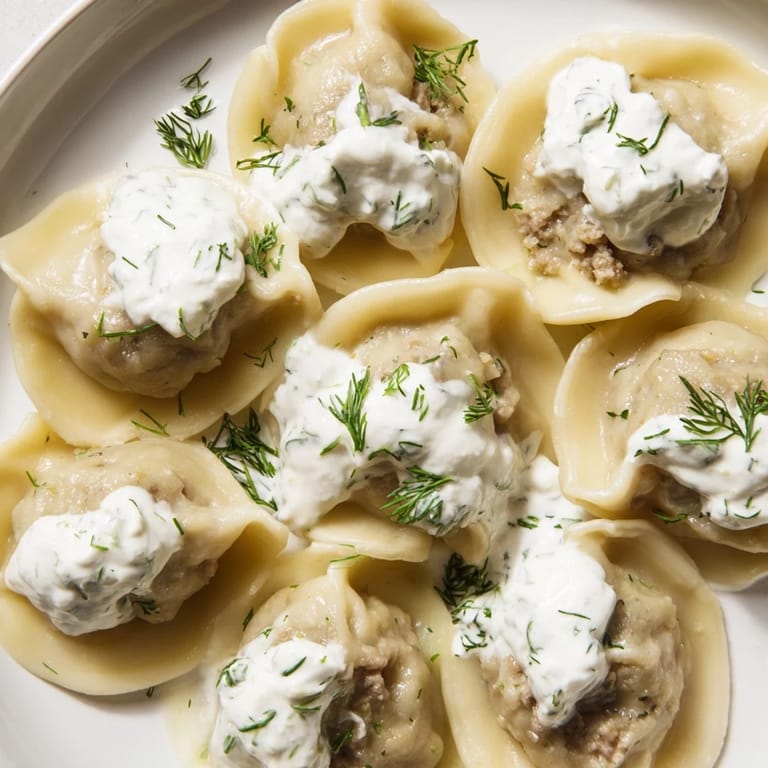
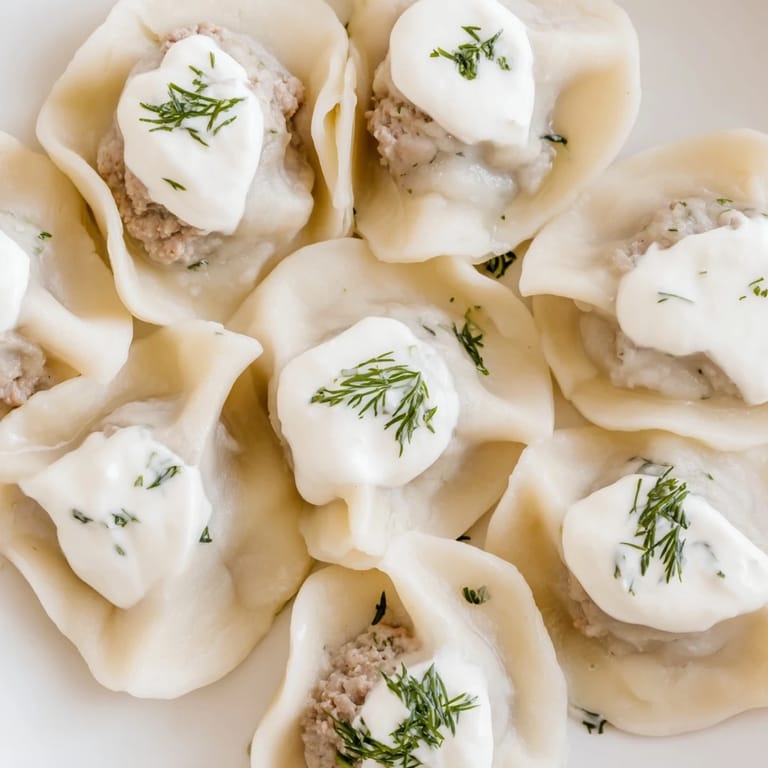
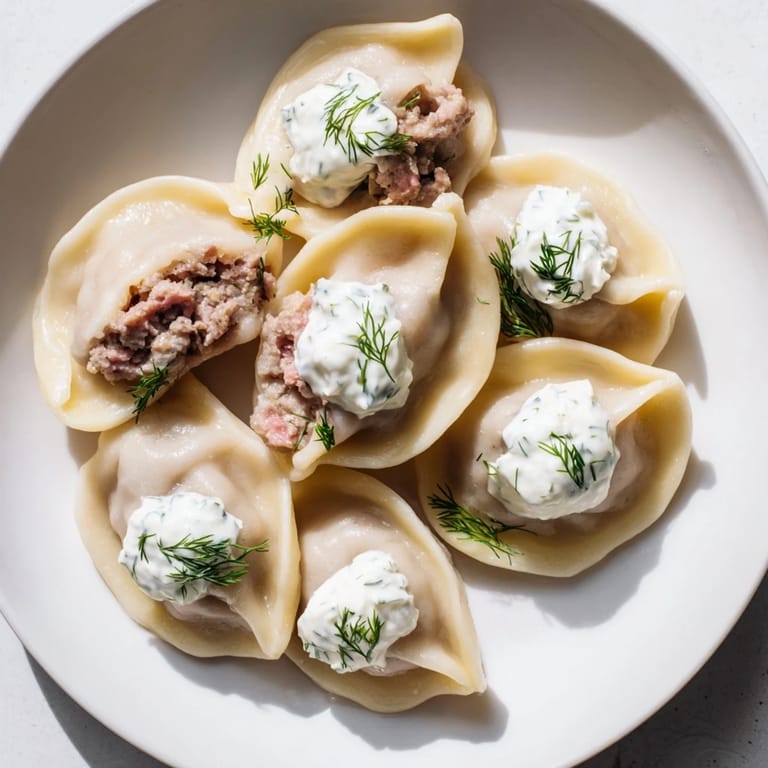
- Remove them with a slotted spoon and serve immediately while they're still steaming, piled high and smothered in cold sour cream and fresh dill.
 Pin It
 The magic happens in that moment after boiling, when you drain them and the steam rises up. There's something almost ceremonial about plating them and watching someone take that first bite—the way they pause, tasting the tender dumpling and the warm, savory filling all at once. That's when you know you've made something that matters.
Getting the Shape Right
The shape matters more than it seems because it affects how the filling cooks and how the dumpling sits in your mouth. I used to fold them carelessly until a friend showed me the proper technique—half-moon, then corners pinched together to form a little ring. The first time I did it correctly, I understood why this shape has been used for centuries: it protects the filling, cooks evenly, and catches the sour cream perfectly. Practice makes this step feel natural, not fiddly.
Make-Ahead Magic
One of the best things about pelmeni is that they're happiest when frozen. Make a huge batch on a Sunday afternoon, freeze them on a tray until solid, then transfer them to a bag where they'll keep for up to three months. When you're too tired to cook but need something nourishing, you can boil them straight from frozen—just add a few extra minutes to the cooking time. This is the kind of cooking that gives you permission to do the work once and enjoy the reward many times over.
Serving and Variations
The classic way is sour cream and dill, and that's beautiful—but I've also served them with a small dish of vinegar on the side for someone to drizzle on top, or melted butter for richness. Some people like them with a crack of black pepper, others want nothing but the cold cream against the hot dumpling. The filling itself can shift slightly too: try adding a small pinch of nutmeg if you're feeling adventurous, or swap half the beef for lamb if you want something different. The base stays the same, but these small changes keep things interesting when you're making your third batch.
- Vinegar and melted butter are traditional additions that brighten or enrich the experience.
- A pinch of nutmeg in the filling adds subtle warmth without changing the essential character of the dish.
- These pelmeni work beautifully in a light broth if you want something more soup-like on a cold evening.
 Pin It
 Pelmeni taught me that the best comfort food isn't complicated, just made with attention. These little dumplings are proof that something simple, done well and with care, becomes something worth returning to again and again.
Recipe FAQs
- → What is the dough for pelmeni made of?
The dough combines all-purpose flour, cold water, egg, and salt, kneaded until smooth and elastic for a tender wrapper.
- → How is the filling prepared for pelmeni?
The filling uses ground pork, ground beef, grated onion, garlic, salt, pepper, and a bit of cold water mixed until sticky and well combined.
- → How should pelmeni be cooked?
Pelmeni are gently boiled in salted water until they float and the filling is fully cooked, typically about 5 to 7 minutes.
- → What sauces complement pelmeni best?
A rich sour cream sauce enhanced with fresh dill is traditional; melted butter or vinegar can also be served alongside for additional flavor.
- → Can pelmeni be stored or frozen before cooking?
Yes, pelmeni can be frozen before cooking by spreading them on a tray to freeze individually, then transferring to a bag for up to three months.