 Pin It
 My sister called me at the farmers market asking what to bring to dinner, and I was holding a perfect head of cabbage when I told her to forget the salad and come help me roast it instead. She was skeptical until she tasted the tahini sauce—that moment when her eyes went wide and she asked for the recipe on the spot is when I knew this dish had something special. It's one of those dishes that proves vegetables don't need to be complicated to be absolutely craveable.
I made this for a potluck last spring where everyone was bringing elaborate casseroles, and someone actually set down their plate to ask if I'd bought it from somewhere. Watching people go back for seconds of a side dish made entirely from cabbage and sesame paste felt like winning a quiet victory in the kitchen.
Ingredients
- Green cabbage: One medium head gives you enough for four generous servings, and keeping the core intact is the secret to wedges that stay together instead of falling apart during roasting.
- Olive oil: Good quality matters here since it gets caramelized with the cabbage and becomes part of the flavor story.
- Kosher salt and black pepper: Season generously before roasting so the cabbage seasons itself as it cooks, not just on the surface.
- Tahini: Look for pure sesame seed paste without added oils or sweeteners, and give the jar a stir before measuring since the oil separates.
- Garlic: Finely grating it instead of mincing means it dissolves into the sauce and you avoid little sharp garlic chunks.
- Fresh lemon juice: Bottled won't give you the same brightness and acidity that balances the richness of the tahini.
- Cold water: Keep it nearby while whisking so you can adjust the sauce consistency exactly how you like it, whether you prefer it thick or pourable.
- Ground cumin: Just a quarter teaspoon adds an earthy depth that ties the whole dish together.
- Sesame seeds, herbs, and paprika: These garnishes aren't just pretty—they add texture and fresh notes that cut through the richness.
Tired of Takeout? 🥡
Get 10 meals you can make faster than delivery arrives. Seriously.
One email. No spam. Unsubscribe anytime.
Instructions
- Get your oven ready and prep the cabbage:
- Preheat to 425°F and line your baking sheet with parchment paper so nothing sticks. Cut your cabbage into eight wedges, keeping the core in each piece so everything holds together during roasting.
- Season and roast:
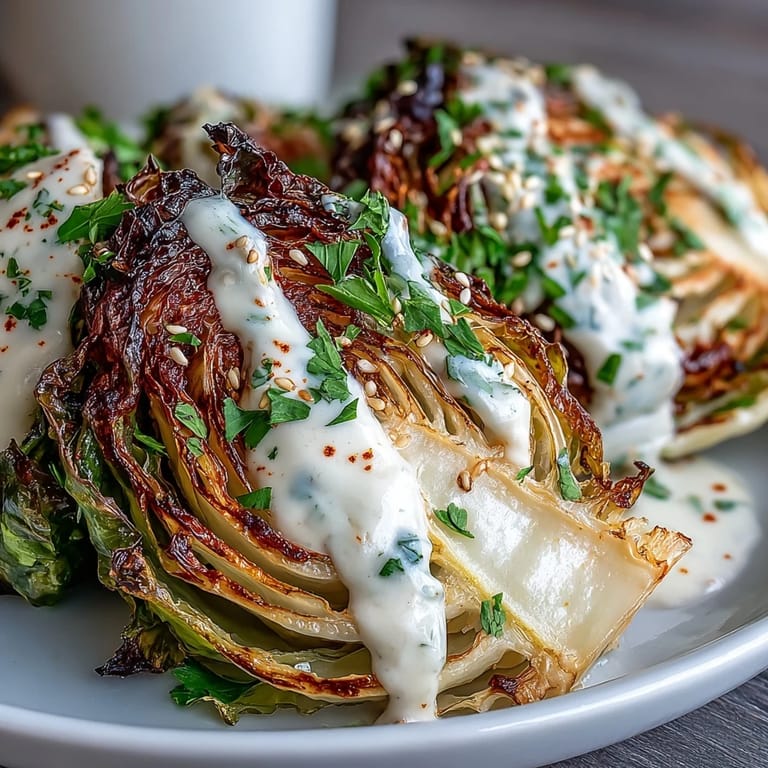
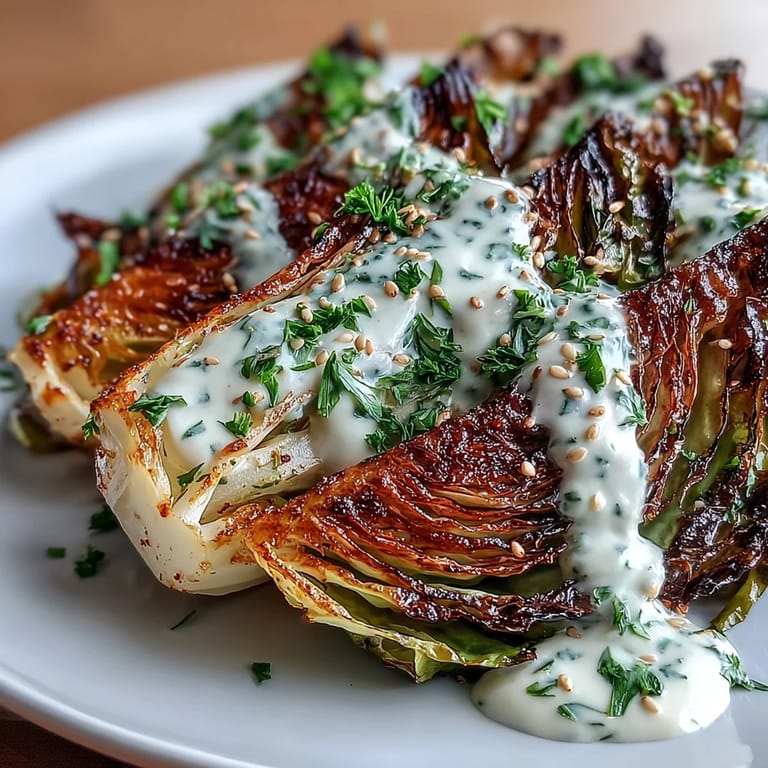
- Arrange the wedges in a single layer, drizzle generously with olive oil, then scatter salt and pepper over everything. Roast for 25 to 30 minutes, flipping the wedges halfway through, until the edges turn dark golden brown and the leaves are tender enough to pierce with a fork but still have some structure.
- Make the sauce while the cabbage roasts:
- In a bowl, whisk tahini with finely grated garlic, fresh lemon juice, cumin, and salt until combined. Slowly add cold water one tablespoon at a time, whisking constantly, until the sauce goes from thick paste to something creamy and pourable that coats a spoon.
- Bring it all together:
- Transfer the roasted cabbage to a platter and drizzle the tahini sauce over each wedge. Scatter toasted sesame seeds, fresh herbs, and a pinch of paprika on top, then serve while everything is still warm or let it cool to room temperature, both work beautifully.
 Pin It
 My neighbor brought his daughter over one evening and she ate two full wedges, which was shocking since she usually refuses anything that looks like cabbage. He came back the next day asking if I could show him how to make it, and now it's become their Sunday dinner ritual together.
Why Roasted Cabbage Changes Everything
Raw cabbage gets dismissed as boring, but heat transforms it completely—the edges get crispy and caramelized while the inside turns so tender it almost melts. Roasting concentrates the natural sweetness and takes away that sharp, raw bite that people think they don't like about cabbage. This is the dish that converts skeptics.
The Magic of Tahini Sauce
Tahini tastes like nothing special on its own, but once you combine it with lemon, garlic, and cumin, it becomes something almost creamy and luxurious despite being completely plant-based. The acid from the lemon cuts through the richness so it doesn't feel heavy, and the cumin adds a subtle warmth that makes you wonder what it is but can't quite place it. This sauce works on almost anything—grain bowls, roasted vegetables, even spread on toast.
Making This Dish Your Own
The beauty of this recipe is how forgiving it is once you understand the fundamentals. Red cabbage will take a few minutes longer to roast but gives you a deeper color and earthier taste if you want to switch things up. You can serve it alongside rice or quinoa for a complete meal, pile it onto warm pita bread, or even top it with chickpeas to make it heartier.
- If your tahini sauce breaks or looks grainy, whisk in another tablespoon of cold water and it will come back together smoothly.
- Taste the sauce before serving and add more lemon juice if it needs brightness or another pinch of salt if it tastes flat.
- Make the sauce up to two days ahead and store it in a container in the refrigerator, then give it a quick whisk before serving.
 Pin It
 This dish quietly became one of my favorite things to make because it requires almost no skill but delivers restaurant-quality results every single time. Share it with someone skeptical about vegetables and watch their mind change with the first bite.
Recipe FAQs
- → How do I know when the cabbage is done roasting?
The cabbage wedges are ready when the edges are golden brown and lightly crisped, and the thickest part feels tender when pierced with a fork. This typically takes 25–30 minutes at 425°F. Flipping halfway through ensures even cooking and caramelization on both sides.
- → Can I make the tahini sauce ahead of time?
Yes, the tahini sauce can be prepared up to 3 days in advance and stored in an airtight container in the refrigerator. It may thicken when chilled—simply whisk in a little additional cold water to reach the desired consistency before serving. The flavors actually meld and improve after sitting.
- → What can I serve with roasted cabbage wedges?
These wedges pair beautifully with grilled meats, roasted chicken, or falafel. For a vegetarian meal, serve alongside rice, quinoa, or warm pita bread. They also complement other Middle Eastern dishes like hummus, baba ganoush, or roasted vegetables. The dish works as both a side dish or satisfying light main.
- → Can I use red cabbage instead of green?
Red cabbage works well and adds vibrant color. Note that red cabbage may take slightly longer to cook and has a slightly different flavor profile—somewhat more earthy and less sweet than green. The tahini sauce pairs beautifully with both varieties.
- → How do I prevent the tahini sauce from separating?
Whisk the cold water in gradually, one tablespoon at a time, to create an emulsion. If the sauce does separate or looks grainy, continue whisking vigorously—it will come together into a smooth, creamy consistency. Adding lemon first helps create a stable base before incorporating the water.
- → Can I add protein to make this a more substantial meal?
Yes, chickpeas, lentils, or diced tofu can be roasted on the same baking sheet alongside the cabbage. You could also top with grilled halloumi, crumbled feta, or roasted nuts for added protein. For non-vegetarian options, shredded chicken or lamb pair wonderfully with the tahini flavors.