 Pin It
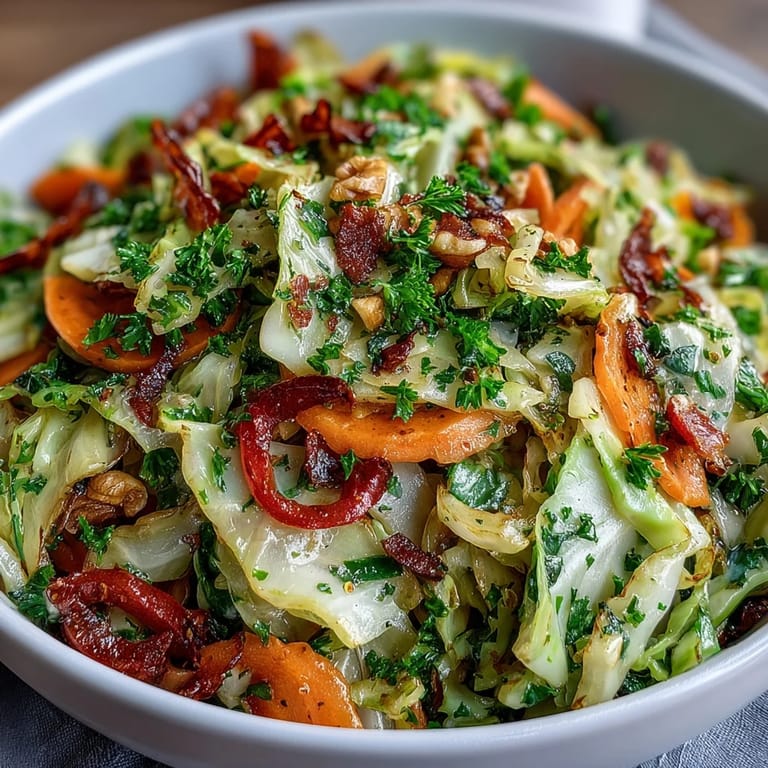
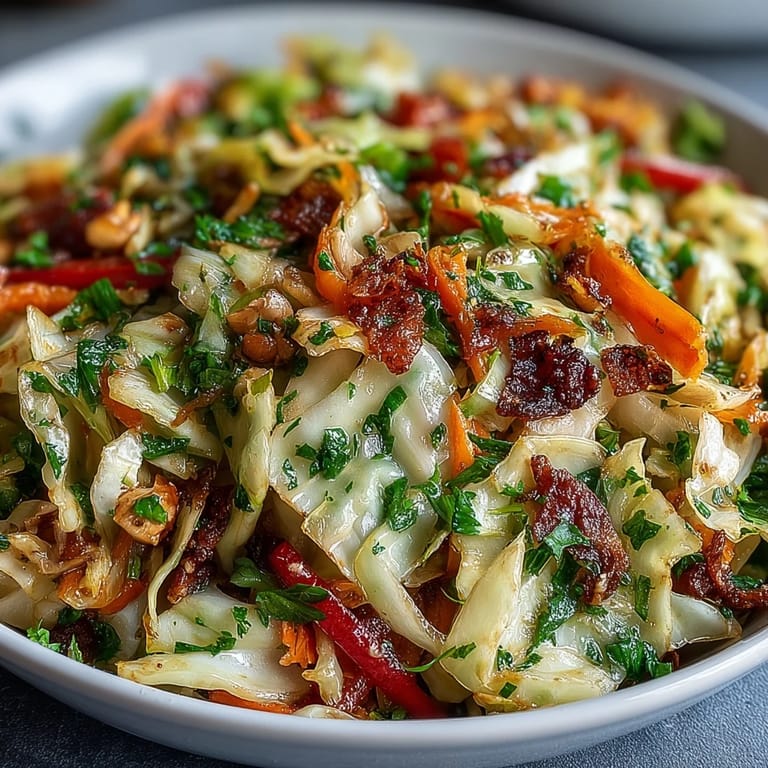
 There's something almost defiant about celebrating cabbage in a year when everyone expects it to play second fiddle. But last spring, while chopping through a massive head of green cabbage at my kitchen counter, I realized how much this humble vegetable transforms when you actually give it attention—a quick sauté in a hot skillet, the way it softens but keeps its snap, paired with vegetables that refuse to be boring. That's when this warm cabbage salad clicked into place, and it's been my quiet favorite ever since.
My neighbor stopped by one evening while I was tossing this together, and the smell of sautéed cabbage with mustard and vinegar must have been irresistible because she ended up staying for dinner. She brought a bottle of wine, and we ate this warm, right out of the skillet, laughing about how something so simple could taste so complete. That night changed how I think about salads—they don't have to be cold or complicated.
Ingredients
- 1 medium green cabbage (about 900 g), cored and thinly sliced: This is your foundation, and the thinness matters because thin cabbage surrenders to heat gracefully while staying crisp where it counts.
- 1 large carrot, peeled and julienned: The julienne cut catches the dressing and brings sweetness that balances the vinegar without feeling saccharine.
- 1 small red onion, thinly sliced: Raw red onion keeps its sharpness and color, grounding the warm cabbage with a little bite.
- 1 red bell pepper, thinly sliced: Sweet and tender, it fills spaces between the cabbage and adds visual brightness that shouldn't be underestimated.
- 2 tbsp fresh parsley, chopped: Not decorative—it adds a fresh, slightly peppery note that ties everything together.
- 3 tbsp extra-virgin olive oil: Use something you'd actually taste on bread; the quality shows in the final dish.
- 2 tbsp apple cider vinegar: The tanginess that makes this salad memorable, but don't skip the emulsification step or it'll taste harsh.
- 1 tbsp Dijon mustard: This acts as an emulsifier and adds depth that regular vinegar alone can't achieve.
- 1 tsp honey or maple syrup: Just enough sweetness to round out the acidity without making it dessert.
- 1/2 tsp sea salt and 1/4 tsp freshly ground black pepper: Season as you go, tasting as you build the dressing.
- 1/4 cup toasted walnuts or sunflower seeds (optional): Add these if you want crunch and earthiness; toast them yourself if you have time.
- 30 g feta cheese, crumbled (optional): The tangy creaminess plays beautifully with warm cabbage, but the salad stands perfectly on its own without it.
Tired of Takeout? 🥡
Get 10 meals you can make faster than delivery arrives. Seriously.
One email. No spam. Unsubscribe anytime.
Instructions
- Heat your skillet and sauté the cabbage:
- Pour 1 tablespoon of olive oil into a large skillet over medium-high heat and let it shimmer—you'll see it move like liquid mercury when it's ready. Add your thinly sliced cabbage in handfuls, stirring frequently for 4 to 5 minutes until the edges turn translucent and slightly caramelized but the inside stays firm.
- Transfer to a bowl and add the fresh vegetables:
- Move the warm cabbage to a large mixing bowl while it's still steaming, then add the julienned carrot, sliced red onion, bell pepper, and fresh parsley while the cabbage is warm enough to soften them slightly.
- Make the dressing:
- In a small bowl, whisk together the remaining 2 tablespoons of olive oil, apple cider vinegar, Dijon mustard, honey, salt, and pepper until the mixture emulsifies and turns slightly creamy. This takes about 20 to 30 seconds of continuous whisking.
- Dress and rest the salad:
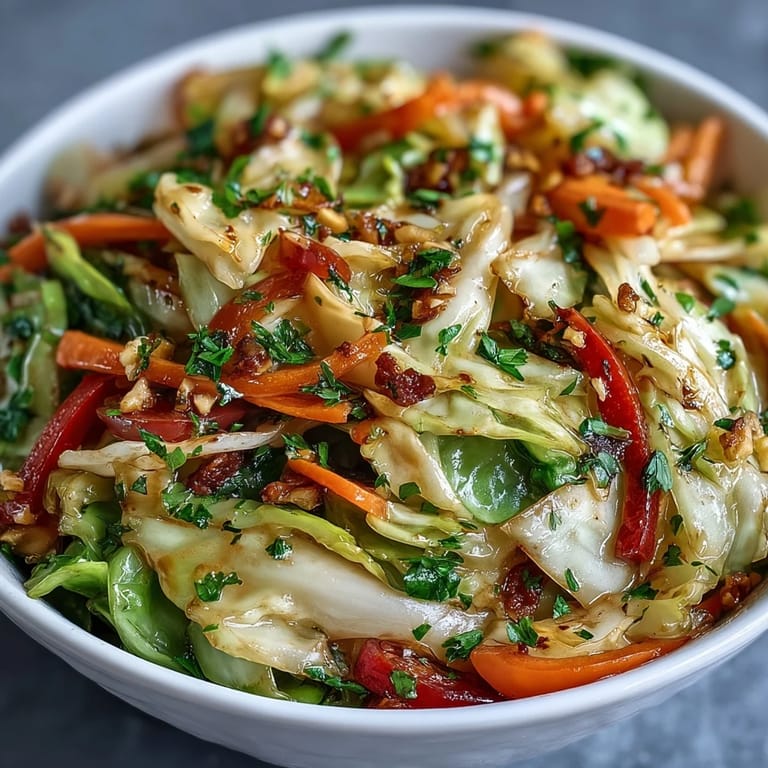
- Pour the dressing over the vegetables and toss thoroughly, making sure every strand of cabbage gets coated. Let it rest for 5 minutes so the flavors meld and the vegetables absorb the dressing without losing their texture.
- Top and serve:
- Scatter toasted walnuts or sunflower seeds and crumbled feta across the top if using, then serve warm or let it come to room temperature on its own.
 Pin It
 I served this to my mother-in-law, who claimed she didn't like cabbage, and she came back for seconds without comment. Later, she texted asking for the recipe, and I knew then that this simple warm salad had quietly rewritten her feelings about an entire vegetable.
The Magic of Warm Salads
Warm salads occupy a strange middle ground in home cooking—they're not soup, not cooked vegetables, but something between. What I've learned is that this in-between space is where vegetables taste most like themselves. When cabbage is warm, its natural sugars become more pronounced, its texture softens in a way that feels generous, and it accepts flavors that cold cabbage might resist. It's not about making things heavy or overcooked; it's about respecting the ingredient enough to transform it gently.
Building Flavor Layers
This salad teaches you something important about dressing: mustard isn't just a flavor, it's an anchor. When you whisk mustard with oil and vinegar, it doesn't just add taste—it creates an emulsion that clings to vegetables instead of running off the plate. The honey balances the vinegar's sharpness without sweetening anything noticeably, and the fresh parsley at the end reminds your mouth that this is still, fundamentally, a salad. It's the difference between ingredients coexisting and ingredients working together.
When to Serve It Warm, When to Let It Cool
I've made this salad for quiet weeknight dinners and for Sunday gatherings with extended family, and it behaves beautifully at any temperature. When it's warm, straight from the skillet, every element feels alive and the flavors punch brighter. As it cools over the next hour or two, the vegetables soften further and the dressing deepens, creating a completely different but equally satisfying experience.
- Serve it warm immediately after tossing if you want maximum crunch and brightness.
- Let it rest at room temperature for an hour if you prefer softer vegetables and better-integrated flavors.
- Refrigerate leftovers and bring them back to room temperature before eating—cold straight from the fridge tastes flat, but 20 minutes on the counter brings the flavors right back.
 Pin It
 This cabbage salad has become the dish I make when I want something that feels special without announcing itself. It's given me quiet dinners with friends and conversations that mattered, all centered around something as simple and honest as a warm plate of vegetables and good dressing.
Recipe FAQs
- → Can I serve this cold?
Yes, this dish works well chilled or at room temperature. The flavors actually develop more depth after sitting for a few hours.
- → What vegetables can I substitute?
Try shredded Brussels sprouts, kale, or add thinly sliced radishes and shredded apple for extra crunch and sweetness.
- → How do I make it vegan?
Replace honey with maple syrup and omit the feta cheese. The dressing and vegetables remain completely plant-based and delicious.
- → How long does it keep?
Store refrigerated for up to 2 days. Bring to room temperature before serving for the best texture and flavor experience.
- → What proteins pair well?
Grilled chicken, roasted salmon, or pan-seared tofu complement the tangy flavors beautifully. It also stands alone as a satisfying vegetarian main.