 Pin It
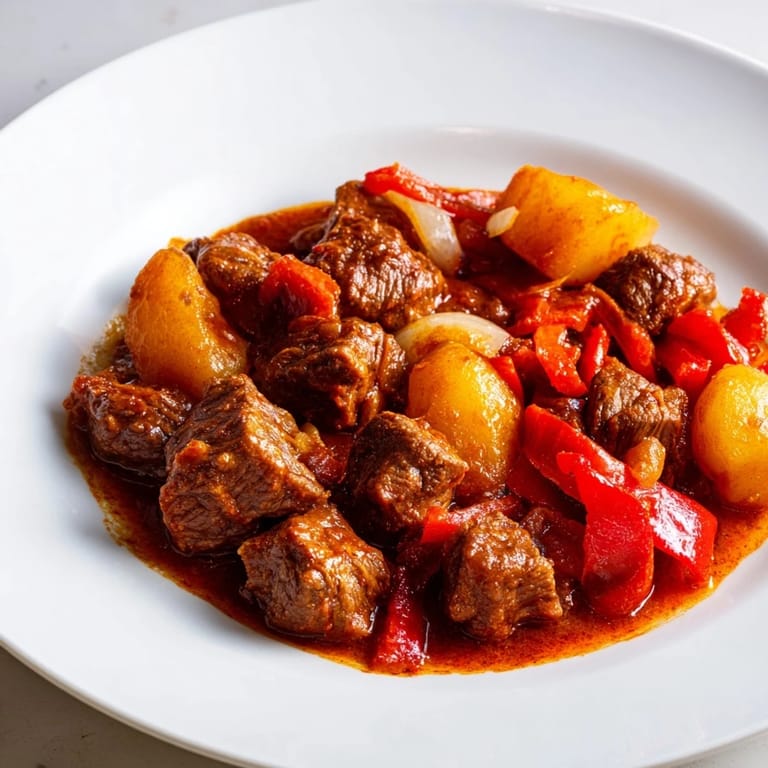
 My first real encounter with Hungarian goulash wasn't in Hungary at all—it was in a cramped kitchen in Vienna, where a friend's grandmother spent three hours tending to a pot of beef that smelled like paprika and autumn. I watched her work without a recipe, adding spices by instinct and taste, and understood then that goulash is less about precision and more about patience. Years later, when I recreated it in my own kitchen on a cold evening, that same richness came through, and I realized why this stew has endured for centuries.
I made this for my sister on a rainy Sunday when she needed comfort more than conversation, and she sat at my kitchen table for hours, coming back for seconds without saying much. That's when I knew this wasn't just a recipe—it was the kind of food that speaks when words don't quite fit.
Ingredients
- Beef chuck (2 lbs): The fattier, more forgiving cuts are your friend here; they break down into tender strands rather than staying tough.
- Onions (2 large): They're the foundation—sweet when cooked low and slow, never rushed.
- Hungarian sweet paprika (3 tbsp): This is the soul of the dish, so don't skip quality; cheap paprika tastes like burnt cardboard.
- Carrots (2 medium): They add gentle sweetness and help thicken the stew as they break down.
- Red bell pepper (1 large): Add it mid-cooking to preserve some texture and brightness.
- Garlic (2 cloves): Minced fine and cooked quickly so it doesn't turn bitter and shadow the paprika.
- Potatoes (2 medium, optional): They absorb the flavors and make the stew more substantial; leave them out if you prefer it brothier.
- Caraway seeds (1 tsp): A whisper of earthiness that makes people say "what is that?" without quite knowing.
- Marjoram (1 tsp dried): Warm and subtle, it ties everything together without competing.
- Black pepper and salt: Grind the pepper fresh; it matters more than you'd think.
- Bay leaf (1): Remove it before serving—I learned that lesson after biting into one once.
- Beef broth (4 cups): Homemade is better, but quality store-bought works when you're honest about time.
- Tomato paste (2 tbsp): A small amount adds depth without making it taste tomato-forward.
- Oil or lard (2 tbsp): Lard gives it a traditional richness, but vegetable oil is fine if that's what you have.
Tired of Takeout? 🥡
Get 10 meals you can make faster than delivery arrives. Seriously.
One email. No spam. Unsubscribe anytime.
Instructions
- Build your base:
- Heat oil in a heavy pot and cook onions slowly until they turn golden and soft—this takes patience, about 8 minutes. You're not trying to brown them hard; you want them to release their sweetness into the fat.
- Wake up the garlic:
- Add minced garlic and let it sizzle for just one minute until it smells sharp and alive, then move forward quickly so it doesn't burn.
- Sear the beef:
- Add beef cubes and brown them on all sides, about 5 minutes total—you're not cooking them through, just sealing in flavor. Work in batches if your pot is crowded; rushing this step disappoints you later.
- Bloom the paprika:
- Sprinkle paprika over the meat and onions, then stir immediately and constantly for about 30 seconds. This coaxes out the paprika's flavor and prevents it from scorching into bitterness.
- Add the rest:
- Stir in tomato paste, caraway seeds, marjoram, pepper, and salt, mixing until everything is coated and fragrant. The spices should feel alive in the pot.
- Build the stew:
- Add carrots, bell pepper, and bay leaf, stirring well so nothing sticks to the bottom. Pour in beef broth while scraping the pot—those browned bits are flavor you don't want to waste.
- First simmer:
- Bring everything to a gentle simmer, cover, and let it cook on low heat for 1 hour, stirring occasionally. The beef should be getting tender but not yet falling apart.
- Final push:
- Add potatoes if using them, then continue simmering uncovered for another 45 to 60 minutes. You're looking for beef that yields easily to a fork and a stew thick enough that a spoon leaves a trail through it.
- Taste and finish:
- Remove the bay leaf, adjust salt and pepper to your preference, and serve while it's still steaming.
 Pin It
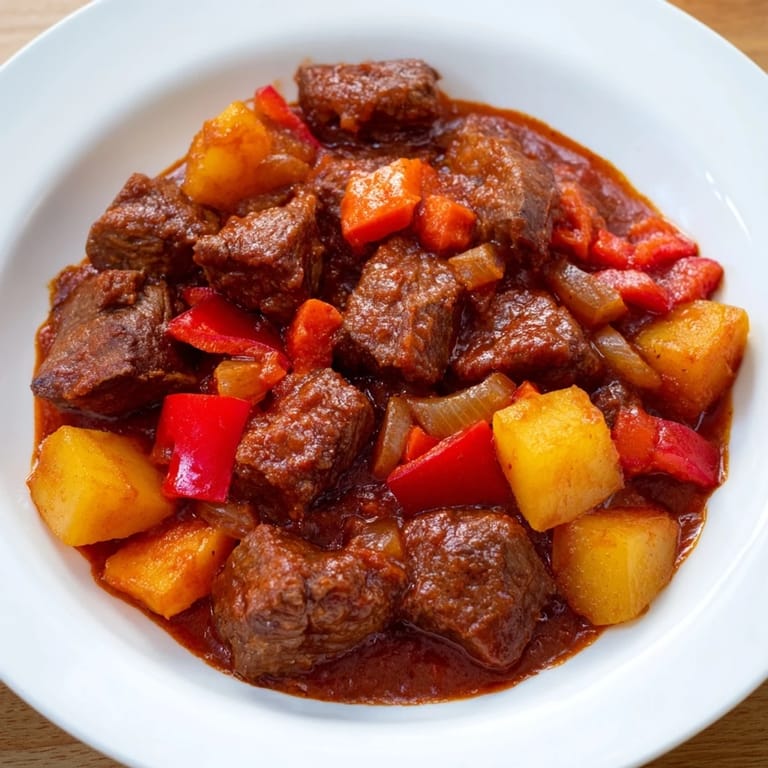
 The first time I reheated leftover goulash, my kitchen filled with a smell so good that my neighbor asked if I was running a restaurant. I wasn't, but I felt like I was.
Paprika Matters More Than You Think
Most cooks underestimate paprika; they treat it like any other spice when it's really the heart of this dish. Hungarian paprika is milder and more complex than Spanish paprika, with a sweetness that builds as the stew simmers. When you buy it, look for a deep red color and buy it from somewhere with good turnover—old paprika loses its magic. If you find yourself looking at the tin thinking it smells like cardboard, that's your sign to find better.
Timing and Temperature Are Your Tools
This stew won't rush, and fighting that is where most home cooks falter. Low, gentle heat for two hours lets the beef fibers relax and the flavors meld into something greater than their parts. A rolling boil tightens the meat and makes it stringy; you're looking for a quiet simmer where bubbles rise occasionally. Keep a lid on for the first hour to trap steam, then uncover to let some liquid evaporate and the flavors concentrate.
Serving and Storage Secrets
Serve this with thick slices of rustic bread, egg noodles, or traditional csipetke dumplings—something to soak up the rich broth. The stew keeps in the refrigerator for three days and freezes beautifully for up to two months; reheat it gently on the stovetop rather than blasting it in the microwave, which hardens the meat.
- Reheat on low heat, stirring occasionally, until it's steaming through.
- Add a splash of fresh beef broth if it's thickened too much after refrigerating.
- Taste for seasoning before serving; flavors sometimes need a gentle boost after sitting.
 Pin It
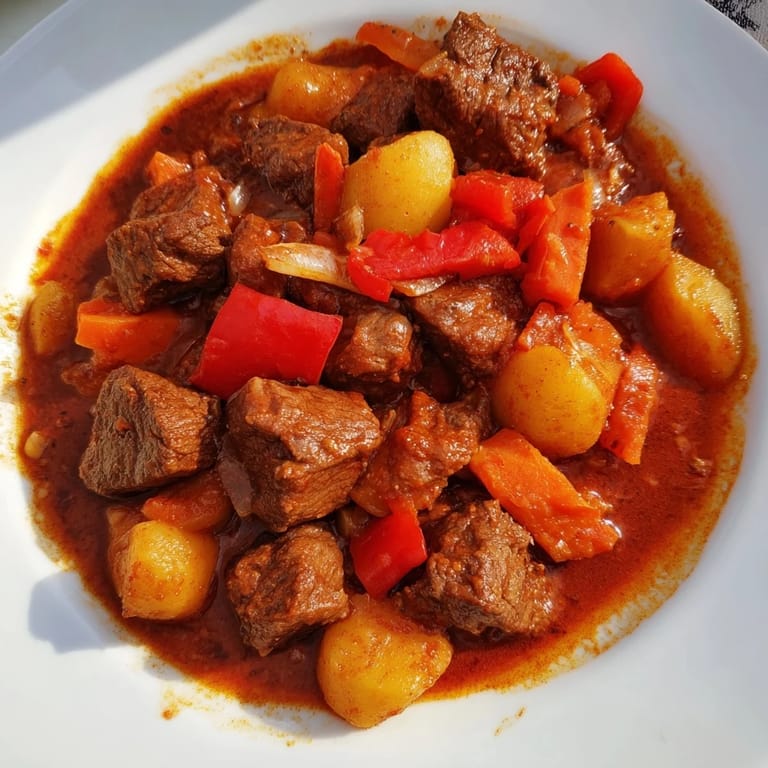
 This stew is proof that the best food doesn't need to be complicated—just honest ingredients, patience, and warmth. Make it once and you'll understand why it's lasted through centuries.