 Pin It
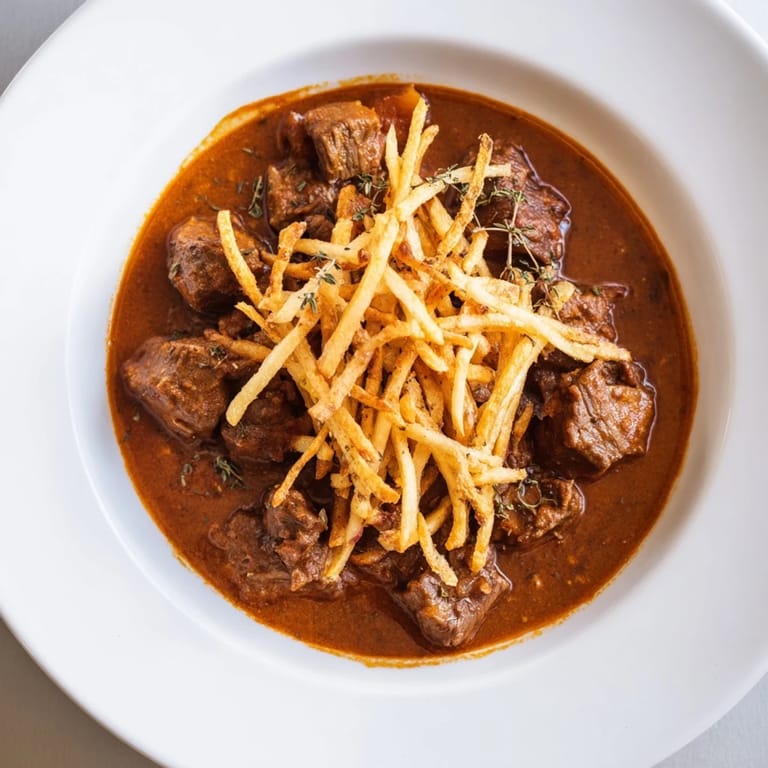
 I discovered Czech goulash on a cold Prague evening, sitting in a small restaurant where the kitchen's warmth seemed to radiate through the dining room. The first spoonful was revelatory—tender beef swimming in a deep paprika sauce that tasted like it had been simmering for generations, crowned with golden fried potato strips that crackled between my teeth. I spent the next hour trying to decode those flavors, knowing I had to recreate it at home. What started as curiosity became an obsession, then eventually, a dish I'd make for anyone willing to sit at my table.
Years later, I made this for my partner on a night when neither of us could agree on what to eat. By the time those potato strips hit the hot oil and the kitchen filled with that unmistakable scent, we'd stopped debating entirely. We just sat at the counter, waiting, and when I set down two steaming bowls with that golden crown of potatoes, something shifted—it became less about dinner and more about the fact that we were both home.
Ingredients
- Beef chuck, 2.5 cm cubes: This cut has just enough marbling to stay tender through the long simmer without falling apart into mush.
- Sweet Hungarian paprika: Don't skip the word "Hungarian"—it's earthier and more complex than generic paprika, and it's the entire soul of this dish.
- Caraway seeds: They seem mysterious until that first spoonful, then you understand why Czech cooks have been using them for centuries.
- Marjoram: Fresh is better if you have it, but dried works beautifully here—it adds a herbal warmth without overpowering anything.
- Beef broth: Homemade is ideal, but a quality store-bought version won't let you down.
- Potatoes for frying: Starchy varieties work best—they'll give you that perfect golden exterior and tender inside.
- Vegetable oil for frying: You need about 500 ml, and yes, the quantity matters for achieving that proper crisp.
Tired of Takeout? 🥡
Get 10 meals you can make faster than delivery arrives. Seriously.
One email. No spam. Unsubscribe anytime.
Instructions
- Build your aromatics:
- Heat oil in a heavy pot and let those onions turn golden and soft, about 8 minutes—this isn't a rush. When they're ready, you'll smell it.
- Toast the spices:
- Stir in garlic, caraway, and paprika, stirring constantly for just 1 minute so the paprika blooms without burning. It's the difference between sweet and bitter, so don't walk away.
- Brown the beef:
- Add your meat cubes and let them sear on all sides for about 5 minutes—you're building color and flavor here, not cooking them through. This step matters more than you'd think.
- Layer in depth:
- Stir in tomato paste, marjoram, salt, pepper, and bay leaf, coating everything evenly. The flour comes next, sprinkled and stirred until no streaks remain.
- Build the sauce:
- Pour in your broth, bring it to a boil, then drop the heat low, cover, and let it simmer for 1.5 to 2 hours. Stir occasionally and taste as you go—the beef will tell you when it's ready by becoming impossibly tender.
- Prepare the potatoes:
- While the goulash dreams on the stove, cut your peeled potatoes into thin matchsticks using a mandoline or sharp knife. Rinse them well in cold water and pat completely dry—water is the enemy of crispiness.
- Achieve the perfect fry:
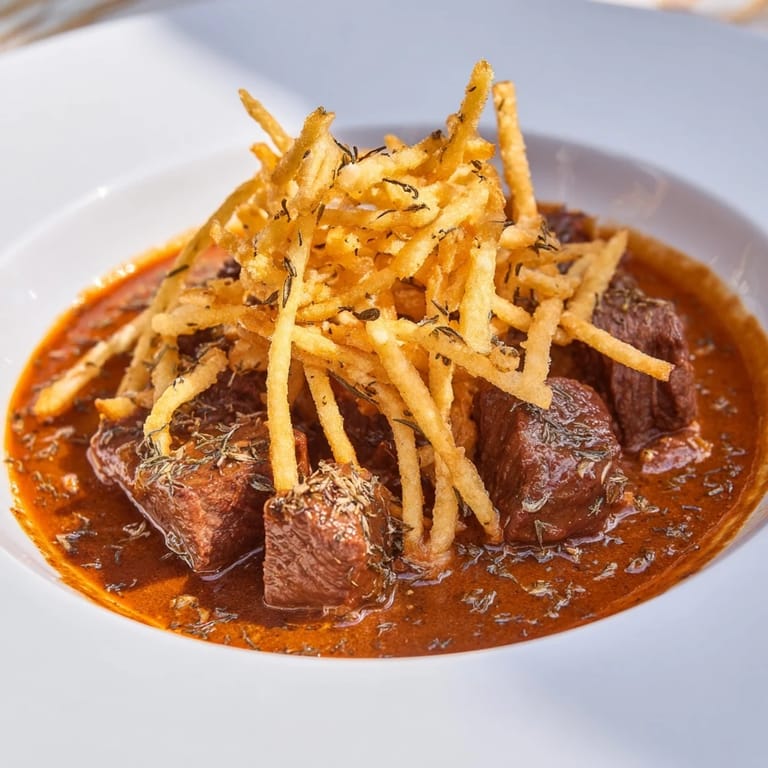
- Heat your oil to 180°C (350°F) and fry the potatoes in batches, about 3 to 4 minutes per batch, until they're golden and crispy. Drain them on paper towels and salt immediately while they're hot.
- Finish and serve:
- Remove the bay leaf from your goulash, taste the sauce, adjust seasoning if needed, then serve each bowl crowned with those hot, crispy potato strips.
 Pin It
 I learned the hard way that this dish refuses to be rushed. The first time I tried to speed it up, the meat fought me the entire way, staying tough no matter how long I simmered it. The second time, I gave it patience, and everything changed—the sauce thickened naturally, the beef surrendered without question, and those potato strips shattered like spun gold on my tongue. Sometimes the best meals are the ones that demand you slow down.
Why This Dish Resonates
Czech goulash is humble in its ingredients but profound in its results. There's something about a dish that's been made the same way for generations that makes you feel connected to something bigger than yourself—to the cooks who came before, to the kitchens where warmth and food meant survival and love simultaneously. This isn't restaurant food trying to impress; it's family food, the kind you make because you love someone and you want them fed properly.
The Magic of Paprika
Paprika isn't just a spice in this dish—it's the entire character. Hungarian paprika, specifically, has this deep, almost smoky sweetness that regular paprika simply doesn't possess. I've made this with the wrong paprika before, thinking it wouldn't matter, and the whole dish fell flat, tasting generic and one-dimensional. When I switched back to Hungarian paprika, everything woke up again. It's one of those ingredients that teaches you that sometimes a single swap changes everything.
Timing and Temperature
The secret to this dish living up to its reputation comes down to respecting both time and heat. Low heat for the long simmer allows the beef to become tender rather than stringy, and it gives the sauce time to develop that rich, cohesive flavor that makes you wonder what magic is happening in that pot. For the potatoes, oil temperature is equally critical—too cool and they'll absorb oil and become greasy; too hot and they'll brown on the outside while staying raw inside. It's why a thermometer is your best friend here.
- Check your oil temperature with a thermometer rather than guessing—180°C (350°F) is the sweet spot.
- Fry potatoes in smaller batches so the oil temperature doesn't drop when they hit the pan.
- Taste the goulash in the final 15 minutes of cooking and adjust seasonings then, not at the beginning.
 Pin It
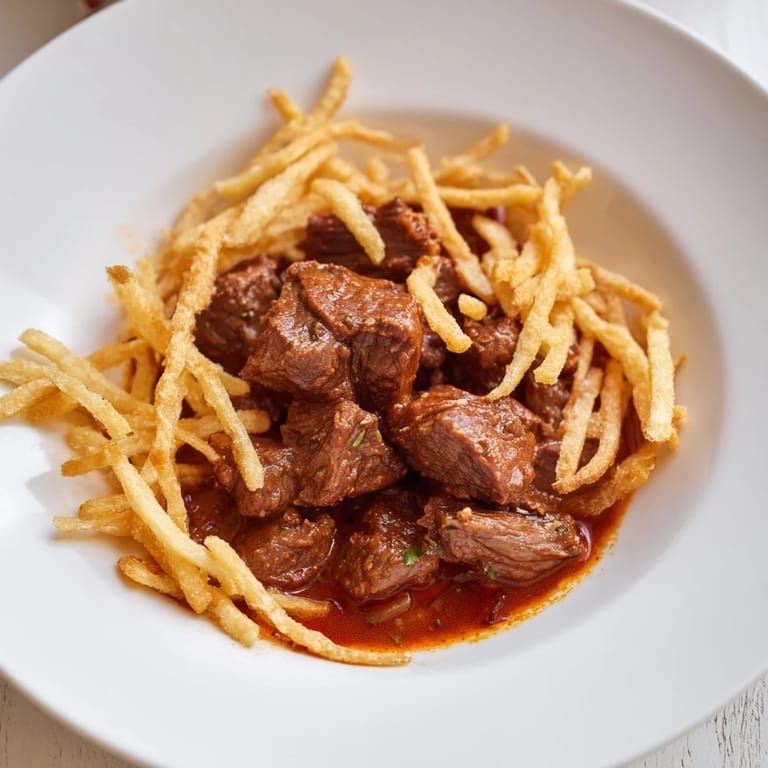
 This is the kind of meal that makes people want to linger at the table, that turns an ordinary evening into something worth remembering. When you serve it with care, it becomes more than dinner—it becomes an invitation.
Recipe FAQs
- → What cut of beef is best for this preparation?
Beef chuck cut into cubes is ideal for slow cooking as it becomes tender and absorbs the rich paprika sauce well.
- → How can I make the potato strips crispy?
Soak the cut potato strips in cold water, dry them thoroughly, then fry in hot oil until golden and crisp for the best texture.
- → Can I adjust the spice levels in the sauce?
Yes, adding extra paprika or chili flakes will increase the heat, while keeping the base flavor intact.
- → Is there a substitute for all-purpose flour here?
Gluten-free flour can be used without affecting the thickening of the sauce, suitable for gluten-sensitive diets.
- → How long should the goulash simmer for best results?
Simmering for 1.5 to 2 hours over low heat ensures the beef becomes tender and the sauce thickens beautifully.