 Pin It
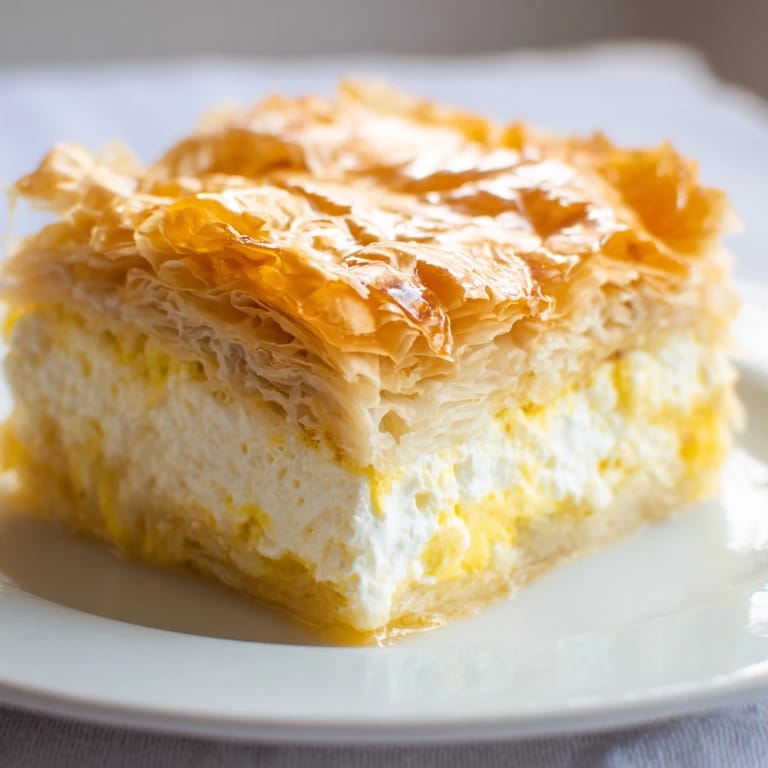
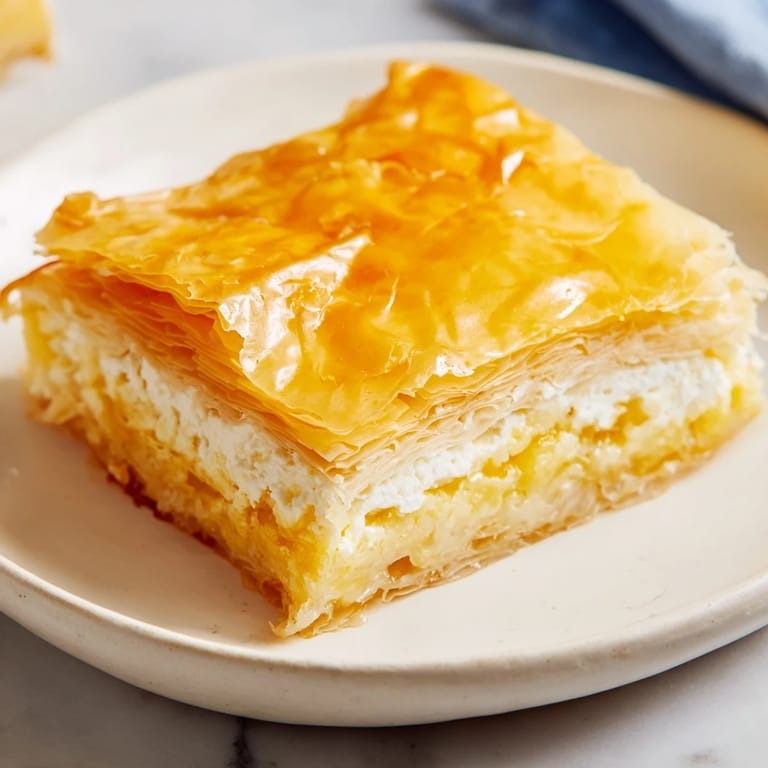
 My neighbor Vesna taught me how to make gibanica on a rainy afternoon, and I watched her confident hands layer phyllo like she was building something precious. She never measured the filling, just knew by feel when it was right, and the kitchen filled with the smell of butter and cheese that made everything else fade away. That first bite of the crispy, golden top giving way to the creamy cheese layers inside made me understand why this dish shows up at every Serbian table, from casual weeknight dinners to celebrations. Since then, I've made it countless times, each batch bringing back that moment of watching her work.
I made this for a small gathering once, and my friend who grew up in Belgrade immediately recognized it and got this look on her face like she'd just been transported home. She ate three pieces and kept saying nothing from a bakery could ever compare, which felt like the highest compliment. That's when I realized gibanica isn't just food—it's a conversation between you and everyone you serve it to.
Ingredients
- Cottage cheese (300g): Use the full-fat version if you can find it, as it creates a creamier filling than low-fat versions.
- Feta cheese (200g), crumbled: The sharper the feta, the more character your gibanica gets—don't hold back on crumbling it fine.
- Large eggs (4): They're the binder that holds everything together, so don't skip or substitute them.
- Plain yogurt (100ml): This adds tang and moisture; Greek yogurt works but will make the filling thicker.
- Sunflower oil (50ml for filling, plus 2 tbsp for brushing): Neutral oil lets the cheese shine without competing flavors.
- Sparkling water (50ml): This is the secret that makes the filling light and slightly fluffy—still water won't have the same effect.
- Salt and black pepper: Go easy on the salt since feta is already salty; taste as you go.
- Phyllo dough (500g, about 12 sheets): Keep it thawed at room temperature so it doesn't crack, and work quickly once you open the package.
- Egg yolk (optional, for glazing): Adds a beautiful shine and helps the top turn golden.
Tired of Takeout? 🥡
Get 10 meals you can make faster than delivery arrives. Seriously.
One email. No spam. Unsubscribe anytime.
Instructions
- Heat your oven and prep the stage:
- Preheat to 180°C (350°F) and lightly oil your baking dish—this is your canvas, so make sure it's ready. A well-prepared pan is half the battle.
- Mix your filling until it's smooth:
- Combine cottage cheese, crumbled feta, eggs, yogurt, oil, sparkling water, salt, and pepper in a large bowl, stirring until everything is fully incorporated and the mixture looks creamy and light. This is where you can taste and adjust seasoning if needed.
- Build the first phyllo layers:
- Lay one sheet of phyllo in the baking dish and brush it gently with oil using light, even strokes. Repeat with two more sheets, brushing each one—you want them saturated but not soggy.
- Spread your first layer of filling:
- Dollop 3-4 tablespoons of the cheese mixture over the phyllo and spread it gently to the edges. Don't press too hard; let it settle naturally.
- Keep layering with intention:
- Add 2-3 more phyllo sheets, brushing each with oil, then spread another layer of filling. Keep alternating until your filling is gone, finishing with 2 sheets of plain phyllo on top for that golden, crispy crust you're after.
- Brush and finish the top:
- Use generous strokes of oil across the top layer to encourage browning. If you're using the egg yolk, whisk it with a splash of water and brush it on for an extra shine.
- Cut before baking:
- Using a sharp knife, score the gibanica into squares or diamonds all the way through—this keeps it from cracking unevenly as it bakes and makes serving easier.
- Bake until golden and crispy:
- Bake for 35-40 minutes, watching until the top is deep golden brown and the edges start pulling away slightly from the dish. You'll know it's done when the smell becomes almost overwhelming.
- Rest before eating:
- Let it cool for 10 minutes so the layers can set; this makes cutting and serving much cleaner. You can eat it warm or at room temperature, both are perfect.
 Pin It
 There's a moment when you pull gibanica from the oven and that first wave of steam and cheese-laden heat hits your face that makes everything feel worth it. My mom now requests it for her birthday, and watching her face light up when I bring it to the table reminds me that the best recipes are the ones we pass forward with a little piece of ourselves in them.
The Science Behind the Layers
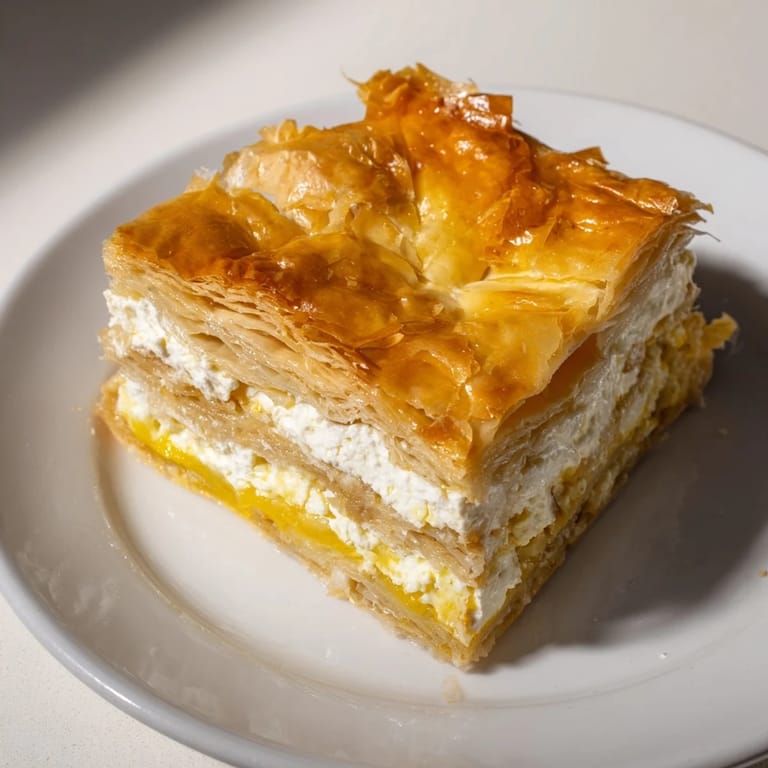
Phyllo dough creates its magic through moisture and air—each thin sheet traps steam as it bakes, and the oil between layers conducts heat so unevenly that some parts crisp while others stay tender. The cottage cheese filling benefits from the same principle; the sparkling water introduces tiny bubbles that stay trapped even after baking, creating that cloud-like texture that makes people ask if you added something special. Understanding this changes how you approach the dish—you're not just following steps, you're orchestrating a transformation.
Timing and Temperature Matter More Than You Think
I once rushed the oven temperature and the top turned dark while the inside stayed warm but slightly undercooked, and I learned that 180°C (350°F) is not a suggestion. Too high and you get burnt edges with a soft center; too low and the phyllo never crisps properly. The 35-40 minute window is also flexible depending on your oven, so keep an eye on color rather than just watching the clock.
Serving and Storage Ideas
Gibanica shines on its own but tastes even better with something fresh alongside it—a simple tomato and cucumber salad cuts through the richness beautifully, and a dollop of sour cream on the side is never a bad idea. Cold gibanica the next day is different but equally good, and reheating it in a 160°C oven for 10 minutes brings back the crispness without drying it out.
- Keep leftovers in an airtight container in the fridge for up to four days and they'll still be fantastic.
- You can assemble it a few hours ahead and bake it whenever you're ready, which takes the pressure off timing.
- Freeze unbaked gibanica in the baking dish for up to a month, then bake from frozen, adding about 10 extra minutes to the cooking time.
 Pin It
 Once you make gibanica, you'll understand why it appears in Balkan kitchens with such regularity—it's humble, it's forgiving, and it tastes like home. Serve it with confidence and watch people come back for seconds.
Recipe FAQs
- → What cheeses are used in this layered pie?
The pie combines cottage cheese and crumbled feta, creating a creamy and tangy filling balanced by yogurt and eggs.
- → Can I prepare the pie ahead of time?
Yes, the assembled pie can be refrigerated before baking, and leftovers store well in the fridge for easy reheating.
- → Is it possible to make a gluten-free version?
Using gluten-free phyllo sheets allows for a gluten-free variation without compromising the layered texture.
- → How is the pastry made crisp and golden?
Brushing every phyllo layer with sunflower oil and optionally egg yolk on top ensures a crisp, golden finish once baked.
- → What are good serving suggestions for this dish?
Serve warm or at room temperature alongside fresh tomato and cucumber salad for a refreshing contrast.