 Pin It
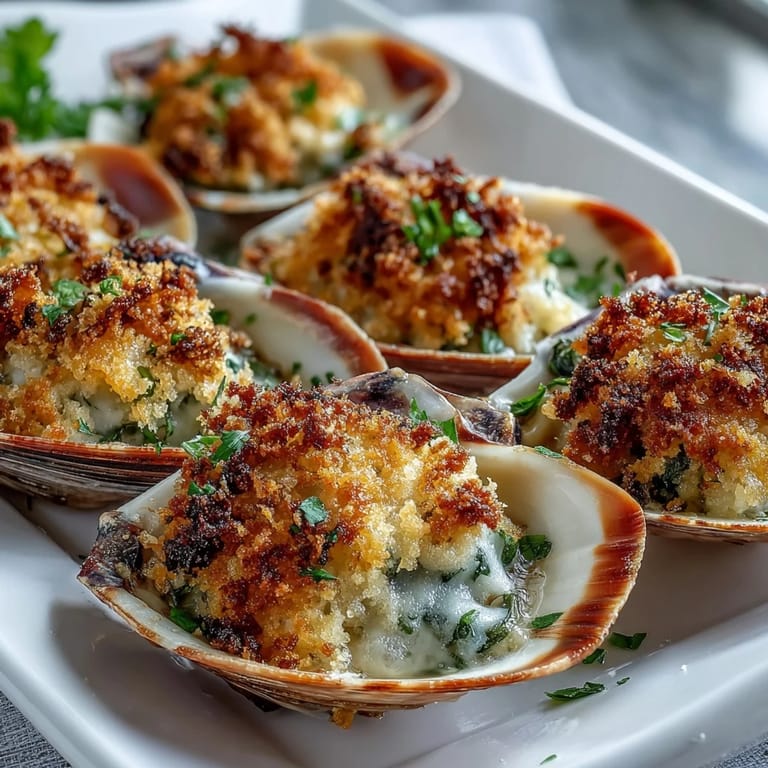
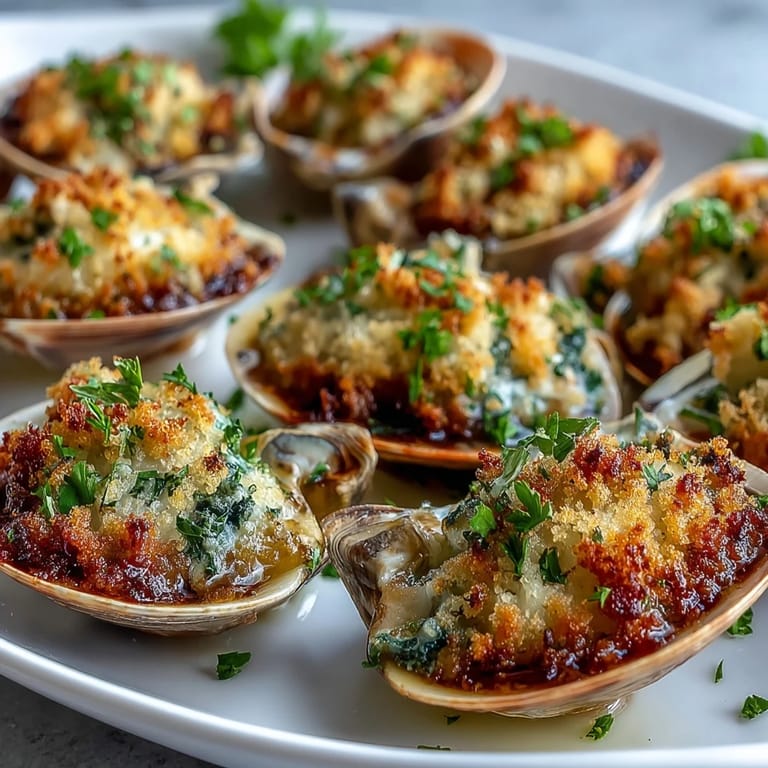
 My neighbor showed up one Saturday morning with a mesh bag of littlenecks still dripping seawater, insisting I had to try roasting them instead of steaming. I was skeptical until the smell of toasted panko, garlic, and lemon hit the kitchen halfway through baking. The clams opened beautifully under that golden crust, tender and briny, and I realized I'd been missing out on something so simple it felt almost wrong. We ate them standing at the counter with our fingers, laughing at how fast they disappeared.
I made these for a small birthday dinner once, and my friend who swore she didn't like clams ate five before I could even sit down. She kept saying it was the lemon that did it, cutting through any fishiness she'd always avoided. Watching her reach for another one, I felt that quiet pride you get when a dish changes someone's mind. Now she texts me every few months asking if I'll make them again.
Ingredients
- Littleneck clams: Choose clams that are tightly closed or snap shut when tapped, a sign they're alive and fresh, and scrub them under cold water to remove any grit clinging to the shells.
- Panko breadcrumbs: Their larger flakes create a lighter, crunchier crust than regular breadcrumbs, and toasting them dry in a skillet first adds even more texture.
- Unsalted butter: Melted butter helps the panko turn golden and gives the topping richness without overpowering the clam's natural sweetness.
- Extra-virgin olive oil: A tablespoon blended with the butter keeps the crumbs moist and adds a fruity note that pairs well with lemon.
- Garlic: Mince it finely so it distributes evenly and mellows in the oven instead of burning or clumping.
- Lemon zest: The oils in the zest bring brightness that juice alone can't match, and you'll use the fruit for wedges at the end.
- Fresh parsley: Chopped parsley adds color and a grassy freshness that balances the richness of butter and cheese.
- Parmesan cheese: Optional but wonderful, it deepens the savory flavor and helps the topping stick together in little golden clusters.
- Kosher salt and black pepper: Season the topping lightly since the clams and Parmesan both bring salt, and freshly cracked pepper gives a gentle warmth.
- Rock salt or foil: Either one props the clam shells upright on the baking sheet so the topping and juices don't spill out.
- Lemon wedges: A squeeze at the table lifts every bite and lets each person adjust the brightness to their taste.
Tired of Takeout? 🥡
Get 10 meals you can make faster than delivery arrives. Seriously.
One email. No spam. Unsubscribe anytime.
Instructions
- Preheat and prep your baking sheet:
- Set your oven to 450 degrees and line a rimmed baking sheet with a layer of rock salt or crumpled foil. This creates little nests that hold each clam shell steady so the topping doesn't slide off.
- Scrub and check the clams:
- Rinse each clam under cold running water, scrubbing away sand and debris with a stiff brush. Tap any open shells gently, if they don't close within a few seconds, discard them.
- Shuck the clams:
- Slide a clam knife into the hinge of each shell, twist gently to pop it open, and run the blade under the meat to loosen it, catching the salty liquor in a small bowl. Nestle the meat and a spoonful of juice back into one half shell and set it on your prepared pan.
- Mix the lemony panko topping:
- In a medium bowl, stir together panko, melted butter, olive oil, minced garlic, lemon zest, parsley, Parmesan if using, salt, and pepper until the crumbs look evenly moistened and fragrant. The mixture should hold together lightly when you pinch it.
- Top each clam:
- Spoon about a tablespoon of the panko mixture over each clam, pressing gently with the back of the spoon to form a little mound. You want full coverage so the topping crisps evenly.
- Roast until golden:
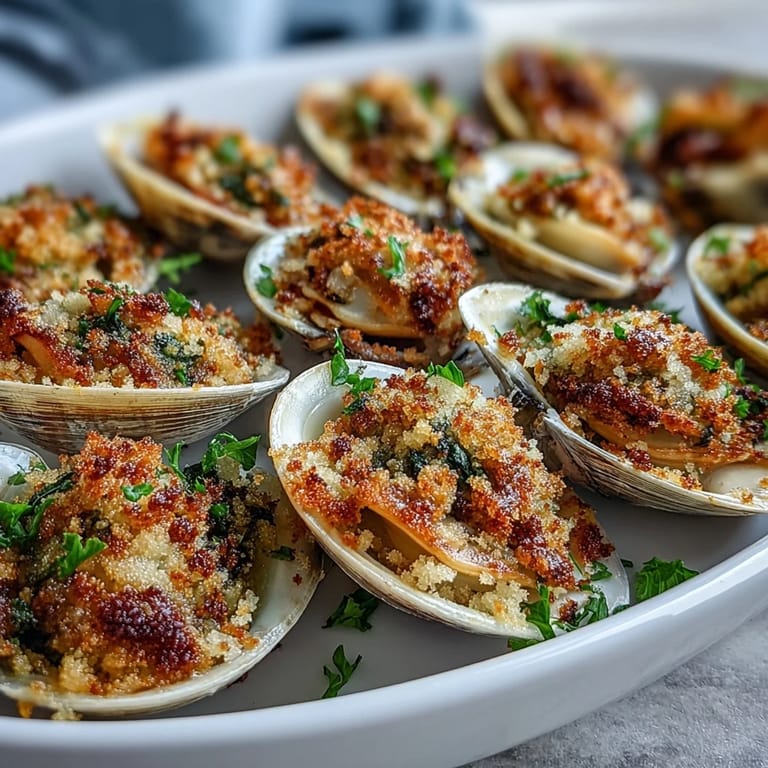
- Slide the baking sheet into the hot oven and roast for 10 to 12 minutes, watching for the breadcrumbs to turn deep gold and the clam edges to curl slightly. The kitchen will smell like garlic, lemon, and the sea all at once.
- Serve immediately:
- Transfer the clams to a platter, scatter extra parsley over the top if you like, and tuck lemon wedges around the edges. Serve them hot so the topping stays crisp and the clams stay tender.
 Pin It
 One evening I served these as a first course before pasta, and we ended up eating the whole batch with our hands, wiping up the garlicky butter with bread instead of moving on to the main dish. Nobody minded, and it became one of those meals where the plan dissolves into something better. Sometimes the best dinners are the ones that never make it past the appetizer.
Choosing and Storing Fresh Clams
Buy your clams the same day you plan to cook them if possible, and keep them in the fridge loosely covered with a damp towel, never sealed in plastic or submerged in water. They need to breathe, and a sealed bag will suffocate them within hours. If a clam smells off or the shell is cracked, toss it without hesitation, one bad clam can ruin the whole batch. I've learned to trust my nose more than any sell by date.
Making the Topping Ahead
You can mix the panko, butter, oil, garlic, lemon zest, parsley, Parmesan, salt, and pepper up to a day ahead and store it in an airtight container in the fridge. When you're ready to cook, let it sit at room temperature for ten minutes so the butter softens slightly and the mixture spreads easily. This trick has saved me more than once when I needed to get clams on the table fast without feeling rushed. Just shuck, top, and roast, and you'll look like you had it together the whole time.
Serving Suggestions and Pairings
These clams are perfect with a crisp, chilled Sauvignon Blanc or a dry Riesling that echoes the lemon and doesn't fight the brine. I also love serving them alongside a simple arugula salad dressed with olive oil and a squeeze of lemon, or with crusty bread to soak up any juices that collect on the platter. If you're making them a main course, double the batch and add roasted vegetables or a light pasta on the side.
- Offer small forks or cocktail picks so guests can pluck the clams out without wrestling with shells.
- Set out extra lemon wedges and flaky sea salt for anyone who wants to adjust seasoning at the table.
- If you have leftover topping, save it in the freezer and use it on fish fillets or stuffed mushrooms next time.
 Pin It
 Once you get the rhythm of shucking and topping, these clams become the kind of dish you make without thinking, impressive but never stressful. They've turned into my go to whenever I want to feed people something that tastes like effort but leaves me time to actually sit down and enjoy the evening.
Recipe FAQs
- → How do I know if clams are fresh before cooking?
Fresh clams should be tightly closed or close when tapped. Discard any that remain open or have cracked shells. They should smell clean and briny, like the ocean, not fishy or unpleasant.
- → Can I prepare the panko topping ahead of time?
Yes, you can mix the panko topping up to 2 hours ahead and store it at room temperature. This makes assembly quick when you're ready to cook.
- → What if I don't have a clam knife for shucking?
You can use a sturdy butter knife or paring knife, but be very careful. Alternatively, steam the clams briefly until they just open, then remove the top shell and proceed with the topping.
- → Can I use a different type of clam?
Yes, cherrystone or topneck clams work well. Adjust cooking time slightly based on size—smaller clams may need 8-10 minutes, while larger ones may need up to 15 minutes.
- → How do I prevent the clams from tipping over while roasting?
Use a bed of rock salt, coarse sea salt, or crumpled aluminum foil on your baking sheet to create stable nests for each clam half to rest in during roasting.
- → What wine pairs best with these clams?
A crisp, dry white wine like Sauvignon Blanc, Pinot Grigio, or dry Riesling complements the lemony, garlicky flavors beautifully. Champagne or Prosecco also makes an elegant pairing.