 Pin It
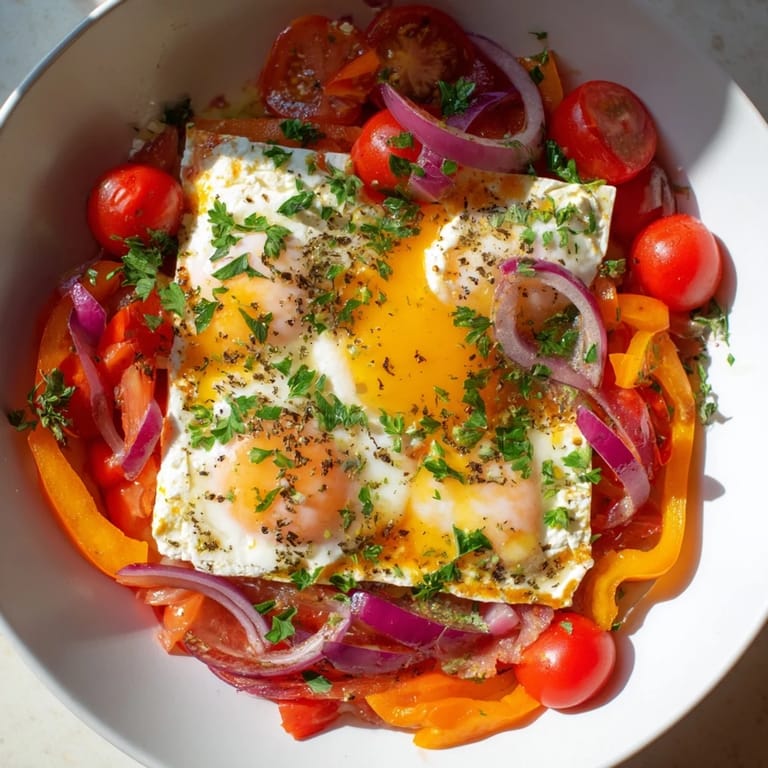
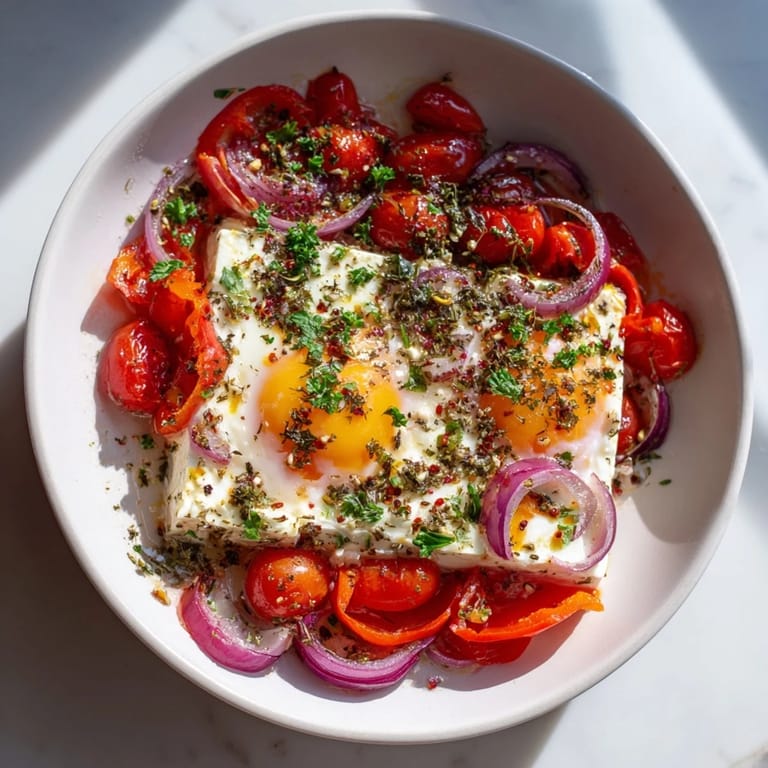
 There's something about pulling a bubbling dish from the oven that feels like pure Mediterranean magic. I discovered this baked feta and eggs on a Tuesday morning when I had almost nothing in my kitchen except some cherry tomatoes, a block of feta, and eggs. The combination seemed too simple, but when those eggs nestled into the warm tomatoes and melting cheese, I understood why this dish has been feeding people for centuries. It's the kind of meal that tastes like you've been cooking all morning, even though you've barely lifted a finger.
I made this for friends one Saturday when everyone was tired of making separate breakfast components. As soon as it came out of the oven—golden, steaming, with that unmistakable smell of olive oil and herbs—someone immediately asked for seconds before we'd even sat down. That's when I knew this recipe was a keeper.
Ingredients
- Cherry tomatoes (2 cups, halved): Look for ones that are actually ripe and feel slightly heavy—they'll release more juice and flavor as they bake.
- Red onion (1 small, thinly sliced): The thin slices soften beautifully and lose their harsh bite when roasted.
- Garlic (2 cloves, minced): Mince it fine so it distributes throughout the dish and doesn't burn on the edges.
- Red bell pepper (1 small, sliced): Any color works, but red is sweetest when cooked.
- Feta cheese (7 oz block): Use a solid block rather than crumbled—it holds its shape and gets this incredible creamy texture in the center.
- Large eggs (4): Room temperature eggs cook more gently and evenly than cold ones straight from the fridge.
- Extra virgin olive oil (3 tbsp): Don't skimp here; good olive oil is the difference between decent and memorable.
- Dried oregano (1 tsp) and dried thyme (1/2 tsp): These two together create that Mediterranean backbone that makes you close your eyes between bites.
- Crushed red pepper flakes (1/4 tsp, optional): I usually add it because the slight heat wakes everything up.
- Salt and freshly ground black pepper: Taste as you layer, since feta is already salty.
- Fresh parsley (2 tbsp, chopped): Add this right before serving so it stays bright green and fresh.
Tired of Takeout? 🥡
Get 10 meals you can make faster than delivery arrives. Seriously.
One email. No spam. Unsubscribe anytime.
Instructions
- Heat your oven and prepare:
- Preheat to 400°F (200°C) while you prep your vegetables. Having everything ready means you can work quickly and the vegetables will hit a hot baking dish.
- Build the vegetable base:
- Combine the tomatoes, onion, bell pepper, and garlic in a medium baking dish, then drizzle generously with olive oil. Toss everything to coat, then sprinkle with oregano, thyme, red pepper flakes if using, salt, and pepper. The vegetables should glisten.
- Settle in the feta:
- Nestle that block of feta right into the center of the vegetables, letting some of the cheese poke through. It'll start catching color and creaming as it bakes.
- First bake—vegetables get tender:
- Slide the dish into the oven for 15 minutes. You're listening for gentle sizzle sounds and watching for the tomatoes to start bursting at their seams and the feta's edges to turn light gold.
- Create wells for the eggs:
- Carefully remove the hot dish from the oven. Using the back of a spoon, make four small wells in the vegetables around the feta block, pushing vegetables gently aside without breaking the feta.
- Crack and nestle the eggs:
- Crack one egg into each well, being gentle so the yolks stay intact. The heat from the dish means the whites will set faster than the yolks, which is exactly what you want.
- Final bake—eggs get just set:
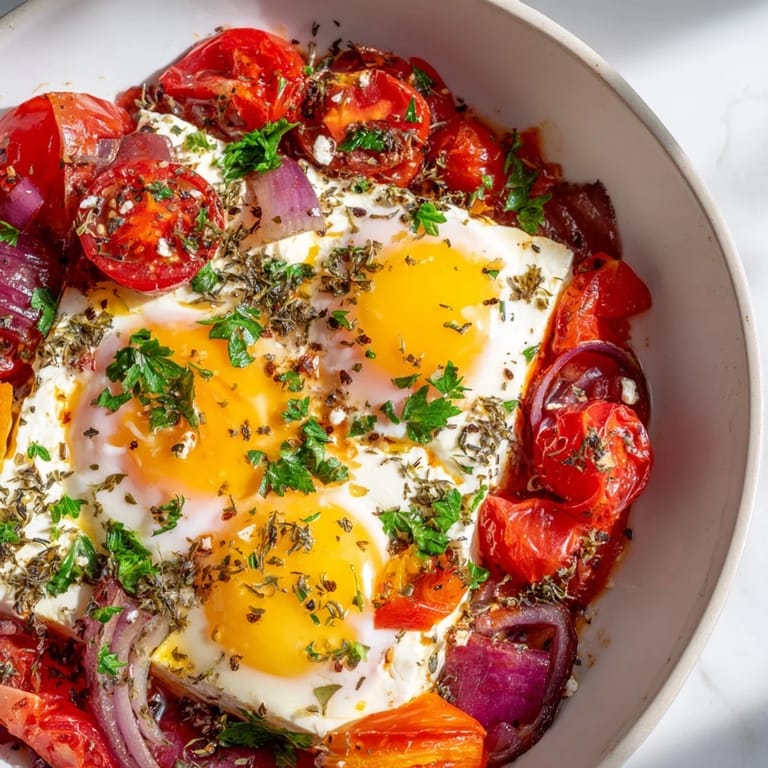
- Return to the oven for 8 to 10 minutes, checking around the 8-minute mark. You're looking for the egg whites to turn opaque while the yolks still jiggle slightly when you gently shake the dish.
- Finish and serve:
- Remove from the oven and scatter fresh parsley over the top while everything's still steaming. Serve straight from the baking dish with crusty bread for soaking up the olive oil and tomato juices.
 Pin It
 There was an afternoon when my teenager reluctantly sat down to eat this with the family, and I watched them actually savor it without scrolling through their phone. That's when food becomes a small miracle—when it stops being fuel and starts being something people actually want to gather around.
Variations That Keep This Interesting
Once you've made this a few times, the base is so flexible you can play with it. I've stirred in pitted Kalamata olives for briny depth, tossed in a handful of baby spinach right before the eggs go in, and even crumbled some crumbly feta alongside the block for more cheesy texture. The foundation stays solid no matter what you add, which is the mark of a really good recipe.
What to Serve It With
The crusty bread is essential—not as decoration but as your vehicle for getting that olive oil and tomato juice from the dish to your plate. I've served this with a simple green salad, some roasted potatoes on the side, or just on its own when I'm keeping dinner light. Cold rosé or a crisp Sauvignon Blanc pairs beautifully if you're making this for company.
Making It Work for Your Table
This recipe feeds four people generously or two people very happily with leftovers. If you're cooking for a crowd, the dish doubles easily—just use a larger baking dish and add a couple more minutes to the final bake time. It reheats reasonably well the next day, though it's honestly best fresh when the edges are still crispy and the center is still warm.
- For extra spice, increase the red pepper flakes or crack some fresh black pepper over the top just before serving.
- Make sure your baking dish is medium-sized so the vegetables cook evenly and aren't too crowded around the feta.
- If you're serving people with dietary restrictions, this is naturally vegetarian and gluten-free if you skip the bread.
 Pin It
 This is one of those recipes that reminds you why people love cooking in the first place—it's simple, it's honest, and somehow it tastes like the Mediterranean even if you're making it on a Tuesday night with ingredients from your regular grocery store. That's enough.
Recipe FAQs
- → What temperature should I bake this dish at?
Preheat the oven to 400°F (200°C) for optimal roasting of vegetables and feta.
- → Can I use different cheeses instead of feta?
Feta's creamy texture and tangy flavor are ideal here, but a mild goat cheese can also work in a pinch.
- → How do I achieve runny yolks without undercooking the whites?
Bake the eggs for about 8–10 minutes after adding them, ensuring whites are just set while yolks remain slightly runny.
- → Are there suggested vegetable substitutions?
Try adding pitted Kalamata olives or baby spinach for added depth and variation.
- → What herbs complement the flavors best?
Dried oregano and thyme provide classic Mediterranean notes, while optional red pepper flakes add gentle heat.