 Pin It
 My grandmother kept a ceramic bowl on her kitchen counter in Athens, and it was always filled with fresh spinach from the market. Years later, when I finally asked her to teach me spanakopita, she laughed and said the real secret wasn't in the recipe—it was in how you could hear the phyllo sheets whisper as you brushed them with oil. That sound meant you were doing it right. I've made this pie dozens of times since, and I still listen for that delicate crackle.
I made this for my best friend's potluck once, and she came back to the kitchen asking if I'd opened a restaurant. What I didn't tell her was that I'd burned the first batch the week before, standing there stunned as smoke billowed from the oven. That failure taught me everything about oven temperature and timing, and by the time she tasted it, all those small disasters had turned into something I was genuinely proud of.
Ingredients
- Fresh spinach: Choose vibrant green leaves with no yellowing; frozen works beautifully too if you squeeze out every drop of water—this is non-negotiable or your pie becomes soggy.
- Feta cheese: The backbone of the filling, so use the best quality you can find; crumbly feta adds character that creamy feta can't match.
- Fresh dill: It's the herb that makes spanakopita distinctly Greek; dried works in a pinch, but fresh dill brings an almost grassy brightness.
- Phyllo dough: Handle it gently and keep it covered with a damp towel while you work, or it'll dry out and shatter before you even get started.
- Olive oil or butter: The magic that turns phyllo into something crisp and golden; don't be shy with it, and brush each layer like you're painting.
- Eggs: They bind everything together and add richness; lightly beat them so they distribute evenly through the filling.
- Onions and scallions: Sauté them together until they soften, which mellows their sharpness and builds a sweet, savory base for the spinach.
Tired of Takeout? 🥡
Get 10 meals you can make faster than delivery arrives. Seriously.
One email. No spam. Unsubscribe anytime.
Instructions
- Prepare your workspace:
- Preheat your oven to 350°F and grease a 9x13-inch baking dish lightly so the phyllo doesn't stick to the bottom and burn. Have your phyllo and oil ready before you start—phyllo waits for no one.
- Cook the aromatics:
- Heat olive oil in a large skillet and let the onions and scallions soften over medium heat for about 5 minutes, stirring occasionally until they're translucent and smell sweet. This is the foundation that keeps the filling from tasting raw.
- Wilt the spinach:
- Add your chopped spinach in batches if it's fresh, letting each batch soften and release its water before adding more. Once it's all in and cooked down, it should look like a fraction of its original volume—that's how you know enough moisture has cooked away.
- Cool and combine:
- Spread the spinach mixture on a plate to cool slightly, then squeeze it one more time in a clean kitchen towel to remove any last drops of moisture. Transfer to a bowl and fold in the dill, parsley, crumbled feta, ricotta if using, beaten eggs, pepper, nutmeg, and salt—taste as you go and adjust seasoning.
- Layer the phyllo base:
- Lay one phyllo sheet in the prepared dish, letting the edges hang over the sides, and brush it lightly with oil or melted butter using deliberate, gentle strokes. Repeat with 6 or 7 more sheets, brushing each one—this is where patience pays off in crispy, golden layers.
- Fill and cover:
- Spread your spinach-feta filling evenly over the phyllo base, then layer the remaining phyllo sheets on top, brushing each with oil as before. Tuck the overhanging edges into the sides of the dish so nothing burns on the edges.
- Score for serving:
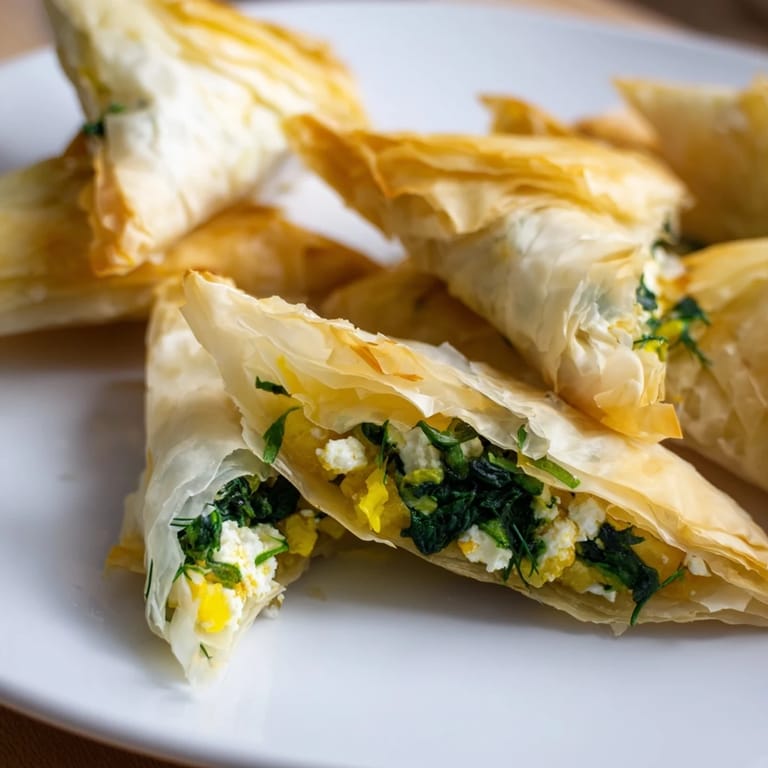
- Using a sharp knife, carefully score the top layers into squares or diamonds—just cut through the phyllo, not down into the filling. This makes serving cleaner and lets people see the beautiful layers.
- Bake until golden:
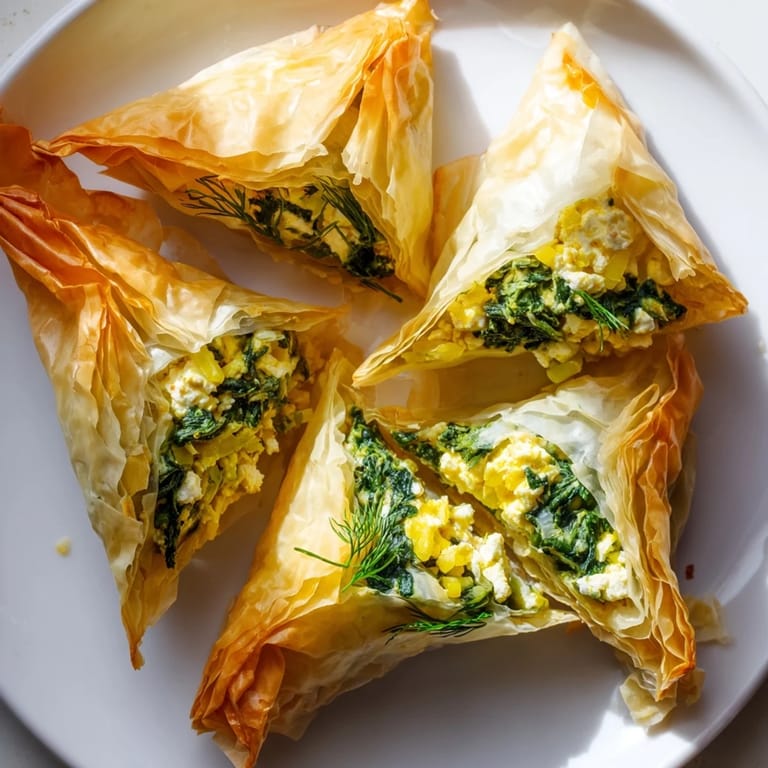
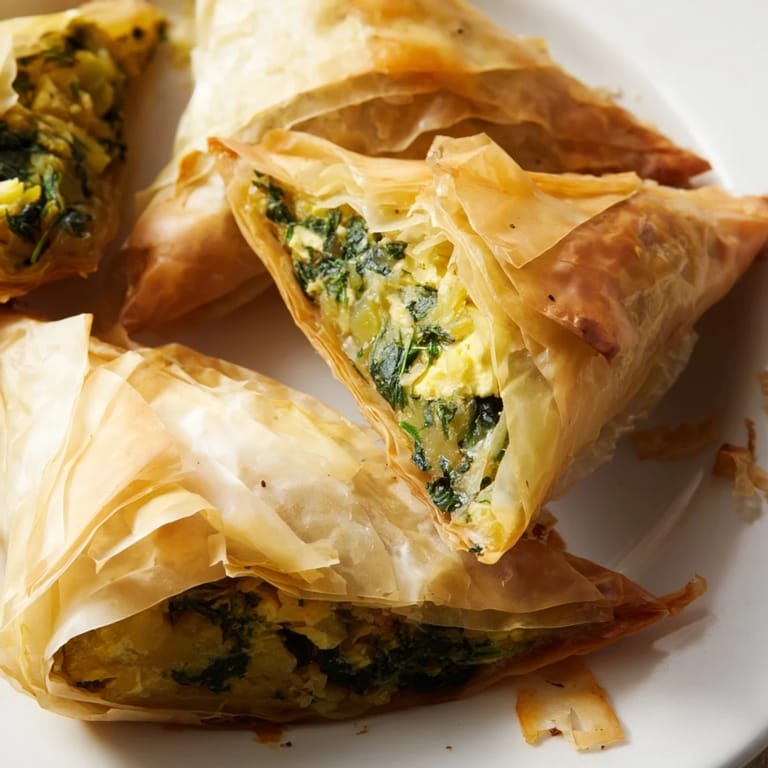
- Bake for 35 to 40 minutes until the top is deep golden brown and you can hear the phyllo crackling softly when you listen closely. Let it cool for 10 minutes before serving so the filling sets slightly and the pieces hold together.
 Pin It
 My neighbor once asked why the whole building smelled like buttery herbs and crispy pastry on the days I made this. I told her it was the spinach and feta, but really, it's the promise that something golden and warm is about to be on the table, ready to be shared.
Why Phyllo is Your Friend (Not Your Enemy)
Phyllo intimidates people, but it's actually forgiving once you understand what it wants. It wants to be cold, to be brushed gently with oil, and to be layered patiently. The thinner each layer, the crispier your finished pie, so don't skimp on the sheets—eight or nine at the bottom makes all the difference between soggy and sensational.
Timing and Temperature Matter More Than You Think
Baking at 350°F ensures the filling heats through and the phyllo crisps without burning the edges. If your oven runs hot, watch it closely after 30 minutes and tent it loosely with foil if the top is browning too quickly. The filling should be steaming hot when you cut into it, and the phyllo should shatter slightly under your knife.
Serving and Storage
Spanakopita is wonderful warm from the oven, but it's equally delicious at room temperature or even chilled the next day. This makes it perfect for meal prep or bringing to gatherings, and it actually tastes less heavy when it's not piping hot. Pair it with a crisp white wine like Assyrtiko if you're feeling fancy, or just a simple green salad and crusty bread if you're keeping it casual.
- Store leftovers covered in the refrigerator for up to 4 days, and warm them gently in a 300°F oven to restore the phyllo's crispness.
- You can assemble the entire pie a day ahead, cover it tightly, and bake it straight from the refrigerator, adding just a few minutes to the cooking time.
- Freeze unbaked spanakopita for up to 3 months—bake from frozen, extending the time by 10 to 15 minutes until golden and heated through.
 Pin It
 Spanakopita is one of those dishes that tastes like home, whether you grew up eating it or discover it for the first time. Once you've made it, you'll understand why my grandmother always had spinach in her bowl.
Recipe FAQs
- → What type of greens can be used besides spinach?
You can substitute fresh chard or a mix of tender greens if spinach is unavailable or to vary the flavor.
- → How do I keep the phyllo dough from drying out?
Keep phyllo covered with a damp cloth while working and brush each sheet lightly with olive oil or melted butter to maintain moisture and crispness.
- → Can I prepare the filling in advance?
Yes, the spinach and cheese filling can be made a day ahead and refrigerated to save time before assembling.
- → What is the best way to serve this dish?
Let the baked pie cool slightly before cutting into portions. It pairs well with crisp white wines like Assyrtiko or Sauvignon Blanc.
- → How should I store leftovers?
Store cooled portions in an airtight container in the refrigerator for up to 3 days; reheat gently to preserve flakiness.