 Pin It
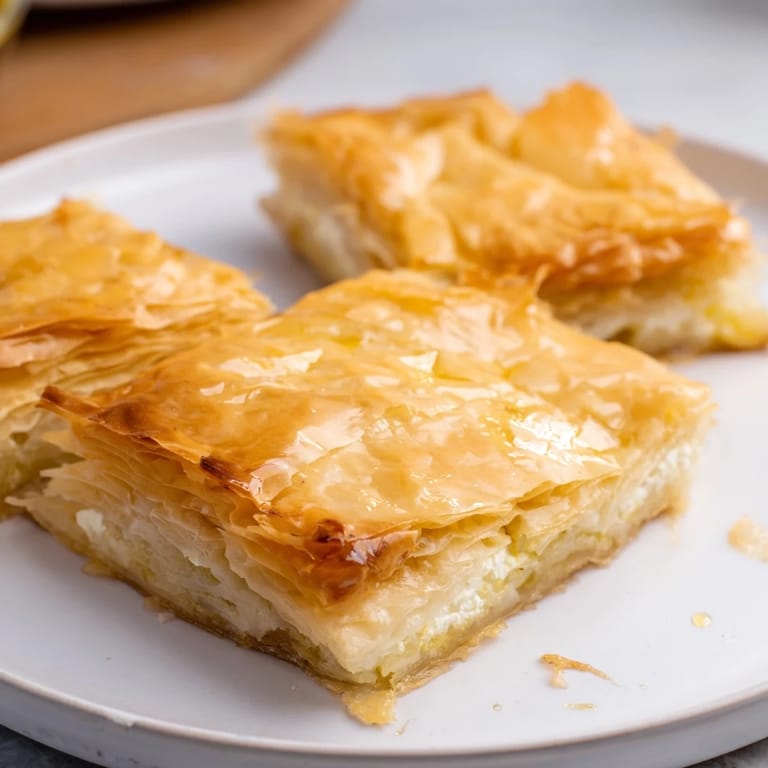
 My neighbor, an older Bulgarian woman named Tsvetana, showed up one morning with a warm pan wrapped in a towel and said only, Try this. The pastry crackled under my fork, steam rising with the scent of butter and tangy cheese. I didn't know what banitsa was then, but I knew I needed to learn how to make it. She came back the next week with phyllo dough and a patience I didn't deserve, guiding my clumsy hands through the layering.
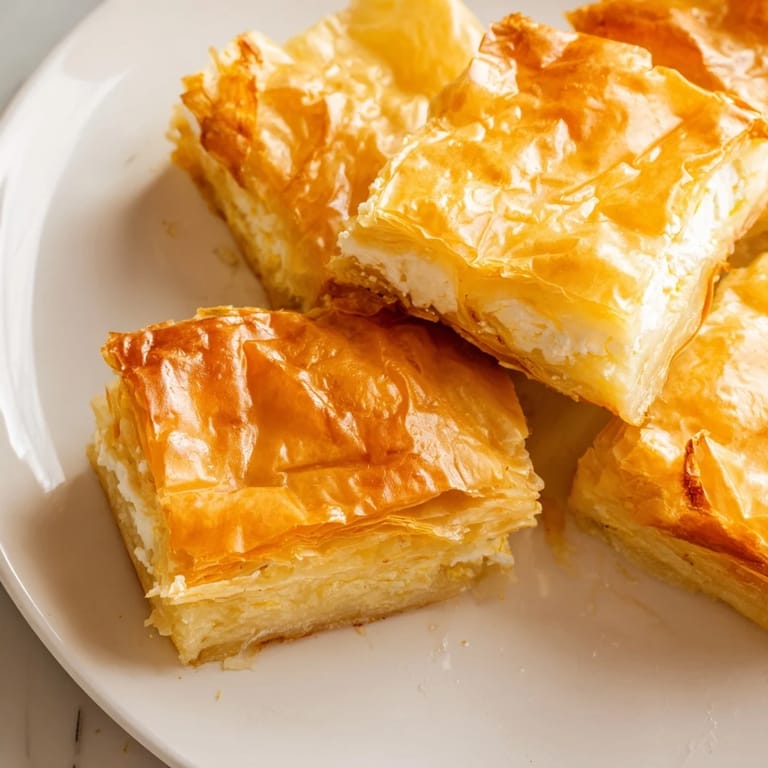
I made banitsa for the first time on my own on a Sunday when I had nowhere to be and nothing to prove. I remembered Tsvetana's hands moving quickly, brushing butter on each sheet like she was painting. Mine took twice as long, and I tore three sheets before I got the rhythm. When I pulled it out of the oven, golden and crackling, I texted her a photo. She replied with a single word: Good. That was all I needed.
Ingredients
- Feta cheese: Use a block of feta and crumble it yourself; pre-crumbled versions are drier and won't melt into the custard the same way.
- Plain yogurt: Full-fat yogurt adds richness and a slight tang that balances the saltiness of the cheese.
- Phyllo dough: Thaw it in the fridge overnight, never in the microwave, or it will turn gummy and impossible to separate.
- Unsalted butter: Melted and brushed between every layer, this is what creates the crisp, golden finish.
- Eggs: They bind the filling into a soft, custardy texture that holds its shape when you cut into it.
- Whole milk: Just enough to loosen the mixture so it spreads easily without weighing down the phyllo.
- Salt and black pepper: Go light on the salt since feta is already salty; the pepper adds a quiet warmth.
Tired of Takeout? 🥡
Get 10 meals you can make faster than delivery arrives. Seriously.
One email. No spam. Unsubscribe anytime.
Instructions
- Preheat and Prep the Dish:
- Set your oven to 180°C and grease your baking dish with a little melted butter, making sure to get the corners. This keeps the bottom layers from sticking and makes serving so much easier later.
- Mix the Filling:
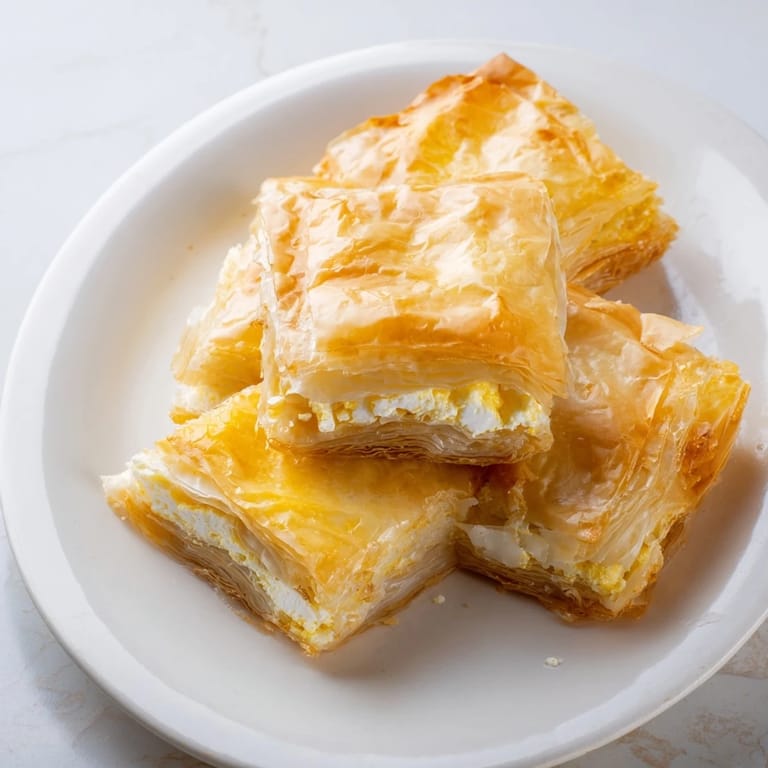
- Whisk the eggs, yogurt, milk, salt, and pepper until smooth, then fold in the crumbled feta gently so it stays in chunks. You want a thick, pourable mixture that smells tangy and rich.
- Prepare the Phyllo:
- Unroll the phyllo and immediately cover it with a damp towel; it dries out in minutes and becomes impossible to work with. Keep the towel over the stack and only pull out one sheet at a time.
- Layer the Base:
- Lay one sheet in the dish, letting the edges hang over if they do, then brush it lightly with melted butter. Repeat with three more sheets, buttering each one, until you have a solid buttery foundation.
- Add the First Filling Layer:
- Spoon about a quarter of the cheese mixture over the phyllo and spread it gently to the edges. It doesn't need to be perfect; it will settle as it bakes.
- Repeat the Layers:
- Add three to four more phyllo sheets, buttering each, then another layer of filling. Keep going until the filling is gone, building up those crisp, custardy layers.
- Finish with Phyllo:
- Top everything with a final three to four buttered sheets, tucking in any overhang or folding it over the top. Brush the surface generously with butter so it crisps up beautifully.
- Score Before Baking:
- Use a sharp knife to cut the banitsa into squares or diamonds, slicing all the way through. This makes it easier to serve later and lets the butter seep into the cuts.
- Bake Until Golden:
- Pour any remaining butter over the top and slide the dish into the oven. Bake for 30 to 35 minutes, until the top is deeply golden and crackling at the edges.
- Cool and Serve:
- Let it sit for 10 minutes so the layers set and the filling stops bubbling. Serve it warm or let it cool completely; both ways are perfect.
 Pin It
 The first time I brought banitsa to a potluck, someone asked if it was a quiche. I said no, but I understood the confusion. By the end of the night, the pan was empty except for a few golden crumbs, and two people had asked for the recipe. I thought of Tsvetana and how food moves quietly from one kitchen to another, carrying a little bit of home with it.
Flavor Variations to Try
I've added chopped fresh dill to the filling, and it brought a bright, herbal note that made the whole dish feel lighter. Parsley works too, especially if you're serving it alongside something rich. Once, I mixed in a handful of crumbled spinach I had left over, and it turned into something closer to spanakopita but still distinctly banitsa. You can also swap half the feta for ricotta if you want a milder, creamier filling that's a little less salty.
What to Serve It With
Tsvetana always served banitsa with a tall glass of ayran, the cold, salty yogurt drink that cuts through the richness. I've also put it on the table with a simple salad of cucumbers, tomatoes, and a squeeze of lemon. If you're serving it for breakfast, it pairs beautifully with strong coffee and a small bowl of fruit. It's filling enough to be the main event, but it also works as a side to soups or roasted vegetables.
Storing and Reheating
Banitsa keeps in the fridge for up to four days, wrapped tightly in foil or stored in an airtight container. I've eaten it cold straight from the fridge, and it's still good, but reheating it in a low oven brings back some of that crisp. If you have leftovers, don't microwave them; the phyllo turns rubbery and sad. Instead, warm individual pieces in a 160°C oven for about 10 minutes until they crisp up again.
- You can freeze unbaked banitsa, tightly wrapped, for up to a month and bake it straight from the freezer, adding 10 extra minutes to the baking time.
- If the top browns too quickly while baking, tent it loosely with foil for the last 10 minutes.
- Let the phyllo come to room temperature for 15 minutes before unrolling it to avoid cracking.
 Pin It
 Every time I pull banitsa out of the oven, I think of Tsvetana's kitchen and the way she taught me without making me feel small for not knowing. It's a recipe that asks for a little patience but gives back so much more.
Recipe FAQs
- → What type of cheese is best for banitsa?
Traditional banitsa uses crumbled feta cheese for its salty and tangy flavor, but Bulgarian sirene or ricotta can also be good alternatives for a milder taste.
- → How do you keep phyllo dough from drying out?
Cover the phyllo dough with a damp towel while working to prevent it from drying and cracking.
- → Can banitsa be served warm or cold?
Banitsa is delicious served warm to enjoy the crisp layers, but it also tastes great at room temperature.
- → What seasoning complements banitsa’s filling?
Simple seasoning with salt and freshly ground black pepper enhances the flavors, while fresh dill or parsley can add a bright herbal note.
- → What are good side accompaniments for banitsa?
Pairs well with a cold ayran yogurt drink or a fresh tomato-cucumber salad for a refreshing contrast.
- → How should banitsa be stored if not eaten immediately?
Store leftovers in an airtight container in the refrigerator and reheat gently to preserve flakiness.