 Pin It
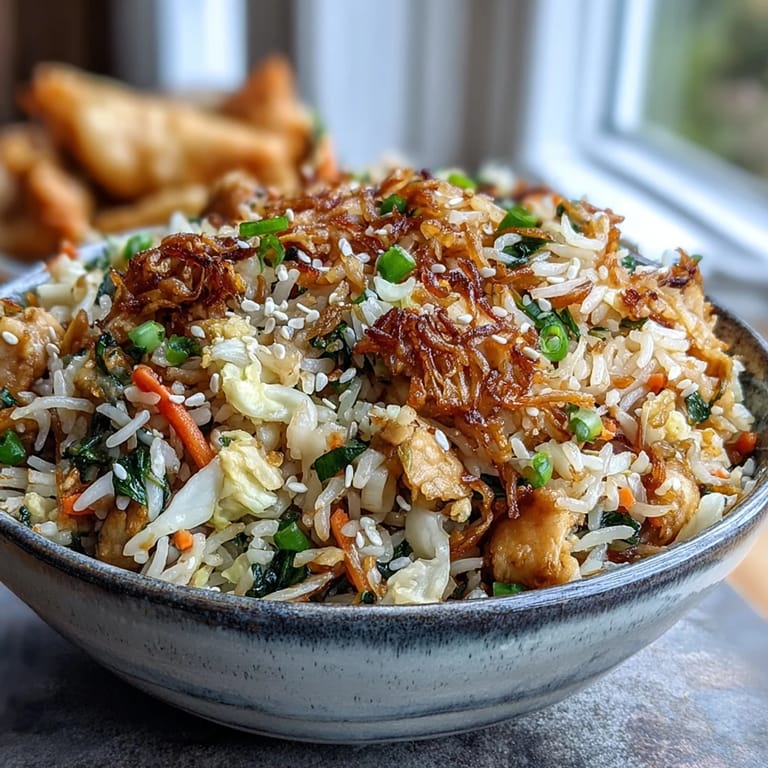
 My neighbor showed up at my door one evening with a container of egg roll filling she'd made too much of, and instead of wrapping it all night, I had a wild idea: what if I just tossed it into fried rice? Twenty minutes later, I had something that tasted like the best parts of an egg roll without any of the frying mess, and she's been asking me to make it ever since.
I made this for my book club once when I was supposed to bring something quick, and watching everyone's faces light up when they tasted it—that moment when someone asks for the recipe with their mouth still full—that's when I knew this wasn't just a happy accident, it was something worth perfecting.
Ingredients
- Minced chicken (500 g): This is your protein foundation, and using freshly minced chicken instead of rotisserie gives you control over the texture and makes the dish feel lighter.
- Eggs (2 large): They create those little golden pockets of creaminess throughout the rice, so beat them well and don't skip them.
- Green cabbage (2 cups, thinly sliced): The heart of the egg roll flavor, and slicing it thin means it softens just enough without turning mushy.
- Carrots (1 cup, julienned): Cut them thin so they cook in the time you need them to and add natural sweetness.
- Green onions (1/2 cup, sliced): Add these at the very end to keep their fresh bite alive in the finished dish.
- Garlic and ginger (2 cloves and 1 tablespoon): Fresh and minced, not powdered—this is what makes your kitchen smell like a real restaurant for the next hour.
- Jasmine rice (3 cups, chilled): Day-old rice is essential because fresh warm rice will turn mushy; cold rice grains stay separate and crispy.
- Soy sauce (3 tablespoons): Use tamari if you're avoiding gluten, and taste as you go because salt levels vary between brands.
- Oyster sauce, sesame oil, rice vinegar (1 tablespoon, 1 tablespoon, 1 teaspoon): These three together create that umami depth that makes people ask what secret ingredient you used.
- Peppers and sugar (1/2 teaspoon black, 1/4 teaspoon white, 1/2 teaspoon sugar): The white pepper adds a subtle heat that black pepper can't, and the sugar balances everything.
- Neutral oil (2 tablespoons): Canola or vegetable oil heats high without burning, which matters when you're working fast over high heat.
- Crispy fried onions and sesame seeds (optional toppings): These aren't just garnish—they're what takes it from good to that thing people remember and ask you to make again.
Tired of Takeout? 🥡
Get 10 meals you can make faster than delivery arrives. Seriously.
One email. No spam. Unsubscribe anytime.
Instructions
- Gather everything first:
- Slice your vegetables, beat your eggs, and get that rice out of the fridge—this is the difference between a smooth 20 minutes and a frantic scramble. Everything moves fast once heat hits the pan, so there's no time to be chopping mid-cook.
- Brown the chicken with purpose:
- Heat a tablespoon of oil in your wok or large skillet over medium-high heat until you see it shimmer, then add the minced chicken. Let it sit for a minute before stirring so it actually browns instead of just turning gray, and break up any clumps as it cooks—you want small, crispy pieces, not chunks.
- Wake up the aromatics:
- Once the chicken is cooked through, add your minced garlic and ginger and stir constantly for about a minute until your whole kitchen smells like you've done something serious. This is when you know the flavor foundation is happening.
- Soften the vegetables slightly:
- Add the cabbage and carrots and keep everything moving for 3 to 4 minutes—you want them tender enough to eat happily but still with a little resistance under your teeth. If they start to look too soft, you've gone too far.
- Create egg pockets:
- Push everything to one side of the pan, add the remaining oil to the empty side, pour in your beaten eggs, and let them set for just a moment before gently scrambling them. Don't overcook; they should still be a little soft when you mix them in with the other ingredients because they'll keep cooking.
- Bring the rice in:
- Add all that cold rice, breaking up any clumps with your spatula as you go, then drizzle in all your sauces and seasonings at once. Stir constantly for 3 to 4 minutes, making sure the heat reaches every grain and nothing sticks to the bottom.
- Finish with fresh brightness:
- Toss in the green onions and cook for just one more minute so they warm through but keep their color and snap. Give it a quick taste and adjust the salt or sesame oil if something feels off.
- Serve with texture on top:
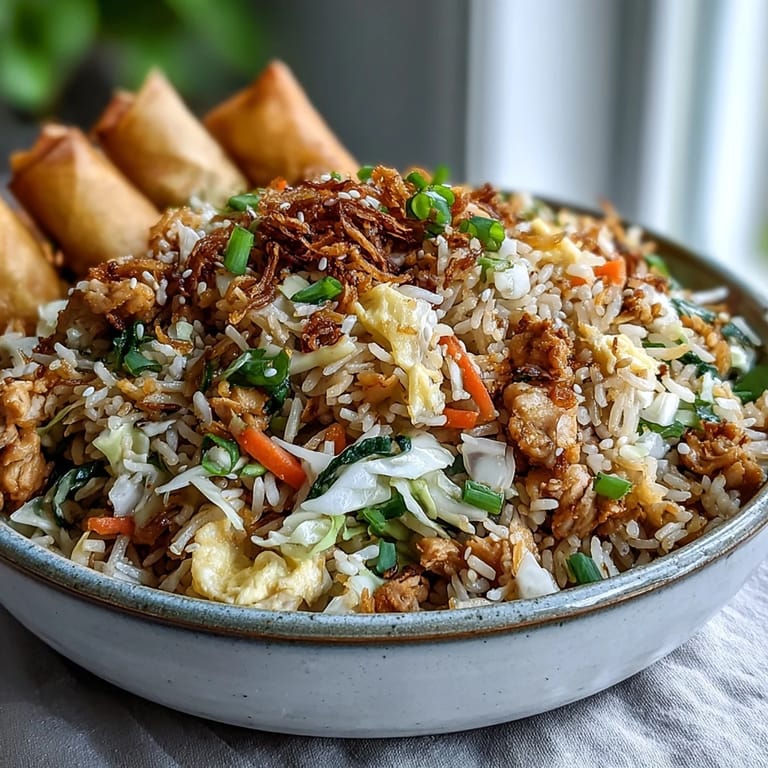
- Plate it hot and scatter those crispy fried onions and sesame seeds over everything while it's still steaming—this is where it goes from good to memorable.
 Pin It
 I learned the egg roll filling trick when I realized I was making this dish to chase a feeling, not just a flavor. It's that moment when simple ingredients taste fancy because you layered them right and paid attention to texture.
Why This Dish Works as Comfort and Sophistication
There's something deeply satisfying about taking the flavors you love from a crispy appetizer and making them into a complete, grounding main course. You get the savory cabbage and ginger notes without the guilt of fried dough, and somehow it feels both casual enough for a Tuesday night and polished enough for when you want to impress someone with minimal effort.
The Secret to Restaurant-Quality Texture
The magic isn't in fancy technique—it's in understanding that fried rice lives or dies by temperature and timing. A screaming hot pan, ingredients that are prepped and ready, and the confidence to keep things moving fast means every element stays distinct instead of turning into a one-note paste.
How to Make It Your Own
This recipe is forgiving enough to handle your changes without falling apart. Swap in turkey or pork if that's what you have, add water chestnuts or bean sprouts for extra crunch, or use whatever vegetables look good at your market.
- If you want more richness, drizzle a little extra sesame oil over the finished dish right before eating.
- For heat, add fresh sliced chilies or a pinch of white pepper—the white pepper is subtle but builds on itself as you eat.
- Keep the crispy toppings separate until the moment you serve it, or they'll soften and lose their best quality.
 Pin It
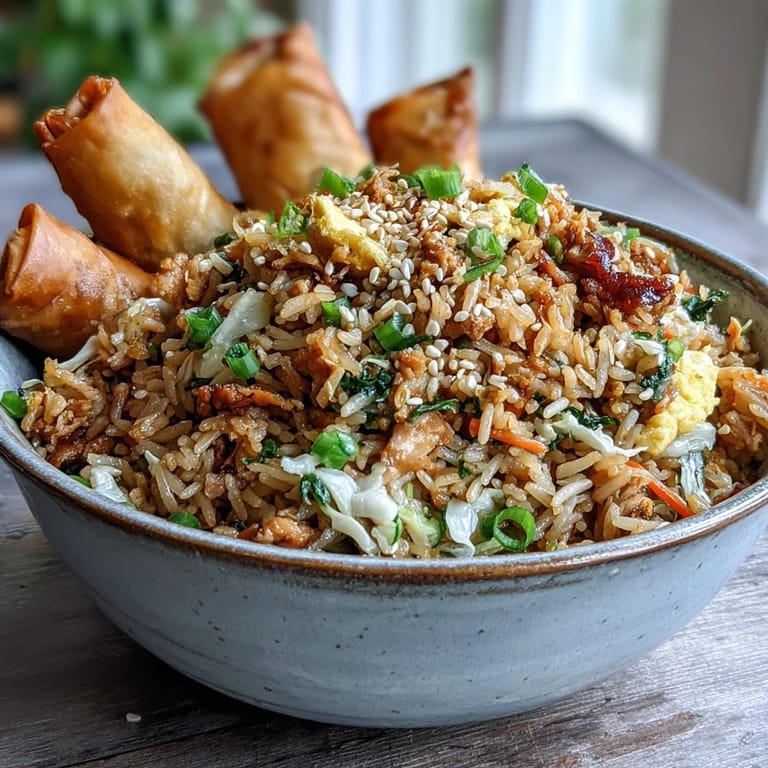
 This is the kind of dish that proves you don't need hours or complicated steps to make something that tastes like you really tried. Once you make it once, you'll make it again.
Recipe FAQs
- → Why use day-old rice for fried rice?
Day-old rice has dried out slightly, which prevents it from becoming mushy during stir-frying. The grains separate easily and develop a pleasant texture that holds up well against the sauces and vegetables.
- → Can I use freshly cooked rice instead?
Yes, spread freshly cooked rice on a baking sheet and refrigerate for at least 2-3 hours to dry it out. This helps achieve the proper texture when stir-frying.
- → What's the best way to prevent clumping when cooking?
Use your hands to break up any rice clumps before adding to the wok. During cooking, continuously toss and stir with a spatula to separate grains and ensure even coating with sauces.
- → Can I make this dish vegetarian?
Absolutely. Substitute the minced chicken with crumbled firm tofu or additional vegetables like bamboo shoots, water chestnuts, or bell peppers for extra texture and variety.
- → How do I store and reheat leftovers?
Store in an airtight container in the refrigerator for up to 3 days. Reheat in a wok or skillet over medium-high heat, adding a splash of water if needed to prevent sticking. The microwave works but may soften the texture.
- → What vegetables work best in this dish?
Green cabbage and carrots provide traditional egg roll crunch. Bean sprouts, snap peas, bell peppers, or bok choy also work beautifully. Aim for vegetables that maintain some crispness after cooking.