 Pin It
 My neighbor Linda showed up one April morning with a jar of dandelion petals she'd collected from her yard, insisting I try them in something sweet. I was skeptical until I baked these honey scones and bit into that first warm, floral-kissed crumb. The delicate yellow petals dissolved on my tongue like edible sunshine, and suddenly spring wasn't just a season—it was breakfast. Now whenever those bright yellow flowers dot the lawn, I know exactly what to make.
I made these for a small garden party last May, and watching my friends spread clotted cream on a still-warm scone while sitting under blooming apple trees felt like I'd somehow captured the entire season in one plate. Someone asked for the recipe before they'd even finished eating, which doesn't happen often enough to take for granted.
Ingredients
- All-purpose flour (2 cups): This is your structure; don't sift it unless your flour is seriously compacted, as that can toughen the scones.
- Granulated sugar (1/4 cup): Just enough sweetness to let the honey and dandelion shine without making these taste like dessert.
- Baking powder (1 tbsp): This is what gives scones their signature crumbly-yet-tender texture; use fresh baking powder or your scones will be flat and sad.
- Fine sea salt (1/2 tsp): A pinch brightens the floral notes and keeps everything balanced.
- Unsalted butter, cold and cubed (1/2 cup): Cold butter creates those beautiful flaky layers, so resist the urge to use softened butter—it changes the whole game.
- Whole milk, cold (2/3 cup): The cold liquid prevents the butter from melting too early, which is the secret to tender scones.
- Dandelion petals, pesticide-free (2 tbsp plus 2 tbsp for topping): Only use the bright yellow petals from fully opened flowers; the green parts are genuinely bitter and will ruin the delicate flavor.
- Honey (2 tbsp plus 1 tbsp for drizzling): Liquid honey works better than crystallized; it distributes evenly and adds subtle sweetness.
- Large egg (1): This binds everything together and helps the scones rise with a tender crumb.
- Clotted cream, for serving: If you can't find proper clotted cream, whipped cream works in a pinch, though mascarpone adds an unexpected richness that some people actually prefer.
Tired of Takeout? 🥡
Get 10 meals you can make faster than delivery arrives. Seriously.
One email. No spam. Unsubscribe anytime.
Instructions
- Prep your workspace:
- Preheat the oven to 400°F and line your baking sheet with parchment paper. This gives you peace of mind so you're not rushing to do it when your hands are covered in dough.
- Combine the dry ingredients:
- Whisk together flour, sugar, baking powder, and salt in a large bowl. This distributes the leavening evenly so your scones rise consistently.
- Cut in the butter:
- Add your cold, cubed butter and use a pastry cutter or your fingertips to work it in until the mixture looks like coarse crumbs with pea-sized pieces of butter visible. Stop before it gets smooth; those little butter pockets are what create those tender, flaky layers.
- Prepare the wet ingredients:
- In a small bowl, whisk together cold milk, honey, egg, and the dandelion petals. Let it sit for a minute so the petals soften slightly and release their flavor.
- Bring it together gently:
- Pour the wet mixture into the dry ingredients and stir with a fork until just combined. Overmixing develops gluten and makes tough, dense scones; you want some loose flour still visible in the bowl.
- Shape the dough:
- Turn the dough onto a lightly floured surface and gently pat it into a 1-inch-thick round. Use a bench scraper or knife to cut it into 8 wedges like a pizza, then transfer them to your prepared baking sheet.
- Bake until golden:
- Bake for 16 to 18 minutes, watching until the scones are puffy and golden brown on top. The aroma will tell you when they're close—that's when you know they're almost ready.
- Finish with flourish:
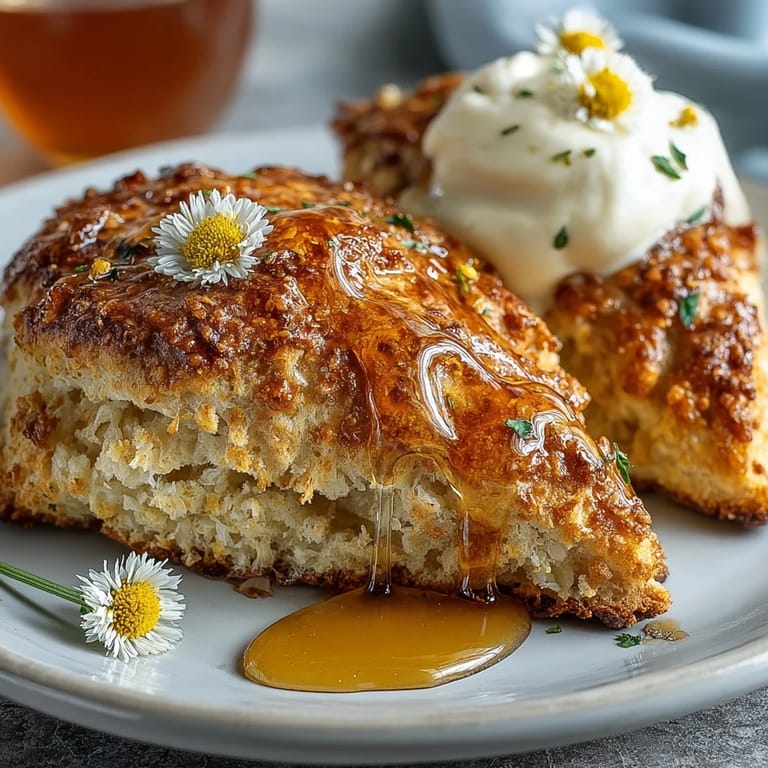
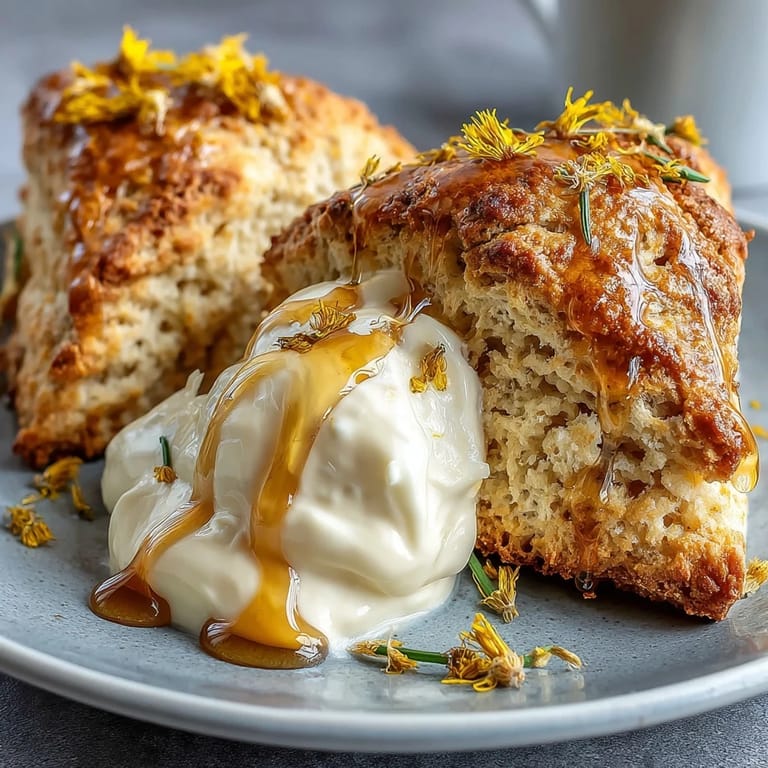
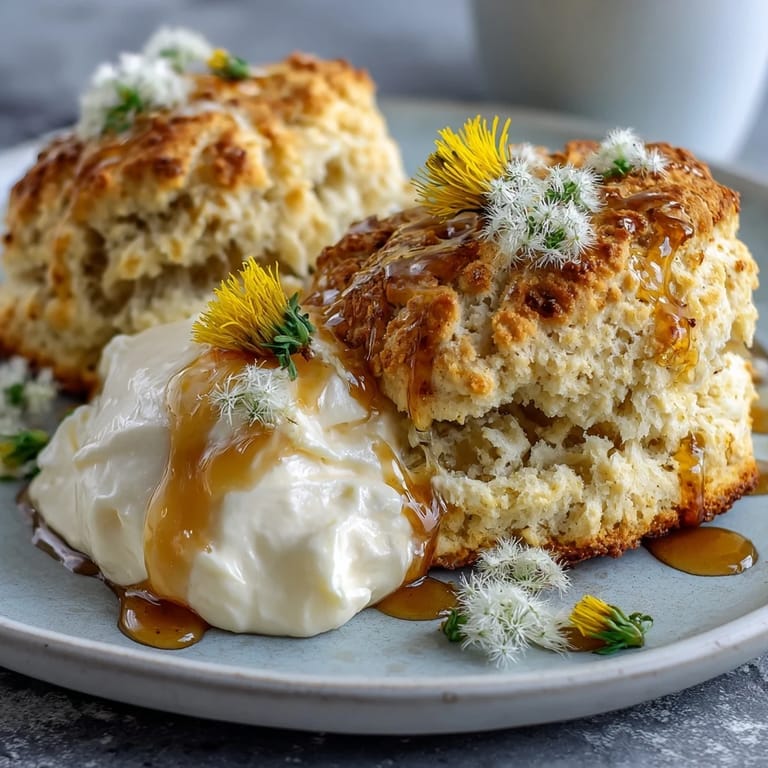
- While still warm, drizzle with honey and scatter the reserved dandelion petals on top. The warmth helps everything cling to the scone.
- Serve immediately:
- Slice each scone in half if desired and serve warm with generous dollops of clotted cream. This is when they're best.
 Pin It
 There's something about serving these scones that feels like you've done something genuinely thoughtful. People eat them slowly, savoring the delicate floral flavor, and that quiet appreciation is worth the small effort it takes to gather dandelion petals and cream.
Why Dandelions Belong in Your Brunch
Dandelions have been used in European cooking for centuries, but somewhere along the way we started seeing them as weeds instead of ingredients. Their petals are delicate and slightly sweet with an almost honeyed undertone, which makes them perfect for scones. Spring is the best time to use them because the flowers are at their most tender and flavorful—once summer heat arrives, the flavor becomes sharper and more grassy.
The Clotted Cream Question
Clotted cream has this rich, almost fudgy texture that makes even a humble scone feel luxurious. If your grocery store doesn't carry it, whipped cream is the obvious substitute, but I've also had success with a 1:1 mixture of mascarpone and whipped cream, which gives you that same silky mouthfeel. Some people even use crème fraîche with a touch of honey stirred in, and honestly, on a warm spring morning, all of these taste like celebration.
Make It Your Own
This recipe is flexible enough to bend to whatever spring flowers you have access to. Violet petals work beautifully, as do fresh rose petals or even lavender if you're feeling bold. The honey amount can shift depending on how sweet you prefer your scones, and if you're out of dandelion petals entirely, a touch of lemon zest gives you that bright, herbal quality.
- Store leftover scones in an airtight container for one day, though they're genuinely best eaten warm on the day they're baked.
- You can freeze unbaked scone wedges on a baking sheet, then bake directly from frozen, adding just a few extra minutes to the bake time.
- If you're making these for guests, have the clotted cream and honey ready ahead of time so you can focus on getting the scones warm and perfect.
 Pin It
 These scones taste like the exact moment when you realize spring has actually arrived. Serve them warm, eat them slowly, and let the floral honey-butter combination remind you why you're so glad winter is finally over.
Recipe FAQs
- → Can I substitute clotted cream with other toppings?
Yes, whipped cream or mascarpone are excellent alternatives that provide a similar rich and creamy texture.
- → Are there any special requirements for the dandelion petals?
Use fully opened, pesticide-free yellow petals only, avoiding green parts to prevent bitterness.
- → How should the dough be handled to ensure tender scones?
Gently mix ingredients without overworking the dough and pat it to about 1 inch thickness for a light texture.
- → What is the best way to serve these scones?
Serve warm, drizzled with honey and garnished with additional dandelion petals, complemented by clotted cream.
- → Can these scones be made ahead of time?
They are best enjoyed fresh on the day they are baked to maintain their tender texture and flavor.