 Pin It
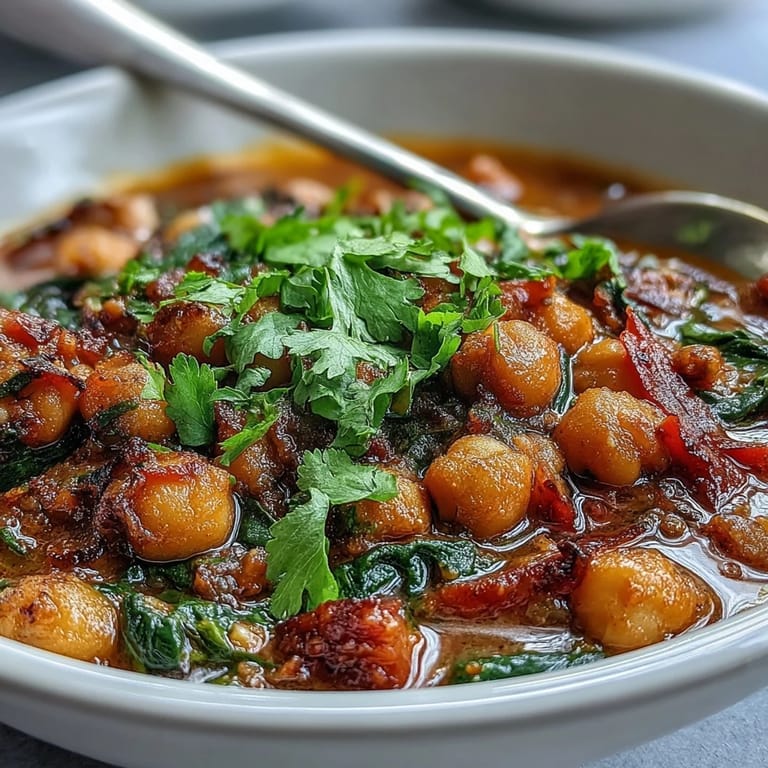
 There's something about the smell of cumin hitting hot oil that instantly transports me to a tiny kitchen in Barcelona, where my friend Maria stirred a similar pot while telling me about her grandmother's market-day ritual. I came home from that trip determined to recreate that warmth, that feeling of spices doing their quiet work while the kitchen filled with possibility. This spicy chickpea stew became my answer—not a perfect replica, but something that captures that same unhurried magic of throwing together humble ingredients and watching them transform into something that nourishes both body and mood.
I made this for my parents on a cold January evening when they weren't expecting anything fancy, just something warm to chase away the grey afternoon. My dad went back for thirds, which never happens, and my mom asked for the recipe immediately—not the typical "I'll try it sometime" response, but genuine interest. That's when I knew this stew had graduated from experiment to keeper.
Ingredients
- Olive oil: Use good quality here because it carries the flavor of the soffritto—it's the foundation everything else builds on.
- Onion, garlic, carrots, bell pepper, and zucchini: Dice everything to roughly the same size so it all cooks at the same pace and creates a pleasant, cohesive texture.
- Chickpeas: Two cans drained and rinsed means you're removing the excess sodium and making the broth cleaner and more flavorful.
- Ground cumin: This warm, earthy spice is the backbone—don't skip it or substitute.
- Ground coriander: It adds a subtle citrus note that balances the heat beautifully.
- Smoked paprika: This gives depth and a whisper of smokiness without actual fire.
- Ground turmeric: A pinch of this golden spice is what makes the stew feel medicinal in the best way, plus it's beautiful to look at.
- Chili flakes: Start with a half teaspoon and taste as you go—heat preferences vary wildly.
- Ground black pepper and sea salt: Don't rush these; proper seasoning is what makes everything sing.
- Diced tomatoes: Canned is perfectly fine and often more consistent than fresh.
- Vegetable broth: Low-sodium lets you control the salt level and taste the actual vegetables.
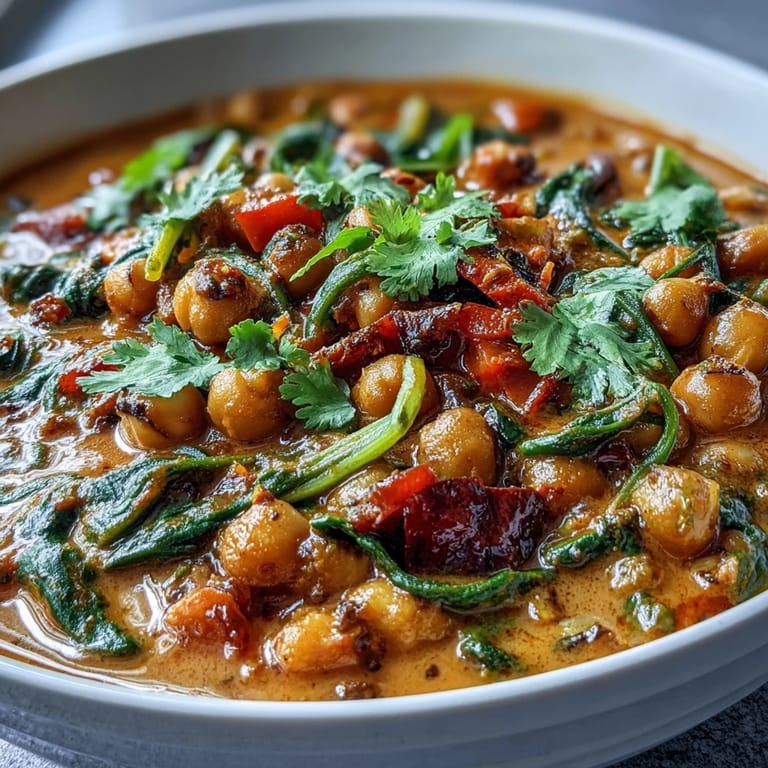
- Fresh spinach or kale: Add this at the very end so it keeps its bright color and slight texture.
- Lemon juice: This is the secret weapon that brightens everything and makes people say "what is that?" without quite knowing.
- Fresh cilantro or parsley: A handful on top makes it feel intentional and finished, not like a weeknight throw-together.
Tired of Takeout? 🥡
Get 10 meals you can make faster than delivery arrives. Seriously.
One email. No spam. Unsubscribe anytime.
Instructions
- Start the flavor base:
- Heat your olive oil over medium heat and add the diced onion, letting it soften and turn translucent—this takes about three to four minutes and fills the kitchen with a gentle, inviting smell. You'll know it's ready when you can easily crush a piece against the side of the pot with your spoon.
- Build the foundation:
- Toss in the garlic, carrots, bell pepper, and zucchini, stirring occasionally so nothing sticks or browns. After about five minutes, the vegetables should be slightly softened but still have some firmness to them.
- Bloom the spices:
- This is the moment everything changes—add all your spices at once and stir constantly for just one minute so they release their essential oils and perfume the pot. Don't walk away, because burned spices taste bitter and there's no coming back from that.
- Build the stew:
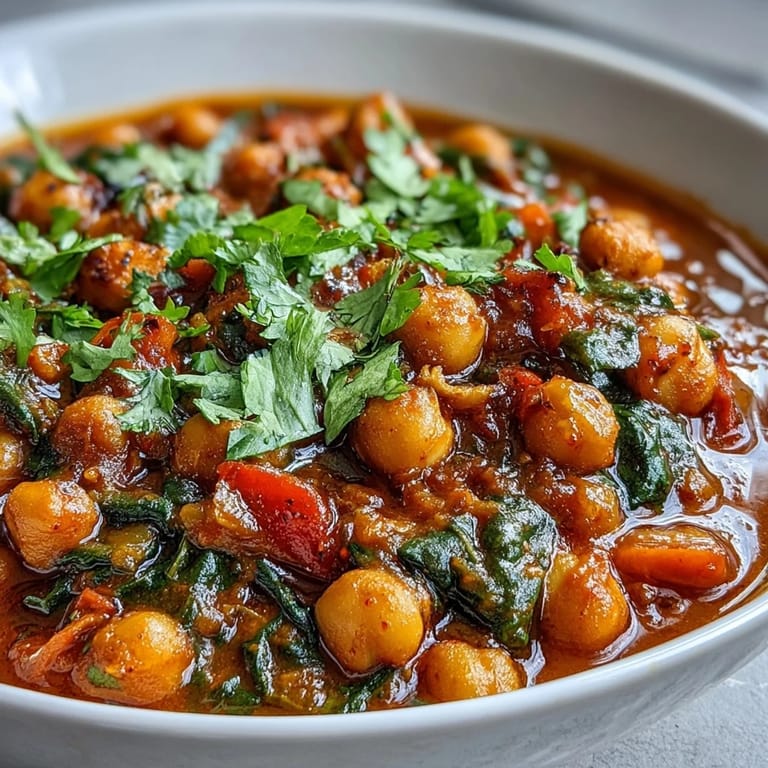
- Pour in your chickpeas, tomatoes, and broth, then bring the whole thing to a boil before immediately turning down the heat to a gentle simmer. Leave it uncovered for twenty to twenty-five minutes, stirring occasionally and letting the flavors meld together.
- Finish with greens:
- Add your spinach or kale and let it wilt for two to three minutes, which happens faster than you'd expect. The leafy greens will turn a darker, glossier green when they're ready.
- Brighten and adjust:
- Squeeze in the lemon juice and taste carefully—this is your chance to add more salt, heat, or anything else that feels missing. Serve it hot with the fresh cilantro scattered on top like confetti.
 Pin It
 There was an evening when a friend texted saying she'd been having a rough week and didn't know what to eat, so I dropped off a container of this stew still warm from the stovetop. She called me three hours later to say she'd eaten it in small, thoughtful spoonfuls while sitting by the window, and that the warmth and the spices had somehow made the day feel manageable. That's when I realized food isn't just fuel—it's sometimes exactly what someone needs without them having to ask.
The Magic of the Simmer
There's a reason this stew only takes fifty minutes total—the high heat from the broth and tomatoes means the chickpeas soften quickly and the vegetables release their sweetness fast. The simmer isn't about cooking time; it's about letting everything get to know each other, about patience that pays off immediately. I've learned that rushing it doesn't help, but neither does cooking it for hours—there's a perfect window where everything tastes bright and alive, not collapsed into mush.
Making It Your Own
One of my favorite discoveries was blending half a cup of the finished stew until creamy and stirring it back in—it gives the whole pot a silky texture without any cream or coconut milk. I've also learned that sweet potato works beautifully alongside or instead of the zucchini, adding a subtle sweetness that balances the spices differently. The beauty of this stew is that it's forgiving; the bones are solid enough that you can swap vegetables based on what's in your fridge or what looks good at the market.
Serving and Storing
This stew tastes even better the next day when the flavors have had time to deepen and mingle, so it's ideal for making ahead or eating throughout the week. It keeps in the refrigerator for up to four days in an airtight container, and it freezes beautifully for up to three months—just leave a little space at the top of the container because liquids expand. When you reheat it, do it gently on the stovetop rather than blasting it in the microwave, which keeps the vegetables from turning into mush and the flavors from tasting flattened.
- Serve it over brown rice, quinoa, or crusty bread for a heartier meal that sticks with you longer.
- A squeeze of fresh lemon juice right before eating brightens everything, even if you added it during cooking.
- Leftover stew tastes wonderful spooned over roasted vegetables or stirred into grains for a quick lunch.
 Pin It
 This stew reminds me that sometimes the most nourishing meals are the simplest ones—vegetables, legumes, spices, and time. There's real comfort in knowing exactly what you're eating and why, and in sharing that with people you care about.
Recipe FAQs
- → How long does this stew keep in the refrigerator?
The stew stores well for 4-5 days in an airtight container. The flavors actually develop and improve after sitting overnight, making it excellent for meal prep.
- → Can I freeze this chickpea stew?
Yes, freeze for up to 3 months. Cool completely before transferring to freezer-safe containers. Thaw overnight in the refrigerator and reheat gently on the stovetop.
- → What can I serve with this stew?
Pair with crusty bread, brown rice, or quinoa for a complete meal. A dollop of yogurt or extra fresh herbs also makes lovely garnishes.
- → How can I make this stew more protein-rich?
Add diced tofu, lentils, or white beans during simmering. Serving over quinoa or with a side of legumes also boosts protein content.
- → Can I use dried chickpeas instead of canned?
Absolutely. Soak 1 cup dried chickpeas overnight, then simmer for 60-90 minutes until tender before adding to the stew.