 Pin It
 There's something about a pot of lemon chicken rice soup that makes even the messiest kitchen feel purposeful. I stumbled onto this recipe on a grey Tuesday afternoon when my fridge was nearly empty and my mood needed lifting—what started as improvisation became the kind of soup I now make whenever someone needs comfort food that doesn't require hours of fussing. The brightness of fresh lemon cuts through the richness of chicken and rice in a way that feels both nourishing and light, like the kitchen knows exactly what you need before you do.
My neighbor actually taught me the importance of zesting the lemon separately from the juice when I made this for her family during a particularly cold snap. She watched me squeeze and stir, then quietly suggested I finish with both—the zest adds this unexpected texture and intensity that juice alone just can't do. Now I always tell people: taste as you go, especially at the end, because that's when the lemon does its real work.
Ingredients
- Boneless, skinless chicken breasts (about 350 g, diced): Cut them into bite-sized pieces so they cook quickly and stay tender in the broth.
- Carrots (2 medium, peeled and sliced): I always slice mine on a slight bias because it looks nicer and somehow tastes sweeter.
- Celery stalks (2, sliced): This is the quiet backbone of flavor—don't skip it even if the smell seems mild at first.
- Yellow onion (1 small, diced): Medium dice works best so the pieces soften but don't disappear.
- Garlic (3 cloves, minced): Fresh garlic makes all the difference; don't use jarred if you can help it.
- Baby spinach (100 g, about 2 cups packed): It wilts down to almost nothing, so don't be shy with the amount.
- Lemon (1 large for zest and juice): Pick a heavy lemon that feels full of juice, and zest it before you cut it in half.
- Long-grain white rice (120 g, rinsed): Rinsing removes excess starch and keeps the grains from clumping.
- Low-sodium chicken broth (1.3 liters): I use low-sodium because you control the salt at the end, and it tastes cleaner.
- Water (500 ml): This dilutes the broth just enough so flavors blend rather than overpower.
- Bay leaf (1): Adds subtle depth; fish it out before serving or your guests will find it.
- Dried thyme (1/2 tsp): This herb is gentle and works with everything in the pot.
- Dried oregano (1/2 tsp): A touch of oregano brings warmth without heaviness.
- Salt and black pepper: Season at the end when you can actually taste everything together.
- Fresh parsley (2 tbsp, chopped, plus extra for garnish): Save some raw for the very end—it stays brighter that way.
- Olive oil (1 tbsp): Just enough to coat the pot and start your vegetables without making the soup greasy.
Tired of Takeout? 🥡
Get 10 meals you can make faster than delivery arrives. Seriously.
One email. No spam. Unsubscribe anytime.
Instructions
- Wake up your vegetables:
- Heat olive oil in a large pot over medium heat, then add onion, carrots, and celery. Let them soften for 4-5 minutes, stirring occasionally—you'll know it's working when the kitchen smells sweet and the edges start to turn gold.
- Build the flavor base:
- Stir in minced garlic and cook for just 1 minute until it's fragrant and slightly golden. This is when the soup starts smelling like something real.
- Brown the chicken:
- Add diced chicken and cook for 3-4 minutes, stirring now and then, until the outside loses its raw pink color. It won't be fully cooked yet, and that's exactly right.
- Layer in the dry ingredients:
- Sprinkle rice into the pot, add bay leaf, thyme, and oregano, then stir everything together so the rice gets coated and the herbs release their oils.
- Bring it to life:
- Pour in chicken broth and water, bring to a boil, then lower the heat and cover. Simmer for 18-20 minutes until rice is tender and chicken is cooked through—the kitchen will smell like pure comfort.
- Finish with brightness:
- Fish out the bay leaf, stir in spinach and lemon zest and juice, then simmer for 2-3 minutes until the spinach turns dark green and silky. This is when the whole dish transforms.
- Season and taste:
- Add salt and black pepper gradually, tasting as you go—lemon can be bold, so you might need less salt than you'd expect. Fold in fresh parsley.
- Serve warm:
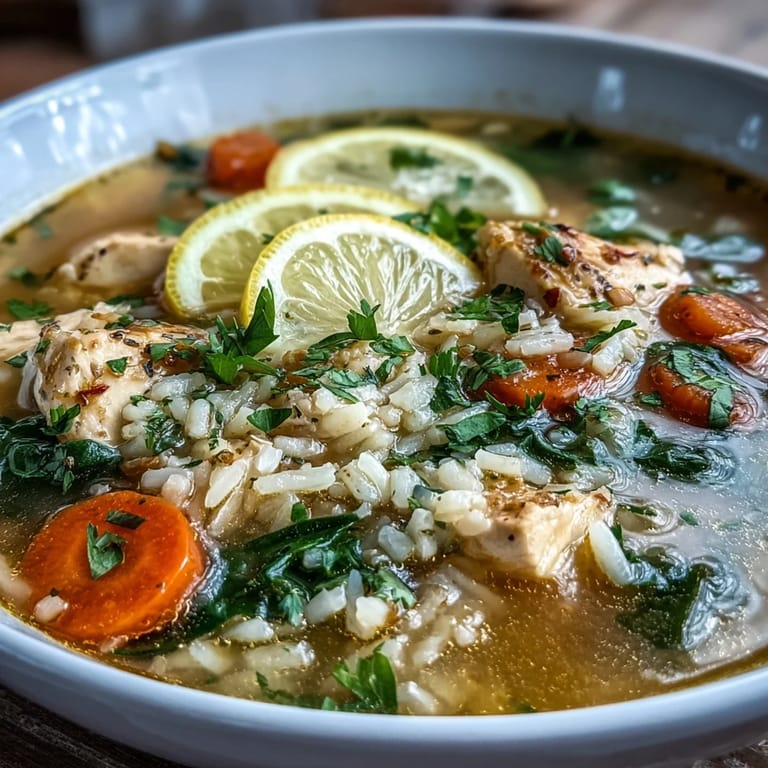
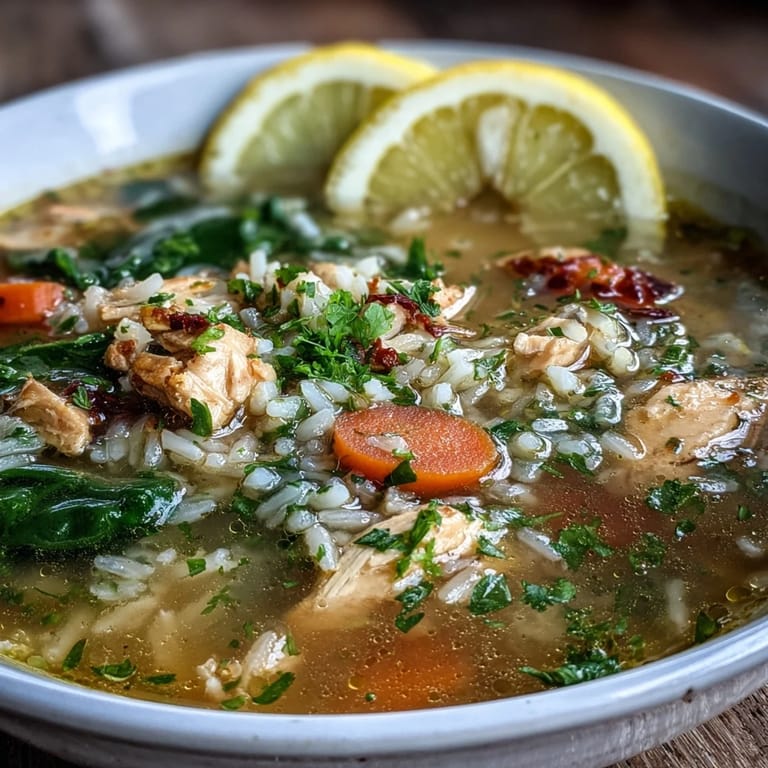
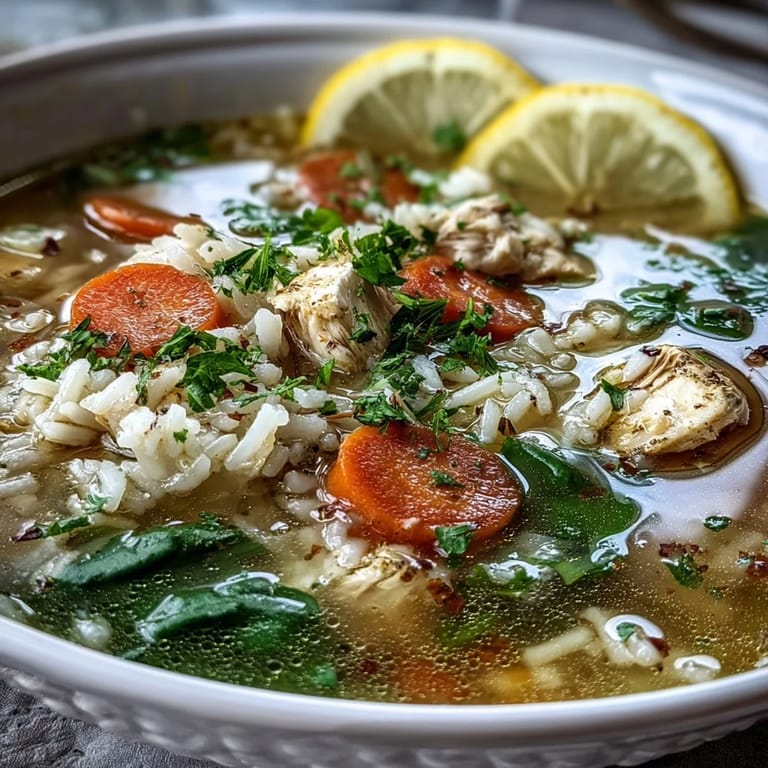
- Ladle into bowls, add extra parsley and lemon slices on top, and let people eat while it's hot.
 Pin It
 The first time I made this for a friend who wasn't feeling well, she took one spoonful and closed her eyes—not in the polite way, but in the way that meant the soup was doing something bigger than feeding her. That's when I realized this isn't just easy food; it's the kind of dish that reminds people they're worth taking care of.
Why This Soup Works Every Single Time
One-pot soups are forgiving because everything cooks together and flavors marry naturally. This one specifically works because you're building layers: vegetables first for sweetness, garlic for depth, then a gentle simmer that lets the chicken stay tender and the rice absorb all the good broth. The lemon at the end isn't an afterthought—it's the moment when all those simple ingredients suddenly taste sophisticated and alive.
How to Make It Your Own
I've swapped vegetables based on what was lurking in the crisper drawer—bell peppers are lovely, diced zucchini works, even a handful of frozen peas adds color and sweetness. Some nights I stir in a beaten egg yolk at the very end for richness, and the soup becomes almost creamy without any cream. If you're feeding vegetarians, leave out the chicken and use vegetable broth with white beans, and honestly, nobody notices what's missing because the lemon and herbs carry everything.
The Small Moments That Matter
I learned to zest my lemon before squeezing it because I was in a hurry once and squeezed first, then realized I couldn't zest a cut lemon without losing half the zest to my fingers. Now I always zest when the skin is tight and firm, then juice what's left. The textural difference in the finished bowl is real—that little bit of zest floating on top catches light and tastes brighter than juice alone, and it's worth the extra ten seconds.
- Keep the bay leaf visible so you remember to remove it, or remove it immediately while the pot is still hot.
- If you're doubling this recipe, increase cooking time by just a few minutes because a larger pot holds heat differently.
- Leftover soup actually tastes better the next day when flavors have settled, and it reheats gently on the stovetop without breaking apart.
 Pin It
 This soup has become my answer to 'I don't know what to make' because it's simple enough for a Tuesday night but generous enough for people you want to feed well. Make it once and you'll find yourself reaching for it whenever comfort and health need to live in the same bowl.
Recipe FAQs
- → Can I use a different grain instead of rice?
Yes, you can substitute rice with quinoa or barley, but cooking time and liquid amounts may need adjustment.
- → How can I make this dish vegetarian?
Replace chicken with white beans and use vegetable broth instead of chicken broth to keep it plant-based.
- → Is it possible to add creaminess to the dish?
For added richness, stir in a bit of cream or a beaten egg yolk at the end of cooking.
- → Can I swap spinach for another green?
Kale or Swiss chard are excellent alternatives to spinach and offer similar texture and flavor.
- → What herbs enhance the flavor best?
Thyme, oregano, bay leaf, and fresh parsley create a balanced, aromatic profile that complements the ingredients.