 Pin It
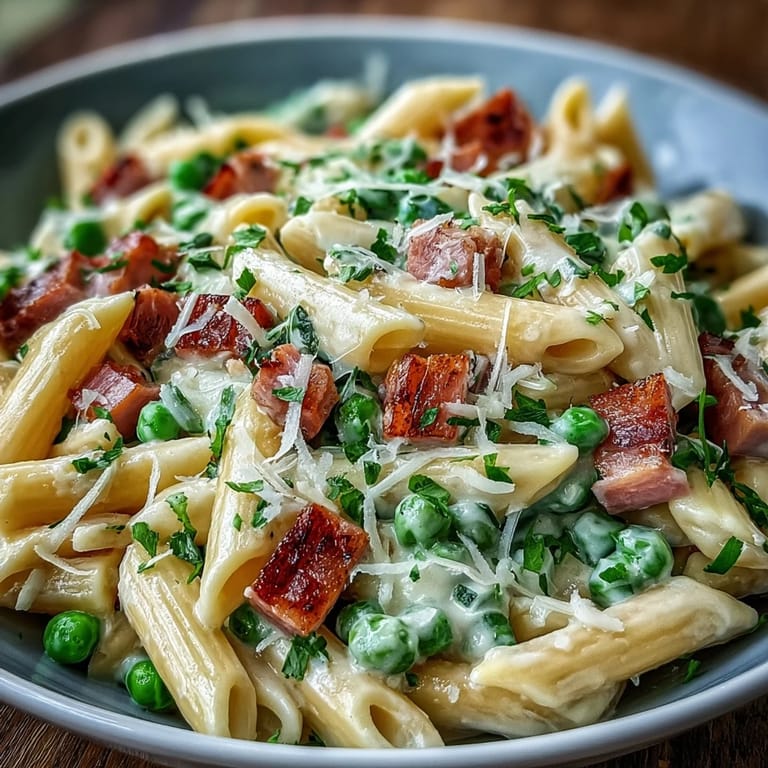
 My neighbor knocked on my door one rainy Tuesday evening with a bag of leeks from her garden, insisting I do something with them before they wilted. I had ham in the fridge, pasta in the pantry, and just enough cream to make something that felt both elegant and utterly effortless. Twenty minutes later, we were eating straight from the pot, and she asked for the recipe before finishing her bowl. That's when I realized this dish had something special—it tastes like comfort but feels like you actually tried.
I made this for my daughter's school lunch box once, and she traded it for literally nothing—just kept it. That moment told me everything about whether a recipe deserves to stay in rotation. Now it's our go-to when someone's had a long week or when we need dinner to happen without stress.
Ingredients
- 2 medium leeks, cleaned and sliced (white and light green parts only): Leeks have a mild, slightly sweet onion flavor that's more delicate than regular onions—they mellow beautifully when cooked slowly, so slice them thin enough to soften quickly but thick enough not to disappear.
- 1 cup (150 g) frozen peas: Fresh peas are lovely, but frozen ones are picked at peak ripeness and often taste better than fresh ones from the grocery store; they add brightness and sweetness at the very end.
- 12 oz (340 g) short pasta (penne, fusilli, or similar): Short shapes catch the creamy sauce better than long pasta, so choose whatever you have or love; the starch from the pasta helps thicken the sauce naturally.
- 7 oz (200 g) cooked ham, diced: Use good quality ham if you can—the difference between grocery store ham and deli counter ham shows in every bite, and it's worth the small splurge.
- 1 cup (240 ml) heavy cream: This is what makes the sauce luxurious; don't skip it or try to stretch it with milk, because the fat is what creates that silky coating.
- 1/2 cup (50 g) grated Parmesan cheese: Freshly grated is worlds better than pre-grated because the anti-caking agents interfere with melting smoothly into the sauce.
- 2 tbsp (28 g) unsalted butter: Unsalted lets you control the salt level, and butter has a richer flavor than oil for sautéing the vegetables.
- 3 cups (720 ml) low-sodium chicken or vegetable broth: Low-sodium gives you room to adjust seasoning at the end without oversalting; the broth becomes part of the sauce, so its quality matters.
- 2 cloves garlic, minced: Garlic added after the leeks becomes mellow and sweet rather than sharp, which is exactly what this dish needs.
- 1/4 tsp ground black pepper, 1/2 tsp salt, 1/4 tsp nutmeg (optional): Nutmeg is optional but transforms this from nice to memorable—just a whisper of it adds sophistication without anyone knowing why.
Tired of Takeout? 🥡
Get 10 meals you can make faster than delivery arrives. Seriously.
One email. No spam. Unsubscribe anytime.
Instructions
- Melt the butter and soften the leeks:
- Melt 2 tablespoons of butter in your large skillet over medium heat—you'll know it's ready when it foams and smells nutty. Add your sliced leeks and let them sit undisturbed for a minute before stirring, which helps them caramelize slightly at the edges; cook for 3 to 4 minutes, stirring occasionally, until they're soft and smell sweet.
- Add garlic and ham:
- Stir in your minced garlic and cook for just 1 minute until the kitchen fills with that unmistakable aroma. Add your diced ham and toss everything together for about 2 minutes, letting the ham warm through and release its flavors into the pan.
- Build the pasta base:
- Pour in your pasta, broth, salt, and pepper all at once, stirring well to separate any pasta strands. Bring the whole thing to a simmer and cover it; you'll notice the liquid bubbling gently at the edges after a minute or two.
- Cook the pasta halfway:
- Let it simmer covered for about 10 minutes, stirring every couple of minutes, until the pasta is mostly tender but still has a slight bite. The broth will reduce and start to coat the pasta—this is exactly what you want.
- Add the peas and finish cooking:
- Uncover the skillet, toss in your frozen peas, and let everything simmer together for 3 to 4 more minutes until the pasta is fully tender and the liquid has reduced significantly. The peas will thaw quickly and add bursts of sweetness.
- Create the creamy sauce:
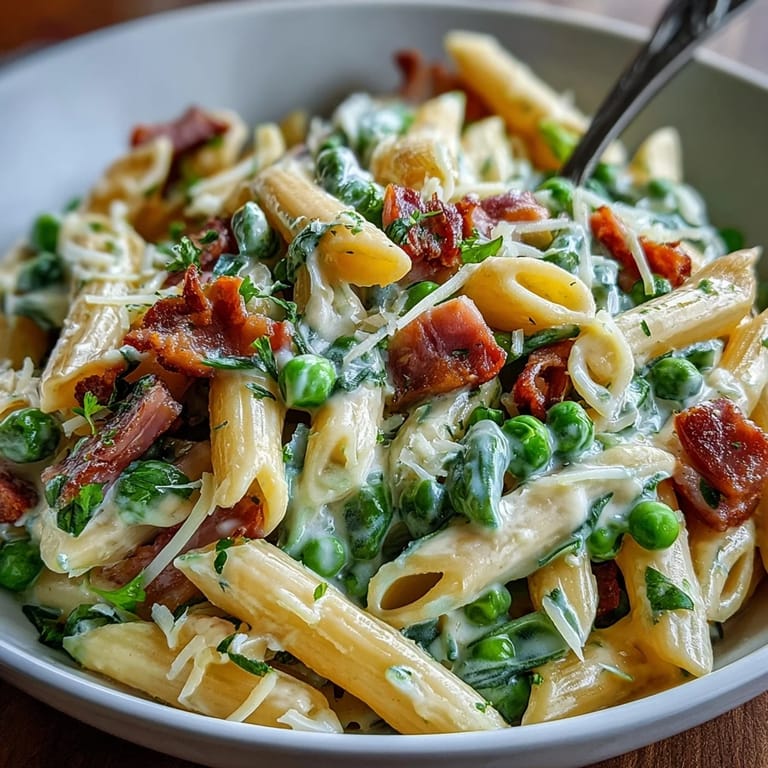
- Reduce the heat to low and pour in your heavy cream and grated Parmesan, along with the nutmeg if you're using it. Stir gently and let it simmer for 2 to 3 minutes until the sauce coats the back of a spoon and looks silky and luxurious, not separated or broken.
- Taste and serve:
- Take a spoonful, taste it, and adjust the salt and pepper to your preference—you might want a bit more than you think. Serve immediately while the sauce is still creamy, with extra Parmesan scattered on top if you like.
 Pin It
 There's a moment in this recipe—right when the cream swirls in and the sauce comes together—where everything feels like it's clicking into place. That moment never gets old, and it's exactly why this dish keeps finding its way onto my table.
Why Leeks Are Quietly Brilliant
Most people overlook leeks in favor of onions, but leeks have this gentle sweetness that onions simply don't have. When you sauté them slowly, they don't turn sharp or aggressive—they become almost buttery, which is why they're so perfect for creamy dishes. Once you start cooking with leeks intentionally rather than treating them like a substitute, you'll wonder why you didn't make them a regular part of your kitchen.
Making It Your Own
This recipe is forgiving enough to adapt to what you have on hand. Smoked turkey works beautifully instead of ham if pork isn't your thing, or you can use cooked chicken for something lighter. I've added handfuls of baby spinach near the end, swapped the pasta shape based on what was in my pantry, and once even stretched the cream with a splash of pasta water to make it go further—it still tasted wonderful.
The Timing and Temperature Matter
This is genuinely a 30-minute meal from start to finish, but only if you prep your ingredients before you start cooking—clean and slice your leeks, mince your garlic, measure your broth. The actual cooking moves quickly once you begin, so having everything ready means you're not fumbling mid-recipe.
- Medium heat for sautéing keeps the leeks from browning too fast and becoming bitter.
- A gentle simmer, not a rolling boil, means the pasta cooks evenly and the broth reduces into a sauce rather than boiling away.
- Low heat for the cream is non-negotiable if you want that silky finish without curdling.
 Pin It
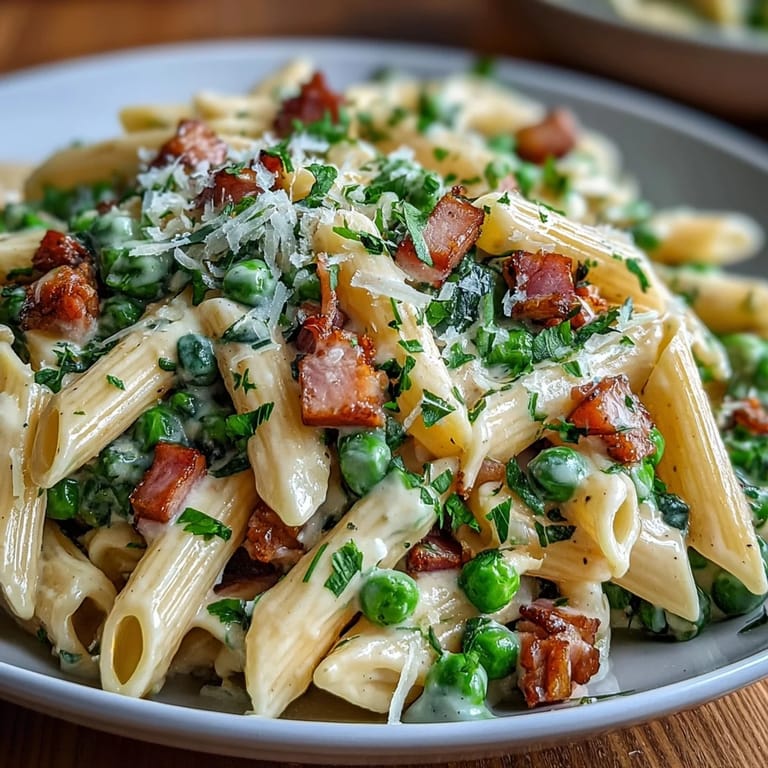
 This is the kind of recipe that proves you don't need complicated techniques or rare ingredients to make something that feels special. It's the quiet weeknight dinner that reminds you why you love cooking in the first place.
Recipe FAQs
- → Can I use different pasta types?
Yes, short pasta like penne or fusilli works best, but other shapes hold the sauce well too.
- → How do I make it dairy-free?
Substitute the cream and Parmesan with coconut milk and nutritional yeast for a creamy texture.
- → Is it possible to use fresh peas instead of frozen?
Fresh peas can be used; add them in the final cooking stage to keep their texture and sweetness.
- → Can I swap ham for another protein?
Cooked turkey or chicken work well as alternatives to vary the flavor and reduce pork content.
- → What is the best way to avoid overcooking the pasta?
Keep the pasta slightly under al dente before adding peas and finishing the sauce to maintain a tender bite.