 Pin It
 My grandmother used to make this skillet on Sunday mornings when we'd visit, and the smell of crispy corned beef hitting hot butter would pull everyone downstairs before the coffee finished brewing. Years later, I tried recreating it from memory—no recipe, just muscle memory and hope—and somehow nailed it on the first try, which still surprises me. There's something almost magical about how the potatoes turn golden, the vegetables soften into the hash, and then those eggs nestle right in like they belong there. It's the kind of breakfast that tastes like home, no matter where you're eating it.
I made this for my partner on a Saturday when we were both exhausted from moving, and watching their face light up when they cut into that runny yolk was worth every bit of effort. The skillet came straight to the table, steam rising up, and we just sat there eating without talking much because sometimes food says what words can't. That meal became the moment we felt settled in our new place, which sounds dramatic for eggs on hash, but you know how certain breakfasts become memories.
Ingredients
- Cooked corned beef (12 oz, diced): Use good quality corned beef—I learned the hard way that the budget stuff doesn't crisp up the same way, and the whole dish relies on those caramelized, crispy edges.
- Yukon Gold potatoes (1 lb, peeled and diced): These waxy potatoes hold their shape beautifully and turn golden without falling apart, unlike russets which can get mushy.
- Yellow onion (1 medium, finely chopped): Chopped small means they soften into the hash and disappear into the flavor rather than sitting as big chewy pieces.
- Green bell pepper (1, diced): The brightness here cuts through the richness, and I love the slight sweetness it brings as it caramelizes.
- Garlic (2 cloves, minced): Mince it fine because you want the garlic distributed throughout, not in big chunks that burn before the potatoes finish.
- Fresh parsley (2 tablespoons chopped, plus extra for garnish): This adds a fresh note at the end—it's the thing that makes people say this tastes brighter than they expected.
- Eggs (4 large): Room temperature eggs cook more gently, so pull them from the fridge a few minutes before you need them.
- Unsalted butter (2 tablespoons): Butter gives you that savory richness and helps the potatoes develop that golden crust.
- Olive oil (2 tablespoons): Use a neutral oil here, not your fancy stuff—this is a cooking oil job, not a finishing oil moment.
- Smoked paprika (1/2 teaspoon): This is the secret flavor booster that makes people ask what that smoky taste is.
- Black pepper and kosher salt (1/2 teaspoon each): Salt and pepper matter more here than you'd think since there aren't many other seasonings competing.
Tired of Takeout? 🥡
Get 10 meals you can make faster than delivery arrives. Seriously.
One email. No spam. Unsubscribe anytime.
Instructions
- Get your potatoes golden:
- Heat a tablespoon each of oil and butter in your skillet over medium heat, then add the diced potatoes. You're looking for them to develop a light golden crust while staying tender inside—this takes about 10 to 12 minutes and requires you to stir occasionally but not constantly, so they actually get contact with the hot pan.
- Build your vegetable base:
- Add the remaining oil and butter, then tumble in the onion, bell pepper, and garlic. Let them cook for about 4 minutes until they soften and start smelling incredible—you'll know when they're ready because the kitchen smells like home cooking.
- Bring in the corned beef:
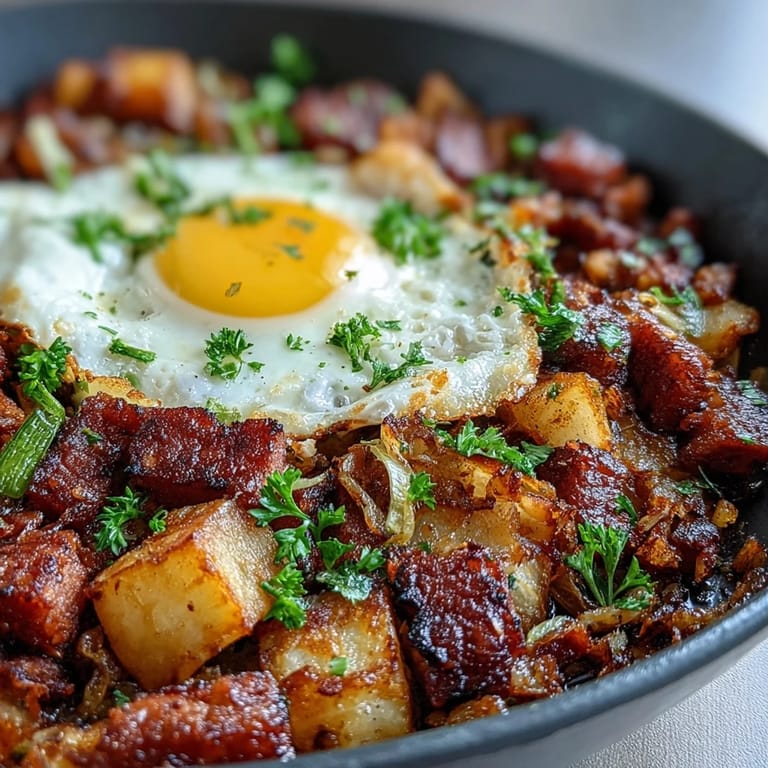
- Crank the heat to medium-high and add your diced corned beef, then season with smoked paprika, salt, and pepper. Cook for 5 to 6 minutes, stirring occasionally, until the corned beef has crispy edges and everything is well combined into a cohesive hash.
- Create wells for the eggs:
- Using the back of a spoon, make 4 shallow indentations in the hash, spacing them evenly. These little nests keep your eggs from rolling around and help them cook more evenly.
- Nestle in the eggs and cover:
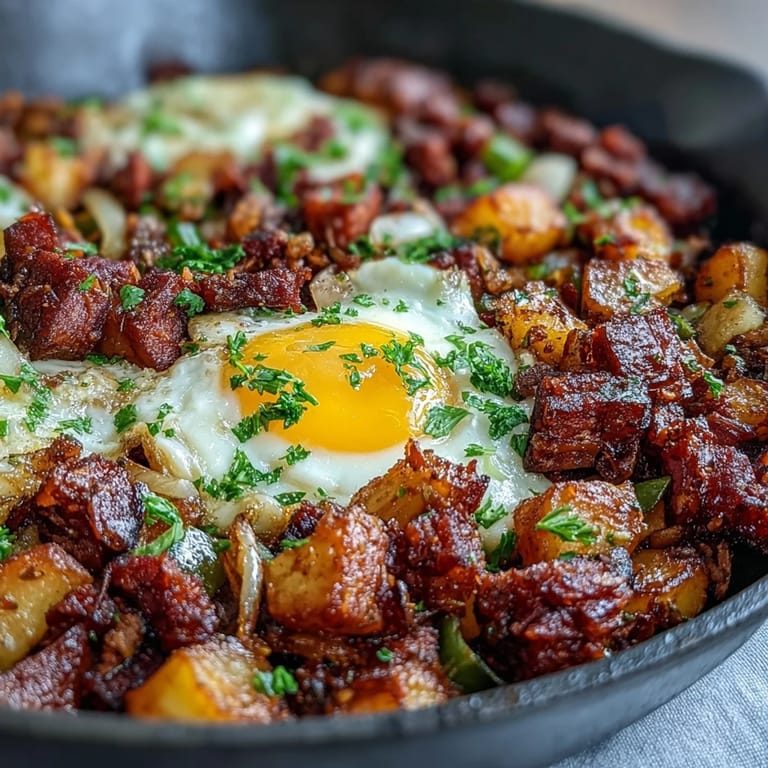
- Crack an egg into each well, then reduce the heat to medium-low and cover the skillet. Cook until the whites are set but the yolks are still runny—this takes 5 to 7 minutes depending on how you like your eggs and how hot your skillet gets.
- Finish and serve:
- Sprinkle everything with fresh parsley and bring the whole skillet to the table if you can, or divide it among plates. Serve right away while the hash is still steaming and the yolks are still liquid gold.
 Pin It
 There was a morning when my kid helped me make this, standing on a step stool pushing the spoon around the hash to make the egg wells, completely concentrated and serious about the responsibility. When those eggs started cooking and the steam rose up under the lid, they gasped like it was magic, and honestly, I remembered why I love cooking in the first place.
The Secret to Crispy Edges
The real magic happens when you resist the urge to stir constantly once the corned beef goes in—let it sit undisturbed for a couple of minutes so the bottom gets those caramelized, crispy edges that everyone fights over. I spent years making this mushy and wondering why restaurant versions tasted better, until a chef friend watched me cook and gently said I was moving it too much. Now I set a timer, step back, and let the pan do its work.
Making It Your Own
Once you understand the basic technique, this skillet becomes a playground for whatever's in your fridge—I've added sautéed spinach, swapped in sweet potatoes when I was trying to eat lighter, and even threw in some leftover roasted Brussels sprouts once and it was unexpectedly amazing. The corned beef hash is really the canvas, and everything else is just flavor that goes on top. Some mornings I add a sprinkle of sharp cheddar right before the eggs go in, and it melts into these little pools of umami that make the whole thing taste richer.
Timing and Temperature Matter More Than You Think
Temperature is honestly the biggest variable—a skillet that runs hot will crisp everything faster, while a cooler one means you need more time and more patience. Cast iron holds heat beautifully and develops those brown crusty bits that stick to the pan and taste incredible, while nonstick lets you see everything clearly and makes flipping easier if you're less confident. Spend a minute figuring out your skillet's personality, and everything else falls into place naturally.
- Room temperature eggs cook more gently and evenly than cold ones straight from the fridge.
- If you like your yolks completely set, just add an extra 2 to 3 minutes under the cover, no shame in that.
- The whole dish only takes 40 minutes total, which makes it perfect for weekends when you actually have time to sit and eat breakfast slowly.
 Pin It
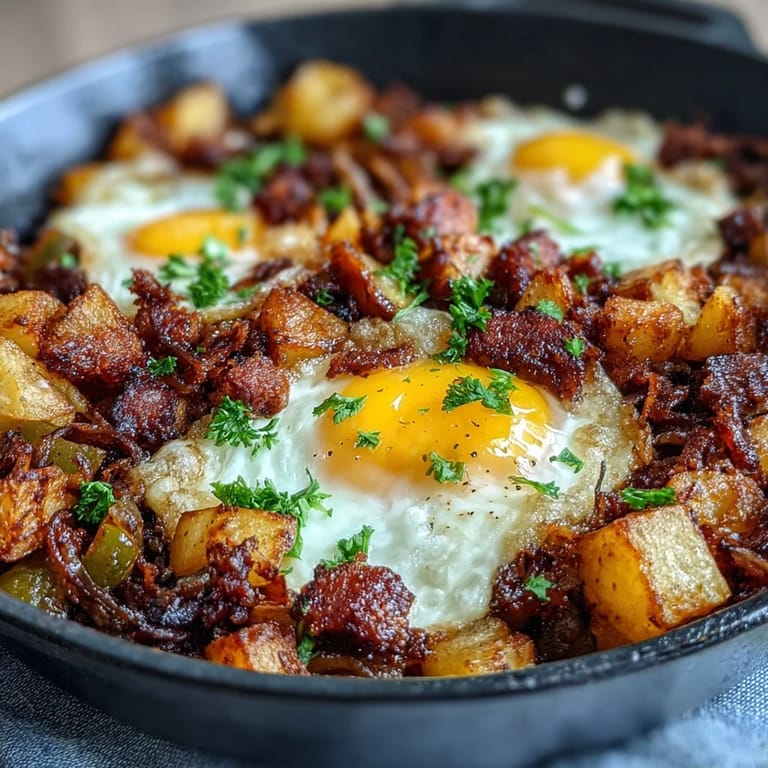
 This breakfast skillet has become my go-to when I want to feel like I've accomplished something before noon, and it never fails to make people happy. Serve it family style straight from the pan, watch everyone's faces when they break into those yolks, and know you've made something worth waking up for.
Recipe FAQs
- → What type of potatoes works best?
Yukon Gold potatoes are ideal for their creamy texture and ability to crisp nicely, but russet or red potatoes are good alternatives.
- → Can I prepare this dish gluten-free?
Yes, using certified gluten-free corned beef ensures the dish remains gluten-free while retaining its rich flavors.
- → How do I get the corned beef hash crispy?
Cook the corned beef with potatoes over medium-high heat, stirring occasionally until a golden, crusty texture forms for the best crispiness.
- → What are some good garnishes or additions?
Fresh parsley adds brightness, and a dash of hot sauce or shredded cheddar cheese can enhance the flavor before serving.
- → Can the eggs be cooked differently in this dish?
Yes, eggs can be cooked until yolks are runny or firm based on preference by adjusting the covered cooking time.
- → Is it okay to use other vegetables?
Absolutely, adding spinach or swapping ingredients like bell peppers for other sautéed vegetables can customize the dish.