 Pin It
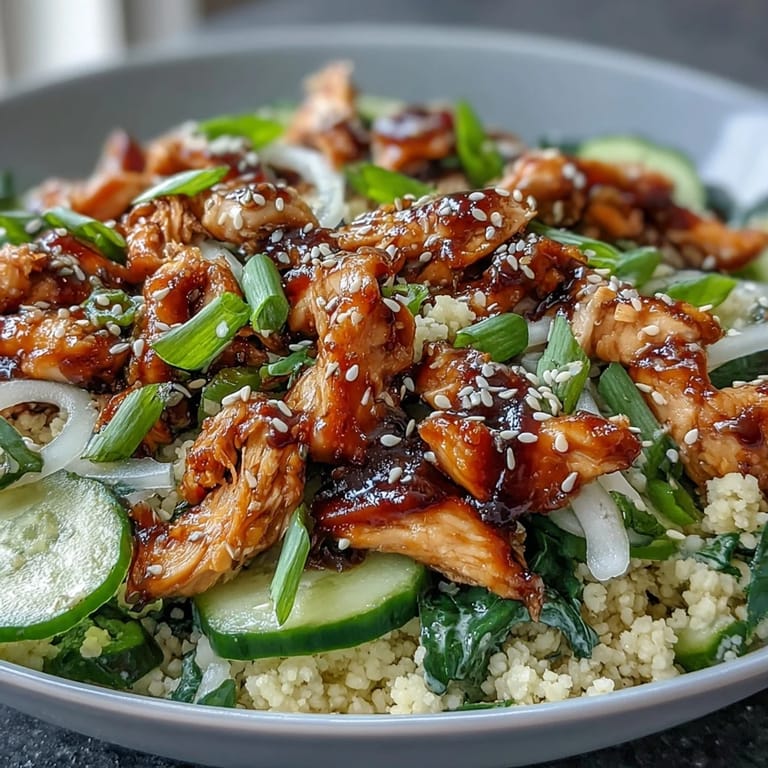
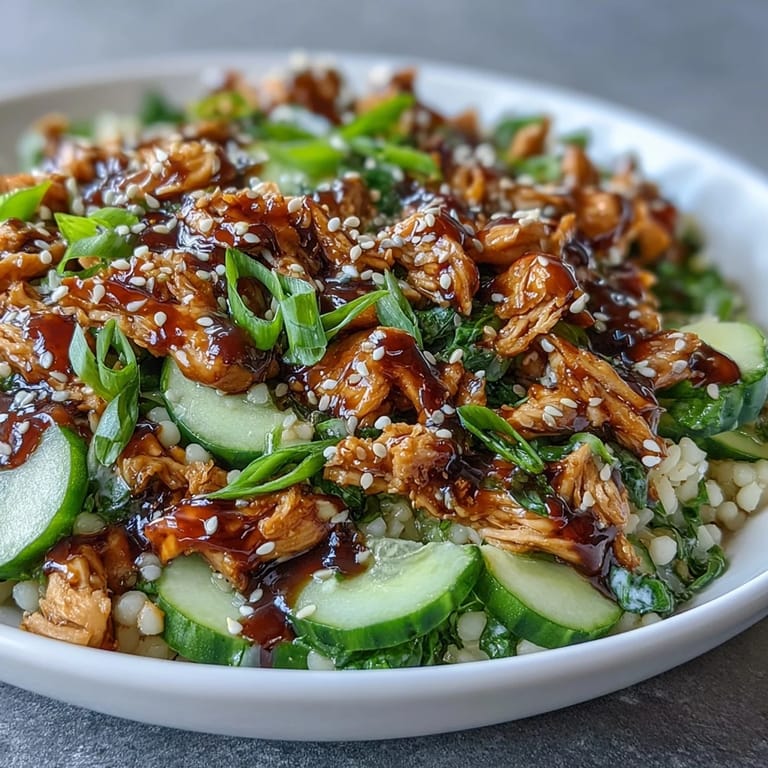
 My friend Maya showed up at a potluck one summer evening with this salad, and I watched people circle back for thirds without hesitation. She explained it came together in thirty minutes flat, which seemed impossible given how composed and intentional every bite tasted. There's something about the way sesame oil whispers through warm couscous that just makes you want to keep eating—it's the kind of dish that feels light until you realize you've finished your entire bowl. The textures caught me off guard: chewy grains, tender chicken, snappy cucumber all held together by this umami-forward dressing that tasted like someone had bottled Asian takeout in the best way possible.
I made this for my family's casual Sunday lunch, and my usually picky nephew asked for the recipe to take to his college dorm. That moment—when someone wants to recreate something you made—that's when you know you've landed on something special. My mom noted how the ginger gave it this gentle warmth without being spicy, and my dad, who typically ignores salads entirely, had already finished his portion by the time I sat down.
Ingredients
- Pearl couscous (Israeli couscous): These little pearls hold their chew beautifully and actually absorb the dressing rather than just sitting on top like traditional couscous would—this is the backbone of the whole dish.
- Rotisserie chicken: Saves you time and honestly tastes better than most home-roasted versions, so lean into convenience here without guilt.
- Cucumber: Seeding it prevents a watery salad later, which I learned after one soggy disaster that taught me to pay attention to these small steps.
- Scallions and cilantro: Fresh aromatics that add brightness and keep this from feeling heavy—don't skip them just because they seem optional.
- Toasted sesame seeds: These add textural contrast and a nutty depth that untoasted seeds simply can't match.
- Soy sauce: Low-sodium is genuinely better here since you're controlling the salt level entirely.
- Toasted sesame oil: The nutty, complex flavor is what elevates this from ordinary to memorable—never skip the toasting step on the label.
- Rice vinegar: Its gentle acidity balances the richness without overpowering, which is why regular vinegar would throw everything off.
- Honey or maple syrup: A touch of sweetness rounds out the salty-savory notes and makes the dressing taste more complete.
- Fresh ginger: Always grate it fresh; the bottled stuff tastes like nothing and defeats the whole purpose.
- Garlic and optional sriracha: Garlic adds a savory depth while sriracha gives you control over heat level—add it if you want that kick.
Tired of Takeout? 🥡
Get 10 meals you can make faster than delivery arrives. Seriously.
One email. No spam. Unsubscribe anytime.
Instructions
- Bring liquid to a boil and cook your couscous:
- Pour water or broth into a medium saucepan, let it come to a rolling boil, then stir in the pearl couscous and reduce heat to low. Cover and let it simmer for 8–10 minutes until the grains turn tender and absorb the liquid—you'll hear the quiet sizzle settle into steam.
- Cool the couscous quickly:
- Spread the cooked grains on a baking sheet so they cool faster and don't clump together into a solid mass. This takes five minutes and completely changes the texture of your final salad.
- Whisk your dressing while waiting:
- In a small bowl, combine soy sauce, sesame oil, rice vinegar, honey, fresh ginger, minced garlic, optional chili sauce, and neutral oil. Whisk until it emulsifies slightly and the flavors feel balanced—taste a tiny drop on your finger to make sure the salty and sour notes dance together nicely.
- Toss everything together:
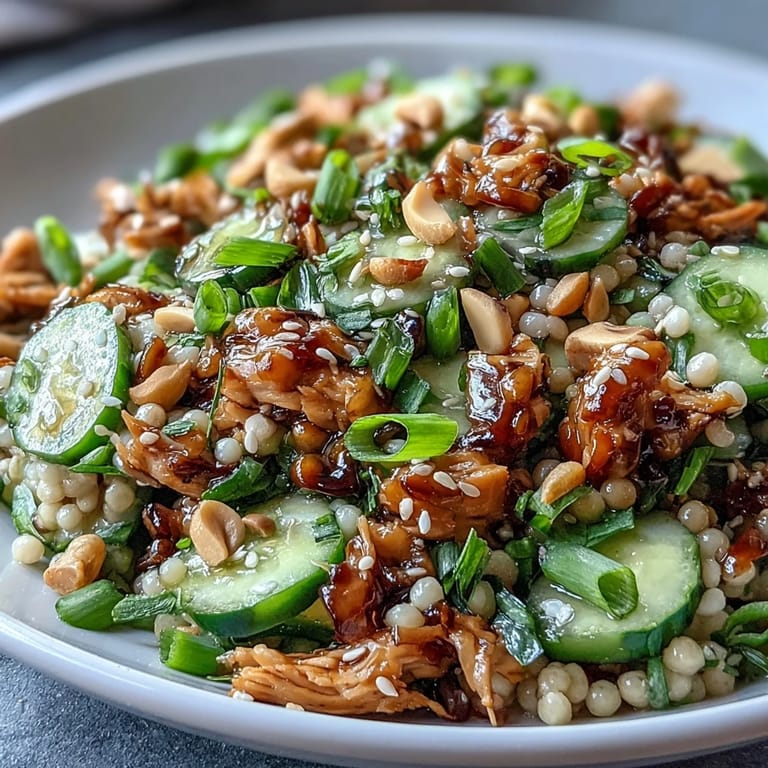
- In a large bowl, combine your cooled couscous with shredded chicken, sliced cucumber, scallions, and cilantro, then drizzle the dressing over everything. Toss gently but thoroughly, making sure every grain gets coated.
- Finish with sesame seeds and serve:
- Sprinkle toasted sesame seeds across the top and give it one final gentle toss. Serve immediately at room temperature or chill for thirty minutes if you prefer it colder.
 Pin It
 One afternoon, I brought this salad to share with my desk mates at work, and someone actually said they could taste the care in it. That stuck with me—how something so simple, made without drama or fancy techniques, could feel genuinely thoughtful to someone just looking for a good lunch. Food does that sometimes, it connects without trying too hard.
Why This Salad Feels Different
The magic here isn't in complicated steps or obscure ingredients—it's in respecting each element and letting them speak. The sesame oil doesn't fight the soy, the vinegar doesn't overwhelm the honey, the chicken doesn't dominate the grains. Everything moves toward the same goal, which is creating something that tastes whole and intentional. You're not making a fusion food situation; you're making something that feels both familiar and exciting at the same time.
Timing and Prep Strategy
The thirty-minute total time is genuinely accurate if you read through the recipe first and gather everything before you start. Get your chicken shredded, cucumbers sliced, herbs chopped, and dressing ingredients measured while the couscous cooks—this is not a dish that rewards multitasking at the stove, but it does reward being organized going in. Once you've made it once, you'll have the rhythm down and could probably do it with your eyes closed.
Room Temperature versus Chilled and Other Variations
Serve this immediately at room temperature if you want the couscous grains to taste their most tender and the sesame oil to coat everything evenly and warm. If you chill it for thirty minutes, the flavors meld deeper and it becomes more of a cold salad situation—both versions are valid depending on the season and your mood. For a vegetarian path, swap the rotisserie chicken for crispy baked tofu or edamame, and the salad becomes just as satisfying without losing any of its personality.
- Shredded carrots or thinly sliced bell peppers add color and extra crunch without changing the fundamental character of the dish.
- A drizzle of extra sesame oil right before serving is never wrong and always elevates the final bite.
- Leftover salad keeps beautifully in the fridge for two days, though the couscous will soften slightly as it absorbs more dressing.
 Pin It
 This salad lives in that beautiful middle ground where it's easy enough to make on a random Tuesday but special enough to serve when you want to impress without looking like you stressed. It's become one of those recipes I return to again and again because it never disappoints.
Recipe FAQs
- → Can I make this salad ahead of time?
Yes, this dish is excellent for meal prep. Store in an airtight container in the refrigerator for up to 3 days. The flavors actually meld and improve overnight. Add fresh cilantro and sesame seeds just before serving for best texture.
- → What can I substitute for pearl couscous?
Regular couscous, quinoa, or orzo pasta work well as alternatives. Adjust cooking time according to package directions and cool completely before tossing with the dressing and vegetables.
- → How do I make this vegetarian?
Simply omit the rotisserie chicken and add protein-rich alternatives like edamame, baked tofu cubes, or chickpeas. Use vegetable broth instead of chicken broth when cooking the couscous.
- → Can I adjust the spice level?
Absolutely. The Sriracha is optional—start with half a teaspoon for mild heat or increase to 2 teaspoons for more kick. You can also substitute with chili garlic sauce, sambal oelek, or red pepper flakes.
- → What other vegetables work in this salad?
Shredded carrots, thinly sliced bell peppers, snap peas, shredded purple cabbage, or diced mango all add wonderful color and crunch. Aim for about 2 cups total vegetables to maintain the balance with the couscous and chicken.